

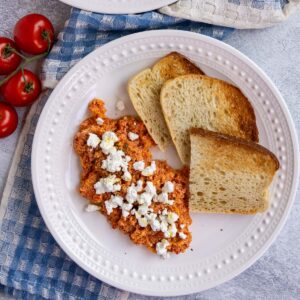
Strapatsada is the perfect summery egg dish to make with fresh, ripe tomatoes. These easy Greek scrambled eggs only require a few ingredients, yet they're packed with intense tomato flavor. Make them for your next breakfast or brunch!
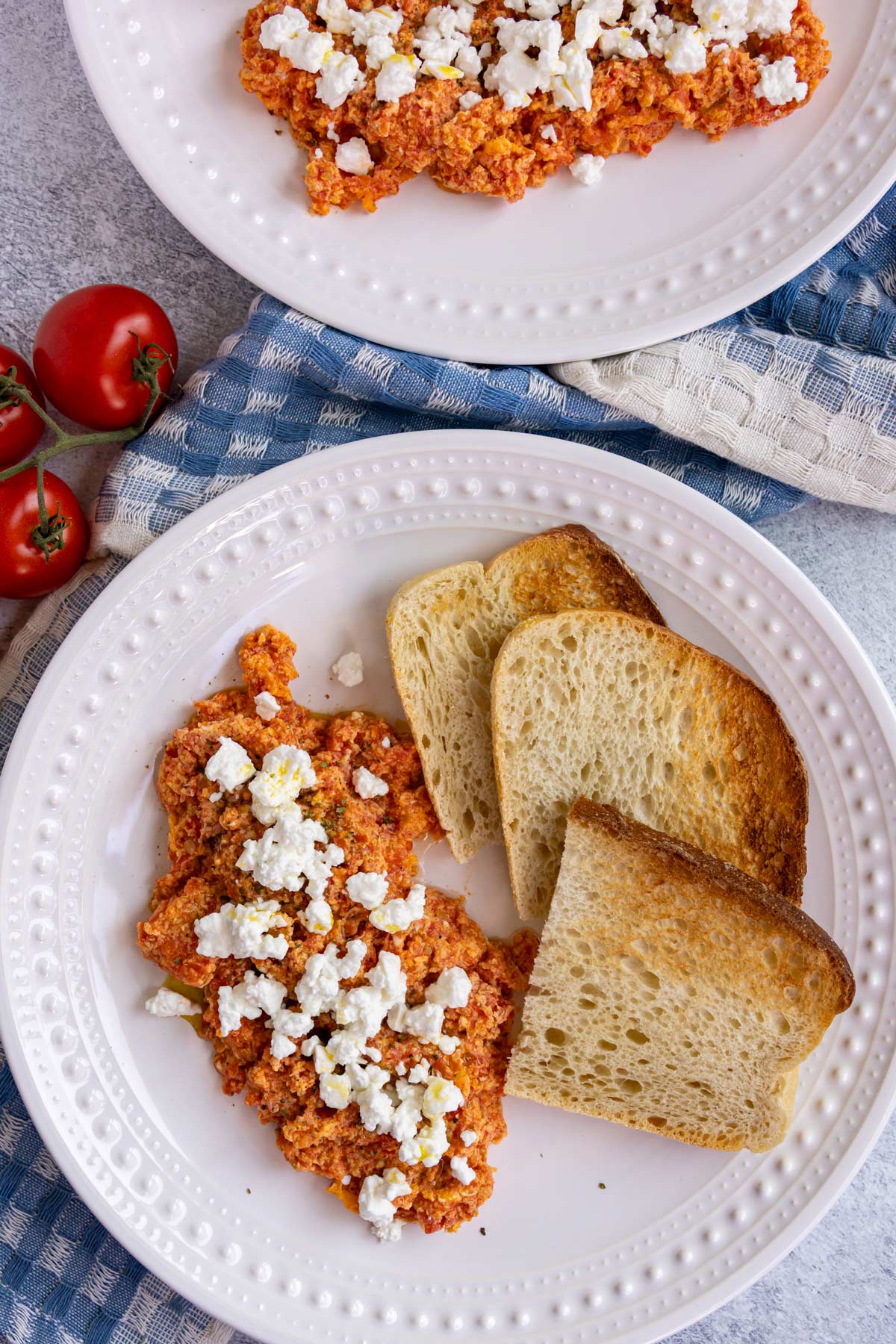
Strapatsada is a quick and easy dish that is perfect for breakfast, lunch, or even dinner. The name strapatsada is derived from the Italian word strapazzare meaning "to scramble." In some regions it's called kagianas (καγιανάς) which comes from the Turkish and Persian words meaning "omelet."
Since it only requires a handful of ingredients, make sure they are the best quality you can get. These Greek scrambled eggs featured fresh tomatoes and olive oil, two of the most beloved Mediterranean ingredients.
Although you could skip topping with crumbled feta cheese, I think it adds a nice bit of salt and a little richness to a classic summer dish. This is actually one of my dad's favorite summer breakfasts in its simplest sense, but adding the feta cheese takes it to another level in my opinion. Also, who doesn't love cheese?
Ingredient notes
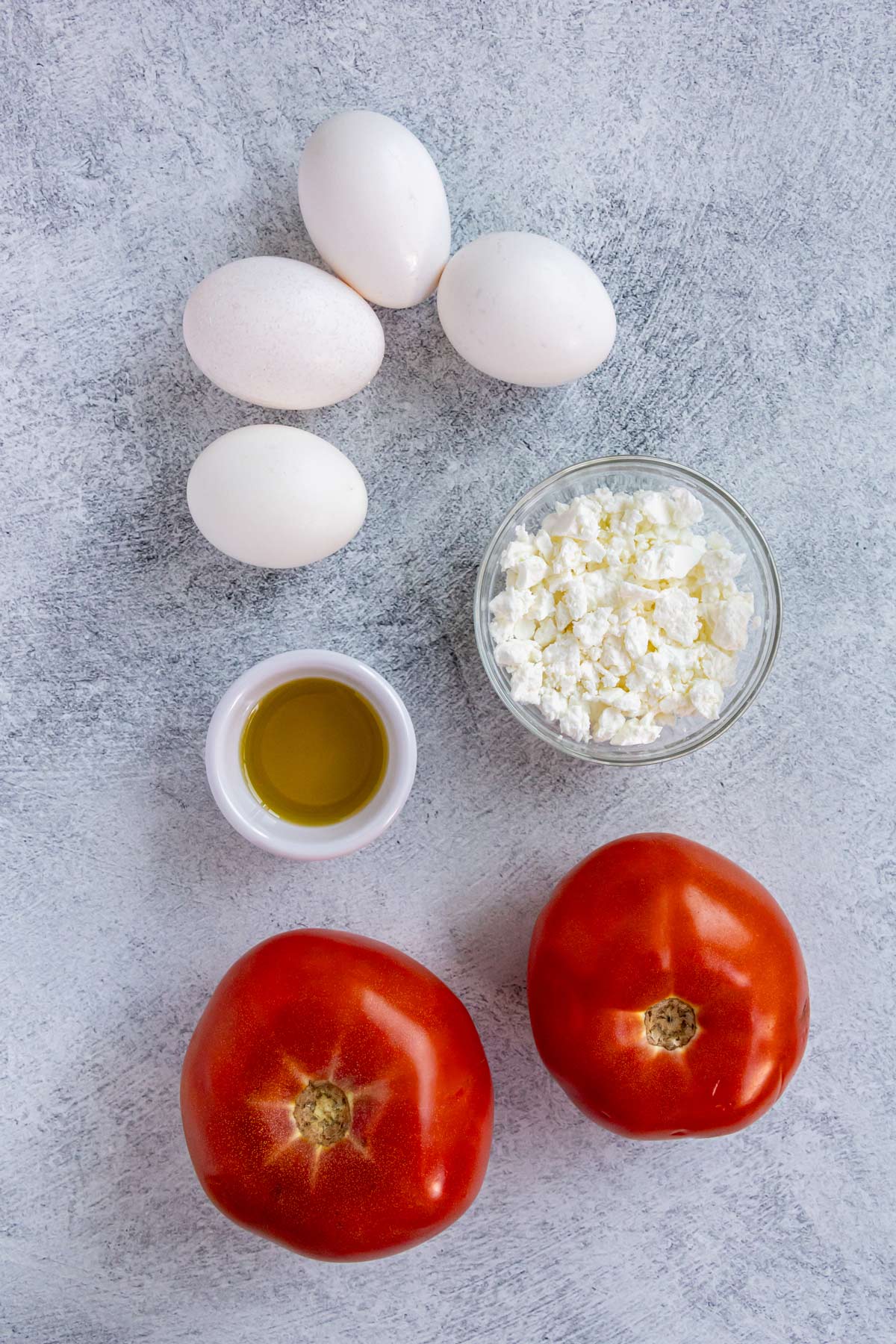
- Tomatoes: Get ripe, fresh, tomatoes, preferably local if you live in a climate that grows them. If it's out of season, campari tomatoes would be a good choice, but as they are a little smaller, you'll need to use more of them to get enough grated tomato for this recipe.
- Eggs: Use large fresh eggs. If you can get free-range organic eggs, or better yet eggs from a local farm, go for it.
- Extra-Virgin Olive Oil: This is the only fat used to cook this dish. Use the best quality extra-virgin olive oil you can get. Ideally it should be Greek, but I won't tell if you source it from another high quality olive oil-producing country.
- Feta Cheese: Unpopular opinion, but I'm not the biggest fan of Greek feta. There, I said it. I typically buy Bulgarian feta which is more briny, richer, and fattier (and to me just tastes better). Use whatever feta cheese you prefer. Some people stir the crumbled feta into the eggs, but I sprinkle it on top. Bulgarian feta is so soft and buttery that it practically melts in your mouth as you eat it anyway, no need to stir it into the eggs.
How to make it
Cut tomatoes in half and grate them on a box grater set over a bowl with the flesh side against the grater.
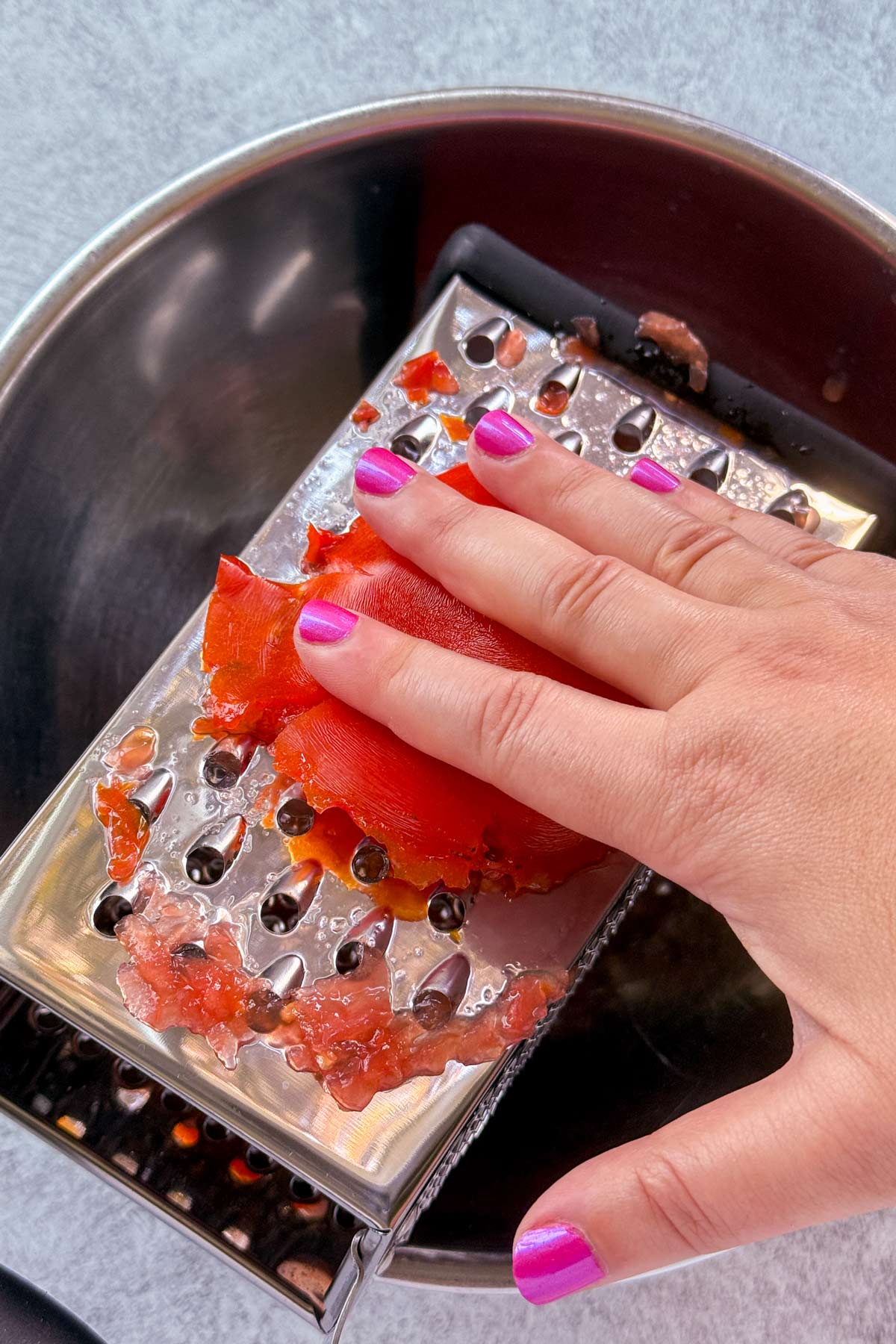
Dispose of the skin once all the flesh is grated. You should have about 2 to 2 ½ cups.
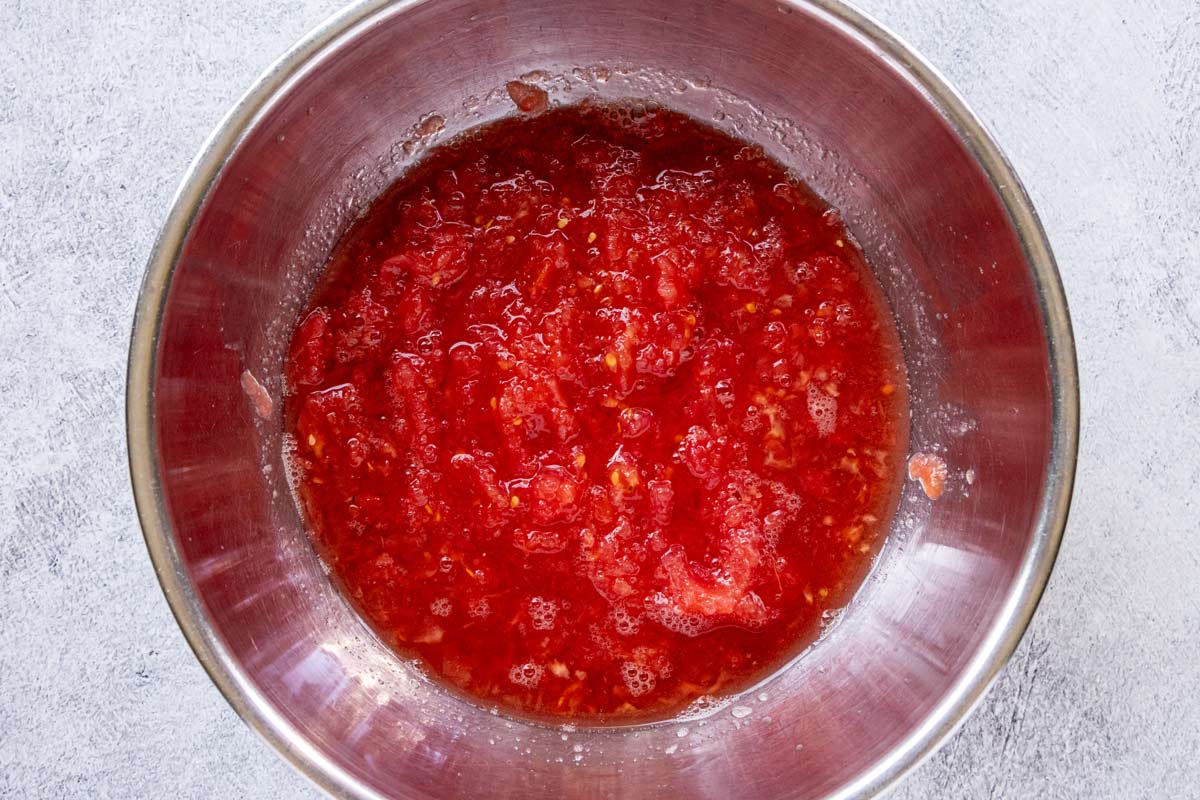
Heat olive oil in a medium nonstick skillet over medium heat. Add the grated tomato, season lightly with salt and pepper and cook, stirring regularly for about 20 to 25 minutes or until thickened and reduced.
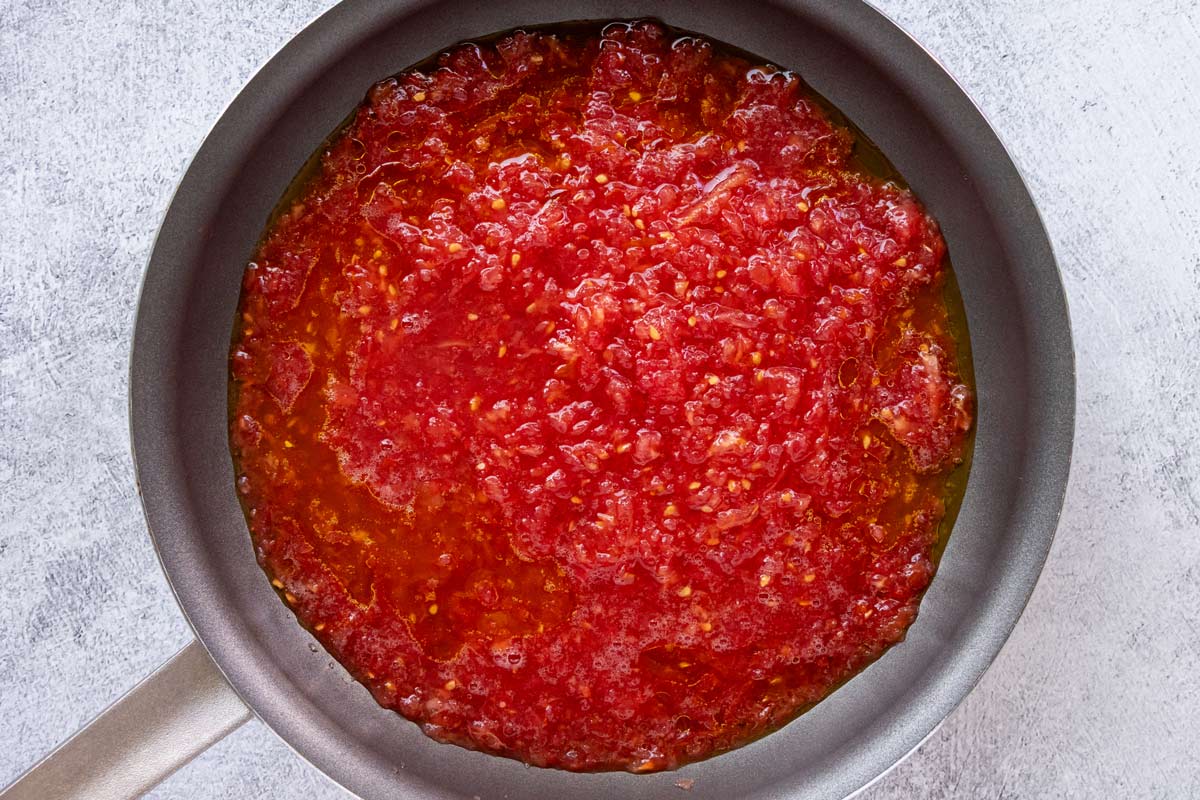
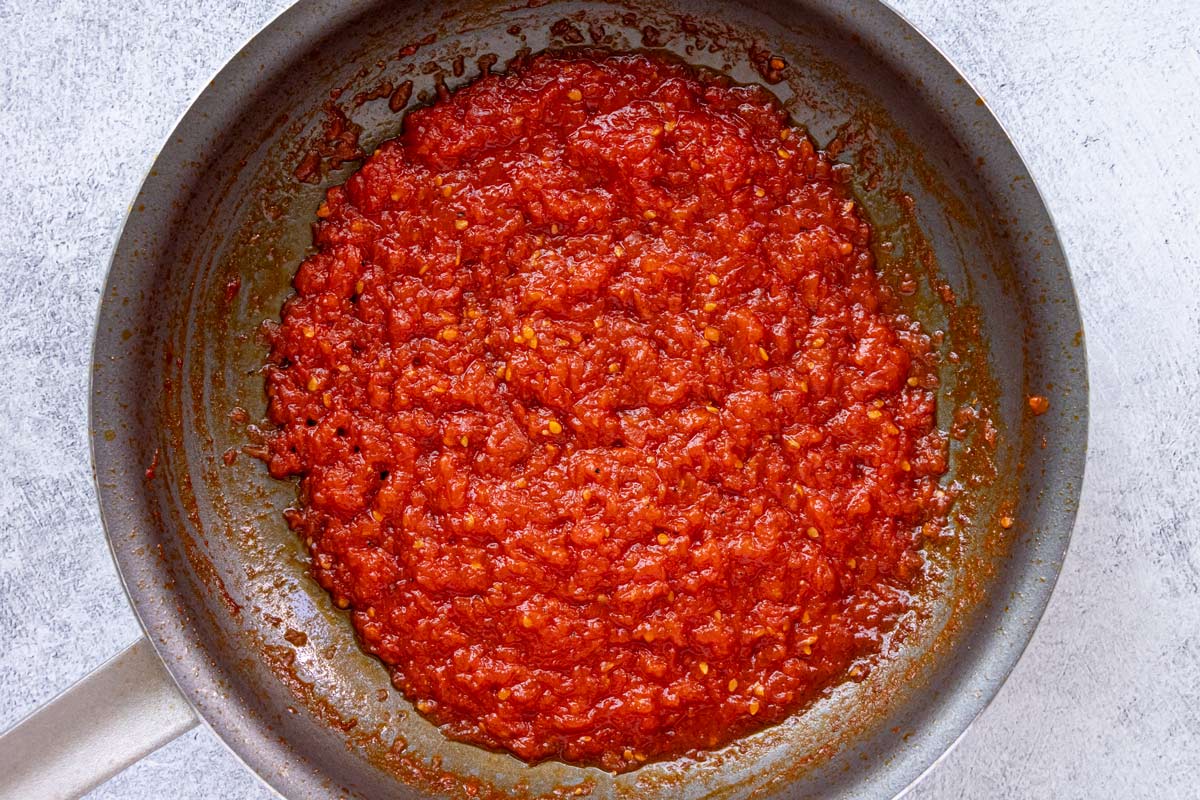
It shouldn't be watery anymore. If you push some of the tomato to one side, the exposed part of the pan should not pool with liquid. The length of time will depend on how juicy your tomatoes are.
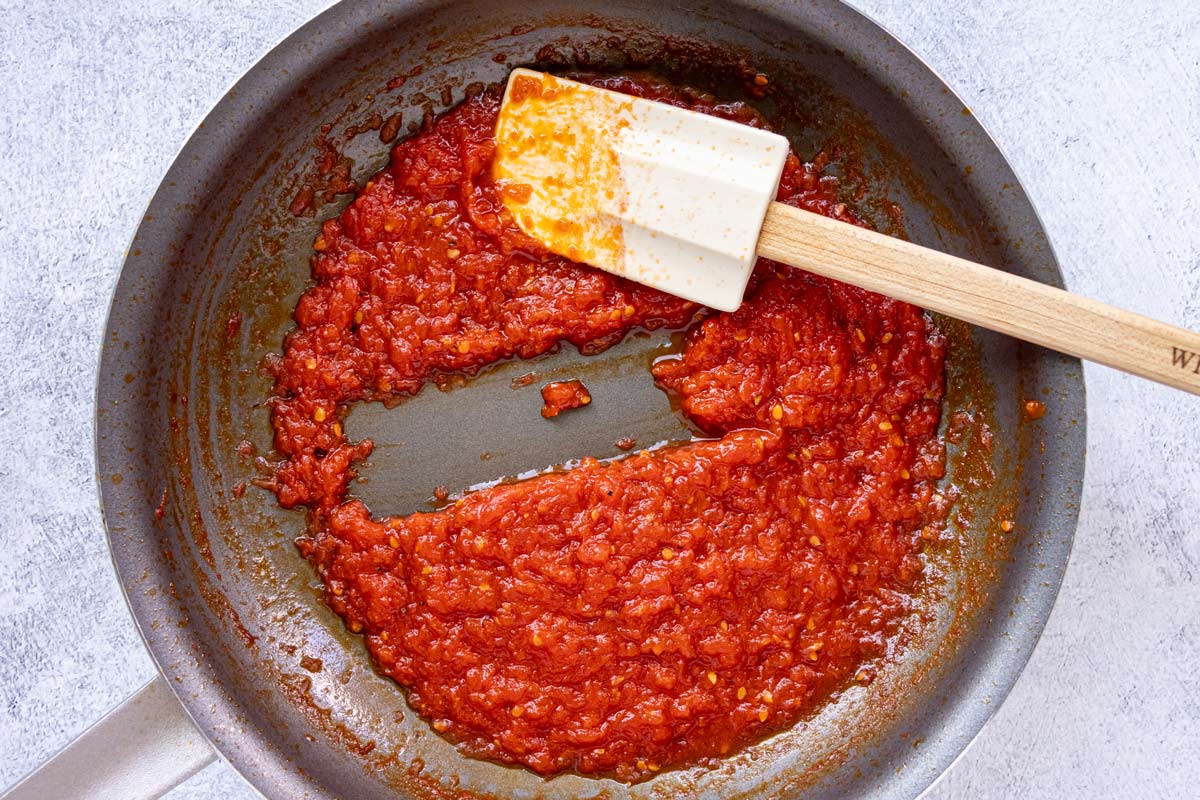
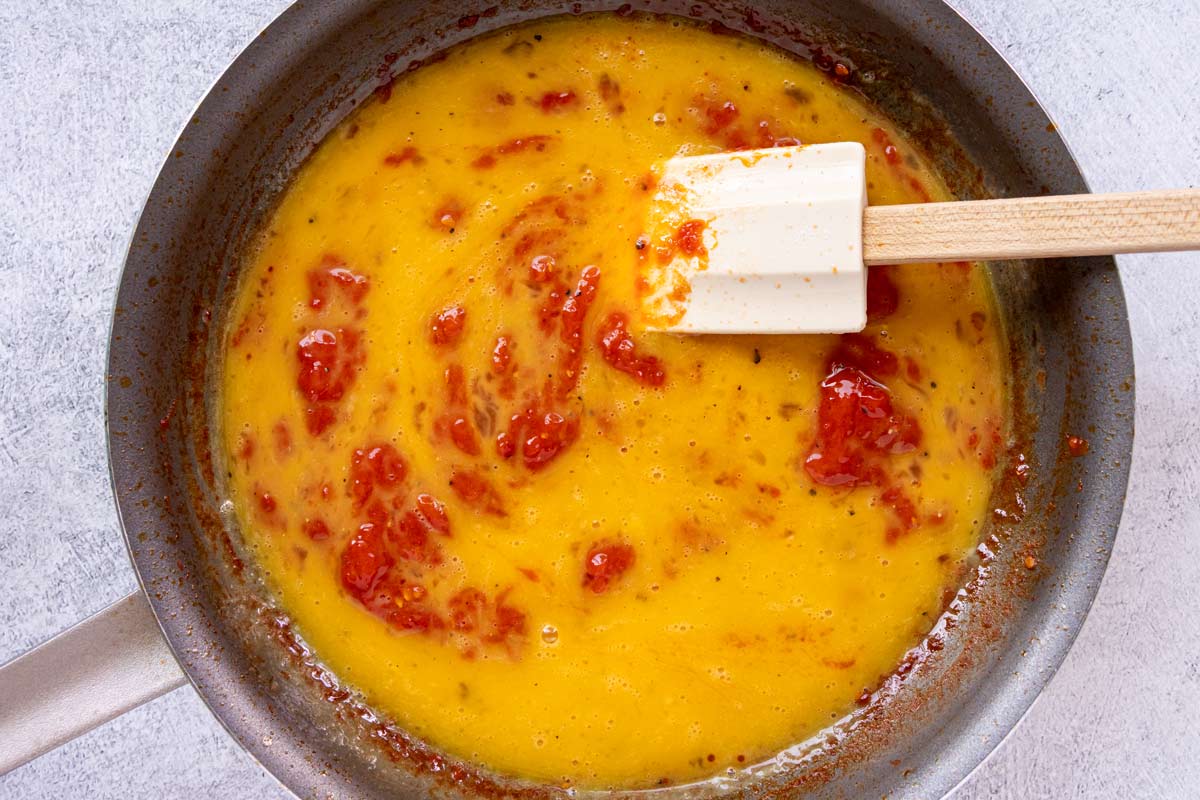
Meanwhile, beat the eggs in a bowl and season with salt and pepper. When the tomato mixture is ready, reduce the heat slightly to medium-low and add the eggs. Continue cooking, stirring regularly, for about 2 to 3 minutes or until the eggs are set but the mixture is still soft (do not overcook).
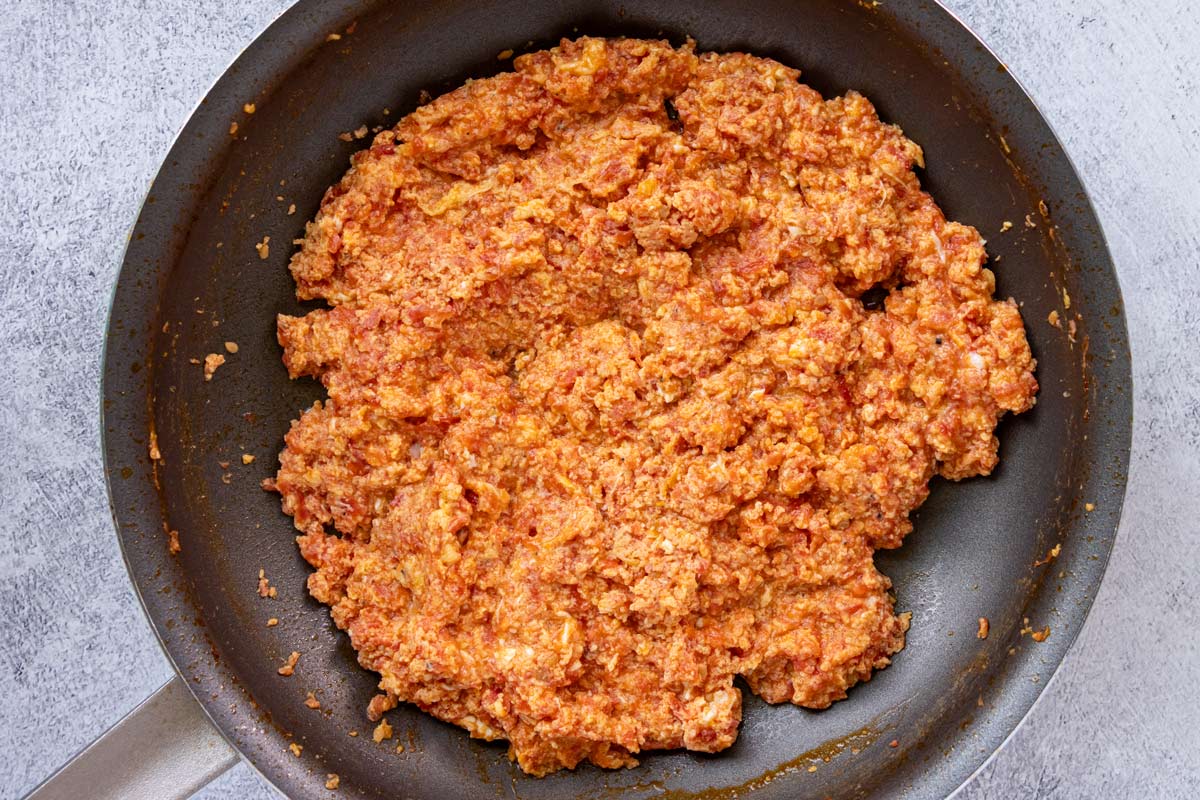
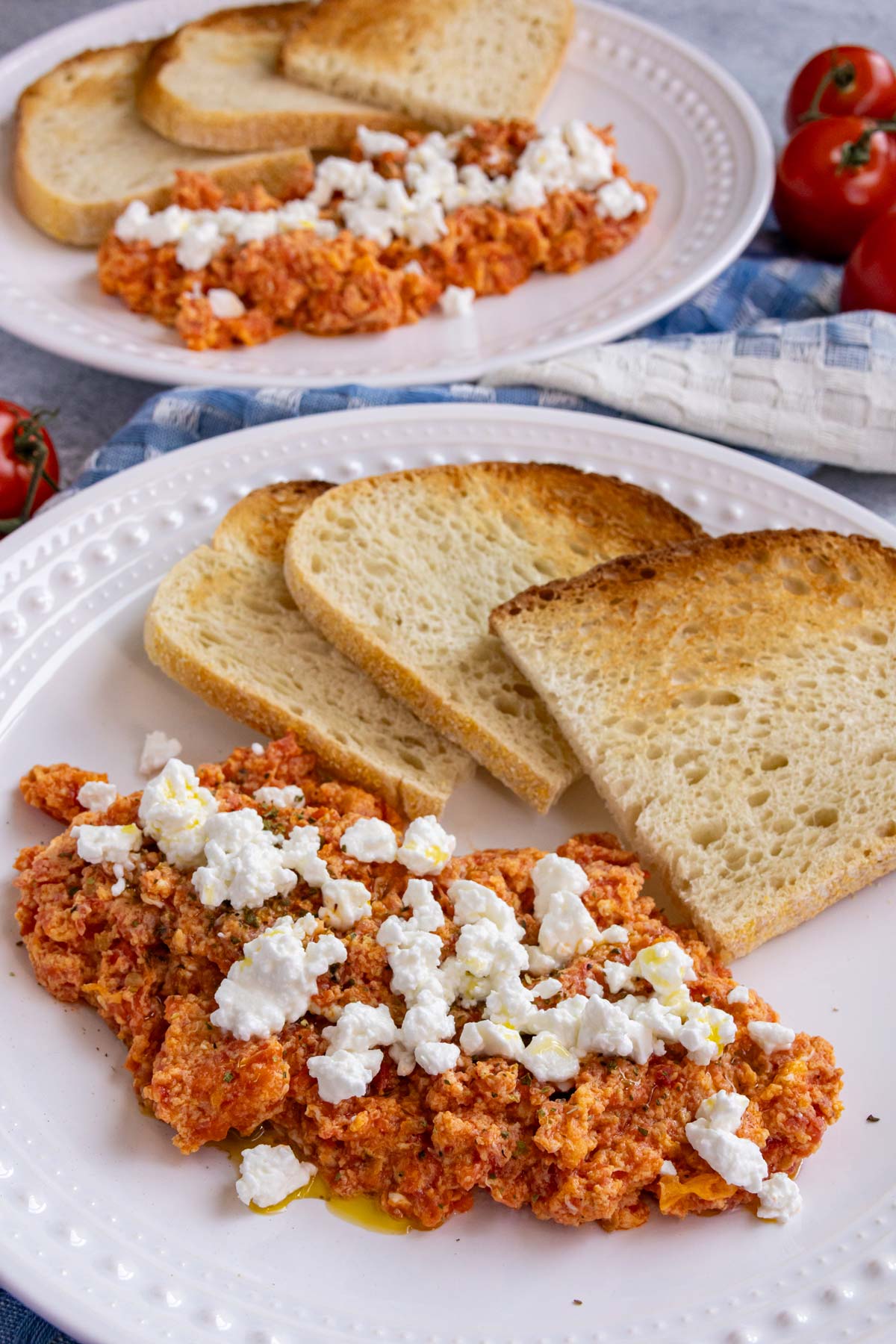
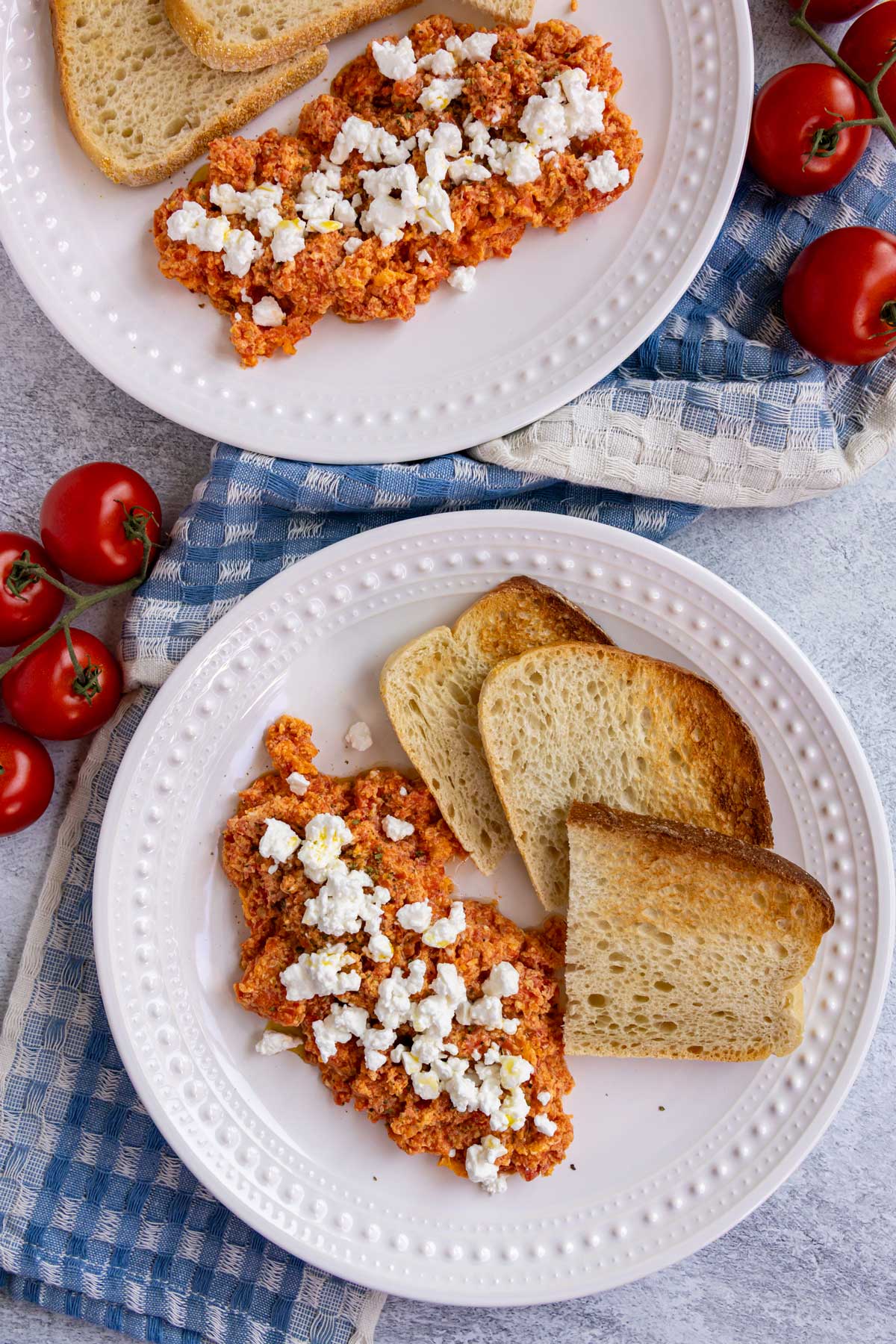
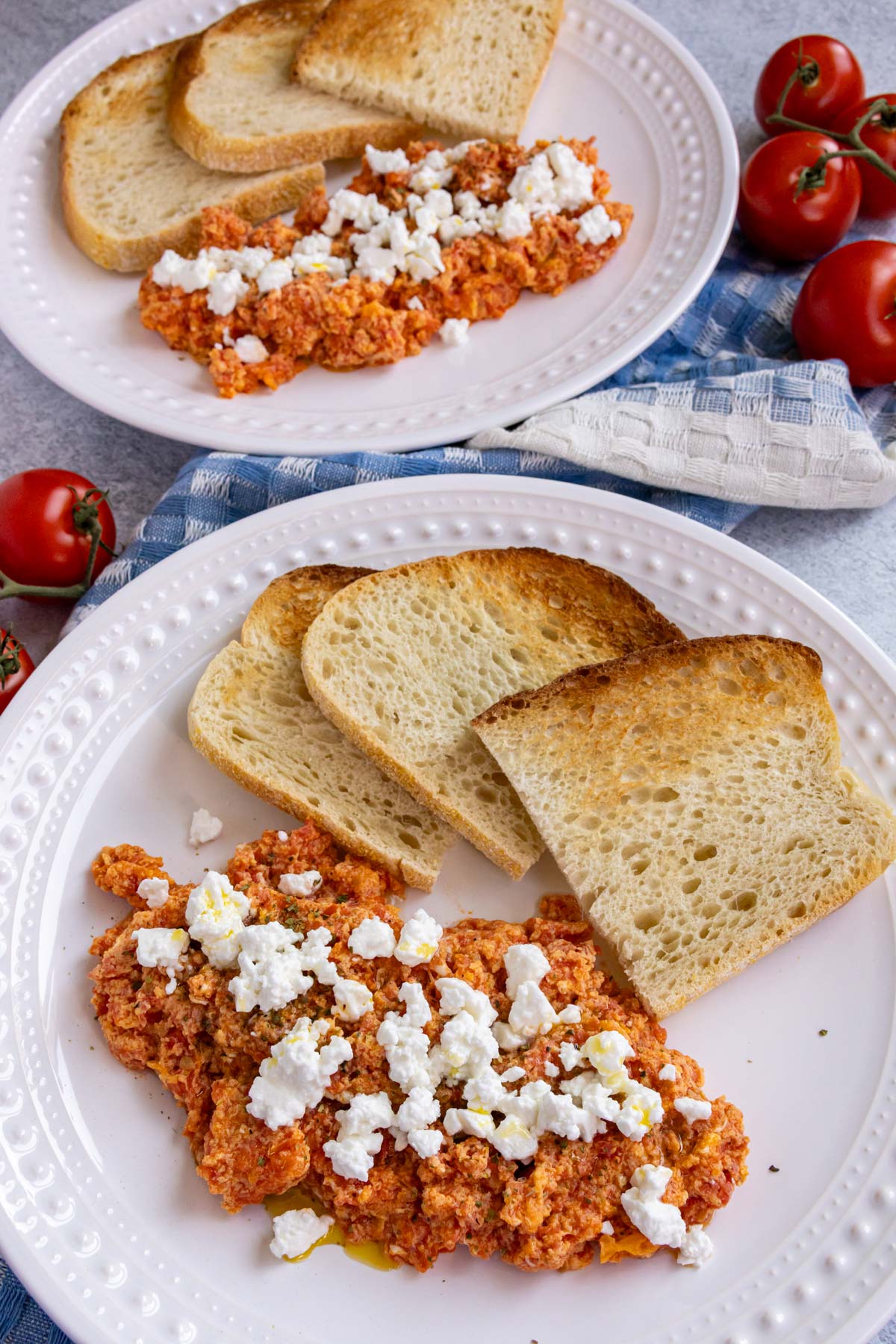
Remove from the heat and top strapatsada with crumbled feta cheese and dried oregano or fresh chopped herbs. You can also drizzle with a little extra-virgin olive oil if you'd like. Serve with crusty bread (toasted or untoasted to your liking).
Please scroll to the bottom of the post for the full recipe (in a printable recipe card) including ingredient amounts and detailed instructions.
Expert tips
In my opinion, the most important tip in making strapatsada is to make sure to cook down the tomatoes enough. If they are still a bit loose and watery, your eggs won't be soft and creamy. They'll be watery too.
You can scramble the eggs less or more depending on your preference. Some people prefer very runny and loose scrambled eggs. Some people want their scrambled eggs well done. It's a travesty, but they're your eggs to do with as you wish. I cook mine somewhere in the middle. Just cooked enough so they are set and not raw, but not too firm either.
I love the combination of eggs, feta, and oregano. I top my strapatsada with dried oregano (easier and more flavorful than fresh oregano). If you want more color and have some fresh herbs on hand, by all means, top with fresh chopped parsley, basil, or chives.
I love cheese. I especially love Bulgarian feta cheese. It's so briny, creamy, and delicious! If you want to use less cheese (or none at all) on top of your Greek scrambled eggs, it's your decision.
If you don't have fresh tomatoes, you can use canned tomato products. In this case, I'd go with a high quality tomato passata or some crushed or ground peeled tomatoes. Use less than you would fresh tomatoes. You'll still want to cook them down to concentrate the flavor, but it won't require nearly as much time as it does with fresh tomatoes.
Other recipes you may like
- Gigantes Plaki (Greek Baked Beans)
- Spanakorizo (Greek Spinach Rice)
- Fasolakia Giaxni / Lathera (Greek Stewed Green Beans)
- Skordalia (Greek Garlic and Potato Spread)
- Giouvetsi / Youvetsi (Greek Beef Stew and Orzo Casserole)
- Insalata Caprese (Caprese Salad)
- Tomato Bulgur Pilaf
- Chakhokhbili (Georgian Chicken Stew with Tomatoes and Herbs)
Tried this recipe? Please leave a star ⭐️⭐️⭐️⭐️⭐️ rating in the recipe card below and/or a review in the comments section further down the page. You can also follow me on social media on Facebook, Instagram, and Pinterest!
Strapatsada (Greek Scrambled Eggs with Tomatoes / Στραπατσάδα)
Ingredients
- 2 medium-to-large ripe tomatoes
- 2 tablespoons extra-virgin olive oil plus more for drizzling if desired
- Kosher salt and freshly ground black pepper
- 4 large eggs
- ½ cup (2 ounces) crumbled feta cheese
- Chopped fresh basil, parsley, or chives, or dried oregano for garnish
Instructions
- Wash and dry the tomatoes, cut them in half, and grate them on a box grater set over a bowl with the flesh side against the grater. Dispose of the skin once all the flesh is grated. You should have about 2 to 2 ½ cups.
- Heat the oil in a medium nonstick skillet over medium heat. Add the grated tomato, season lightly with salt and pepper and cook, stirring regularly for about 20 to 25 minutes or until thickened and reduced. It shouldn't be watery anymore. If you push some of the tomato to one side, the exposed part of the pan should not pool with liquid. The length of time will depend on how juicy your tomatoes are.
- Meanwhile, beat the eggs in a bowl and season with salt and pepper. When the tomato mixture is ready, reduce the heat slightly to medium-low and add the eggs. Continue cooking, stirring regularly, for about 2 to 3 minutes or until the eggs are set but the mixture is still soft (do not overcook).
- Remove from the heat and top with crumbled feta cheese and dried oregano or fresh chopped herbs. You can also drizzle with a little extra-virgin olive oil if you'd like. Serve with crusty bread (toasted or untoasted to your liking).
Notes
- In my opinion, the most important tip in making strapatsada is to make sure to cook down the tomatoes enough. If they are still a bit loose and watery, your eggs won't be soft and creamy. They'll be watery too.
- You can scramble the eggs less or more depending on your preference. Some people prefer very runny and loose scrambled eggs. Some people want their scrambled eggs well done. I cook mine somewhere in the middle. Just cooked enough so they are set and not raw, but not too firm either.
- I love the combination of eggs, feta, and oregano. I top my strapatsada with dried oregano (easier and more flavorful than fresh oregano). If you want more color and have some fresh herbs on hand, by all means, top with fresh chopped parsley, basil, or chives.
- If you don't have fresh tomatoes, you can use canned tomato products. In this case, I'd go with a high quality tomato passata or some crushed or ground peeled tomatoes. Use less than you would fresh tomatoes. You'll still want to cook them down to concentrate the flavor, but it won't require nearly as much time as it does with fresh tomatoes.
Nutrition
*All nutritional information is based on third-party calculations and should be considered estimates. Actual nutritional content will vary with brands used, measuring methods, portion sizes and more.*

Mimi Rippee says
A wonderful recipe! It’s funny, there’s a Turkish recipe that’s so similar.