

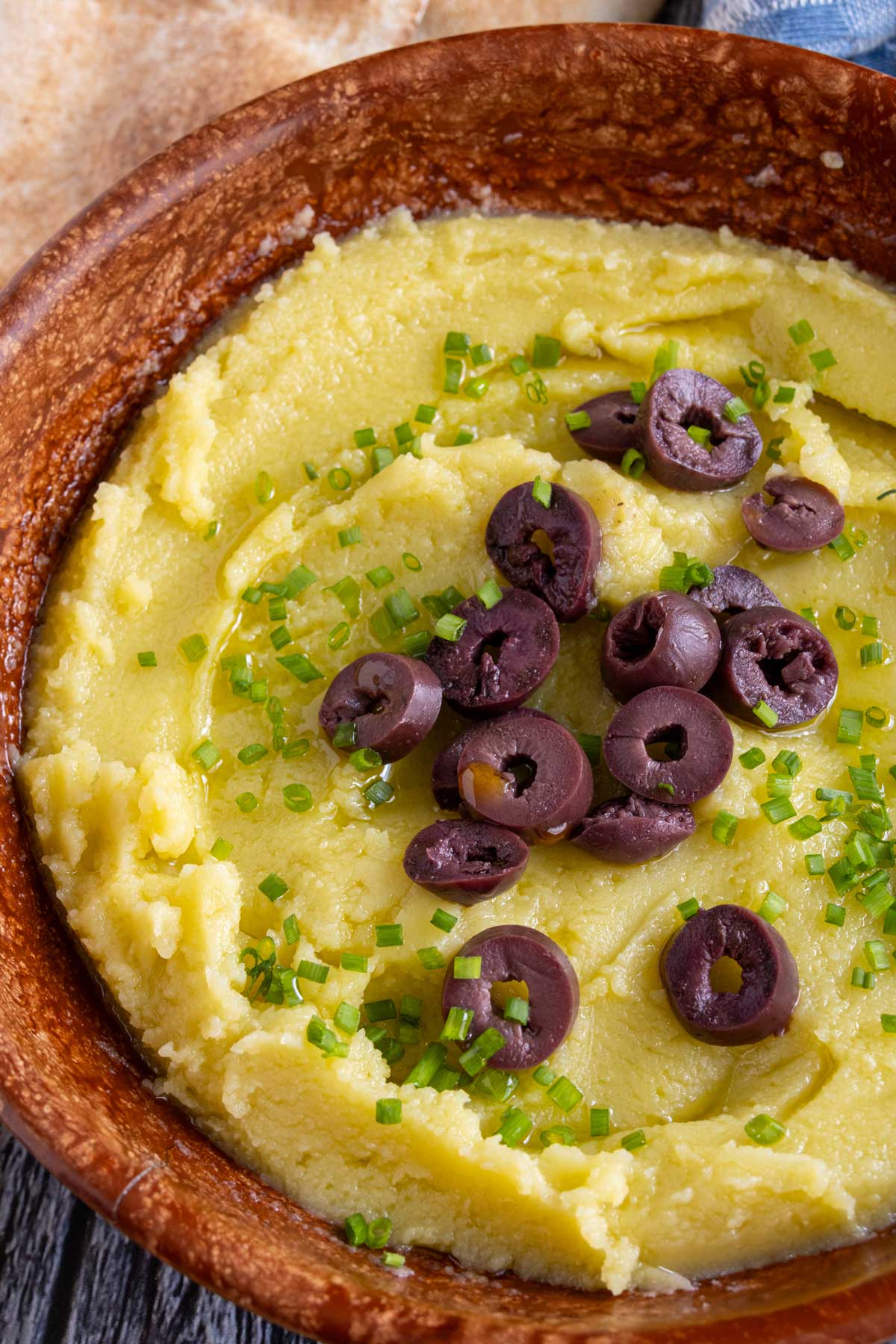
Skordalia is a thick Greek garlic dip or spread, typically thickened with mashed potatoes and enhanced with fresh lemon juice and vinegar. If you love garlic, whip together this delicious dip for your next gathering! Simply serve it as a tasty side with fish or meat, or use it as a savory sandwich spread.
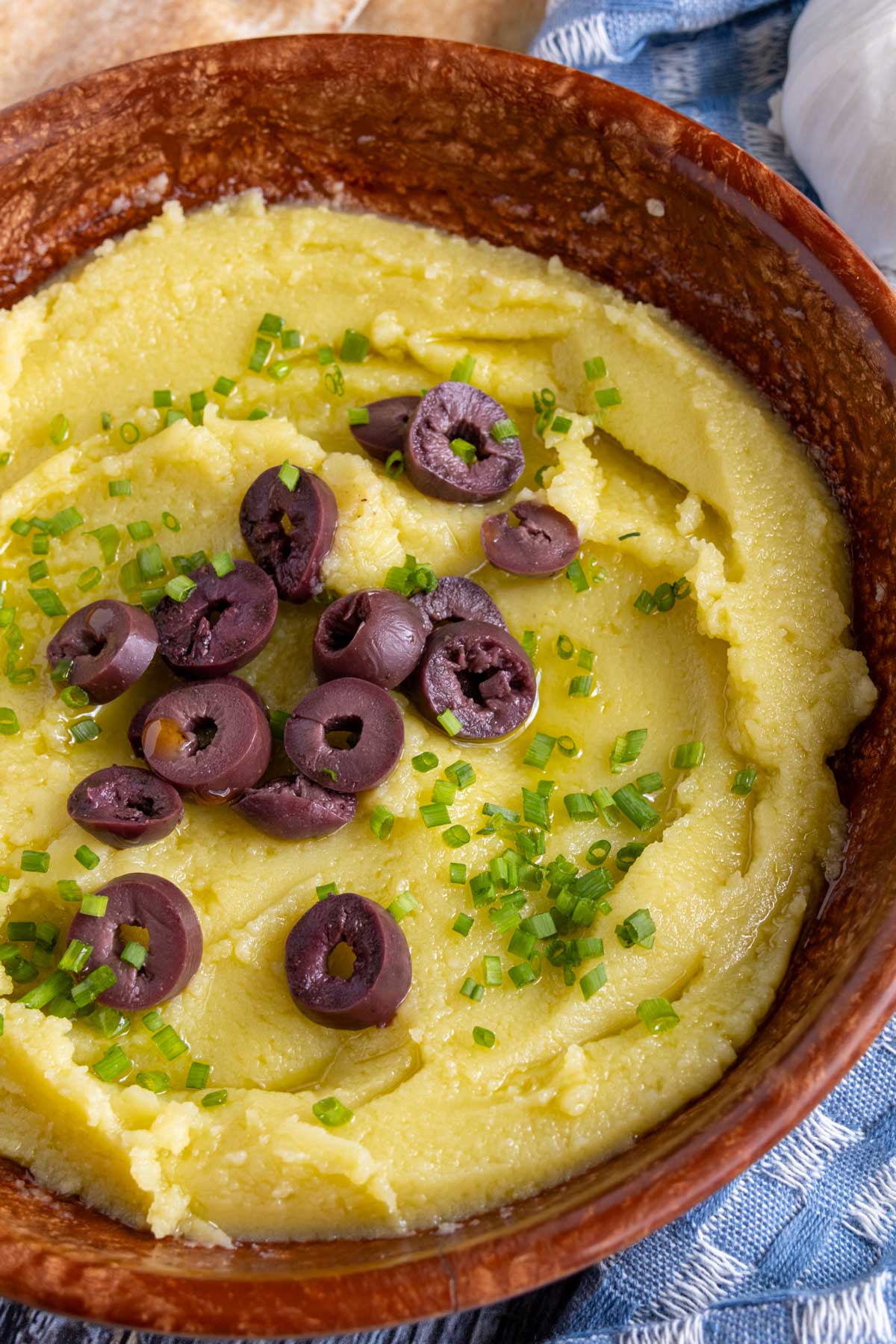
Greek Skordalia actually dates back to ancient Greece. Back then, it was made with ground nuts and olive oil to create a thick emulsion. Potatoes didn't exist in Europe yet. Nowadays you can still make skordalia with nuts and even bread as a thickening element, but the most common and popular version uses potatoes.
Although skordalia is often enjoyed as a dip or spread, you can certainly serve it as a side dish. It's essentially just mashed potatoes with tons of garlic and some added acidity (and a hefty dose of EVOO).
I've even seen skordalia offered on a menu at a Greek sandwich spot as an optional spread for souvlaki and gyro sandwiches. It's not necessarily the most traditional application, but don't knock it till you've tried it!
Ingredient notes

- Potatoes: You could use any potatoes you might use for mashed potatoes. Common options would be Yukon gold (a flavorful waxy style potato) or russets (soft and pillowy floury potatoes). Either will work in this recipe, but keep in mind that floury potatoes like russets are more apt to fall apart easily if you overcook them.
- Garlic: Because the garlic isn't cooked in this recipe and can have a strong/sharp flavor, make sure you use the freshest you can get. If your garlic has sprouted, remove the green sprout from the center before using it.
- Olive Oil: Ideally, use the best quality extra-virgin olive oil you can get/afford. You will be using quite a lot and it's an important element to the dish, so make sure it tastes really good!
- Acid: Although you could use either fresh lemon juice or red wine vinegar, I am using both here because each type of acid provides its own unique flavor. Both are very common ingredients in Greek cooking.
How to make it
Add cubed peeled potatoes to a pot and cover generously with salted water. Simmer until the potatoes are tender but not falling apart, about 10 to 15 minutes. Drain in a colander.
Meanwhile, prepare the garlic. Peel the cloves and if there is a green sprout inside any of your garlic cloves, remove it. Then, either 1) mash the garlic with a big pinch of salt in a mortar and pestle until you have a paste, 2) pass it through a garlic press, 3) mince/mash the garlic into a paste by mincing on a cutting board, adding a big pinch of salt and crushing/scraping it with the side of a knife until smooth, or 4) process the garlic with a big pinch of salt and the lemon juice and vinegar in a small but powerful food processor until smooth (you could also add some of the oil if needed to get the mixture smooth).
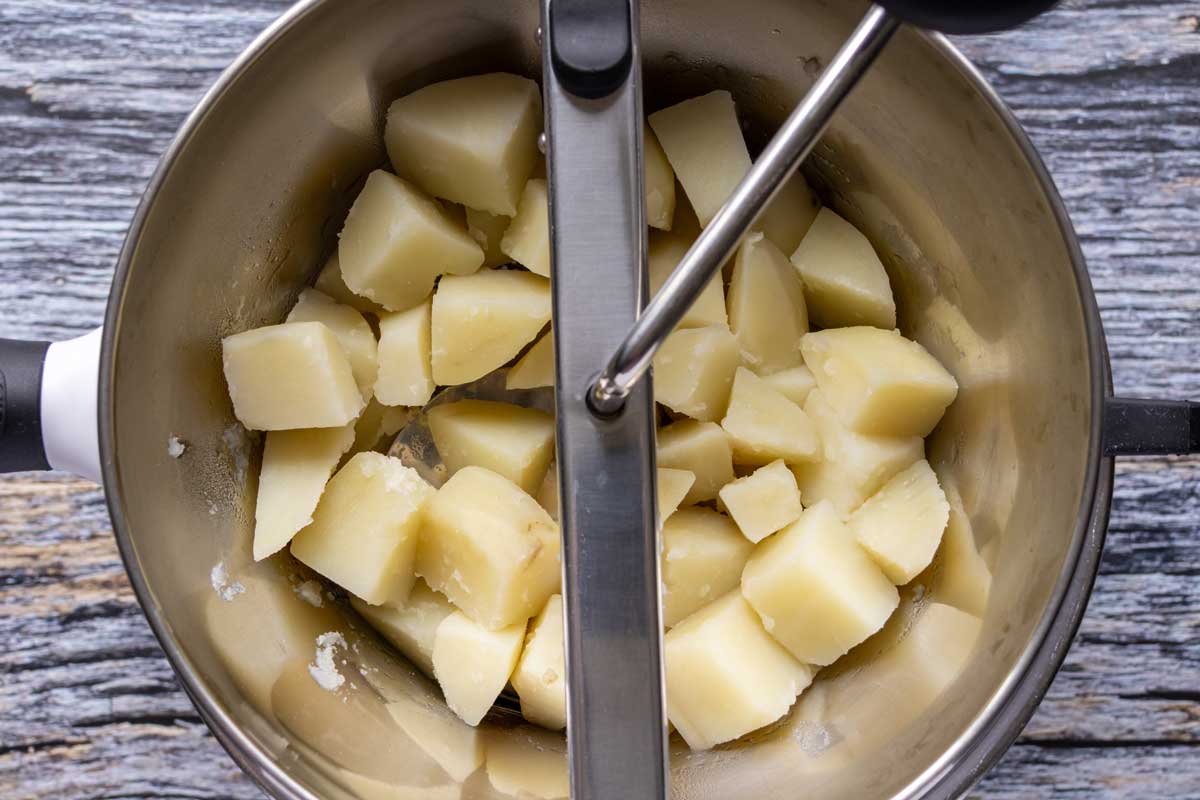
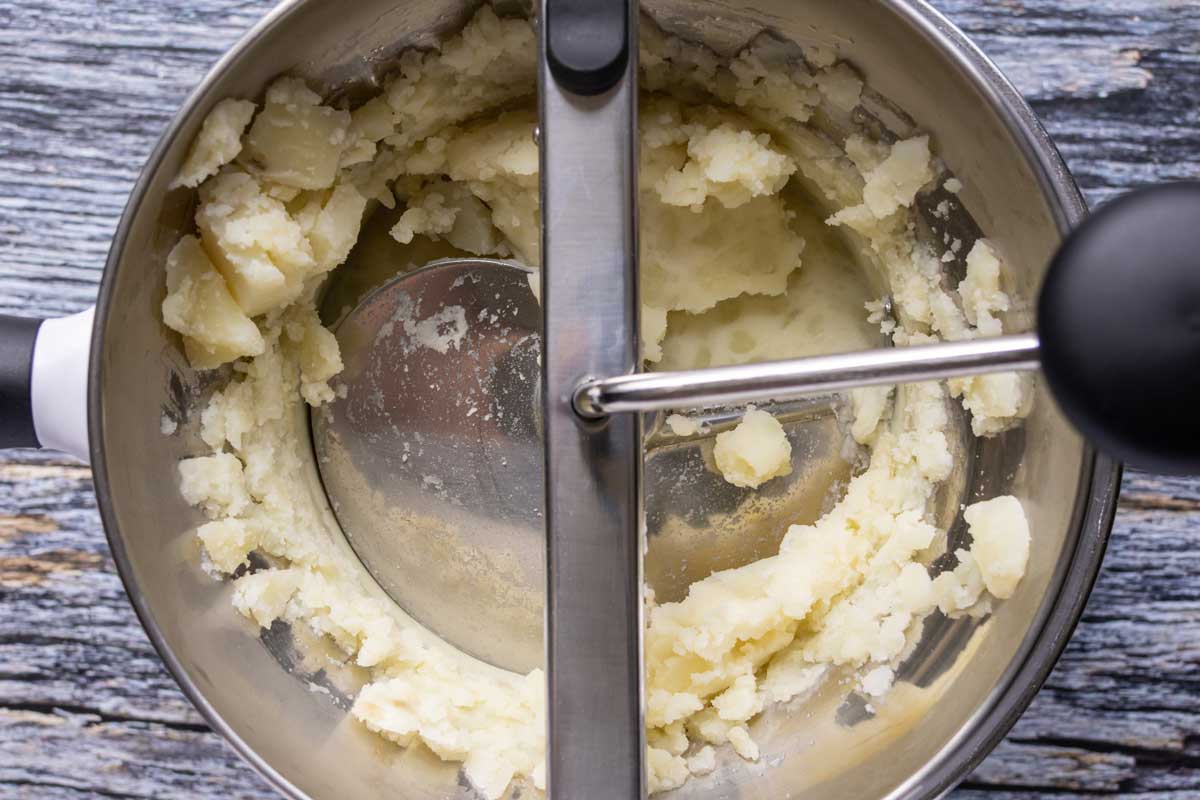
Either transfer the drained potatoes to a mixing bowl to mash them by hand with a potato masher or transfer to a food mill fitted with the finest disk or potato ricer (set over a mixing bowl) to process them into the smoothest texture.
Add the garlic paste, lemon juice, vinegar, and season with salt.
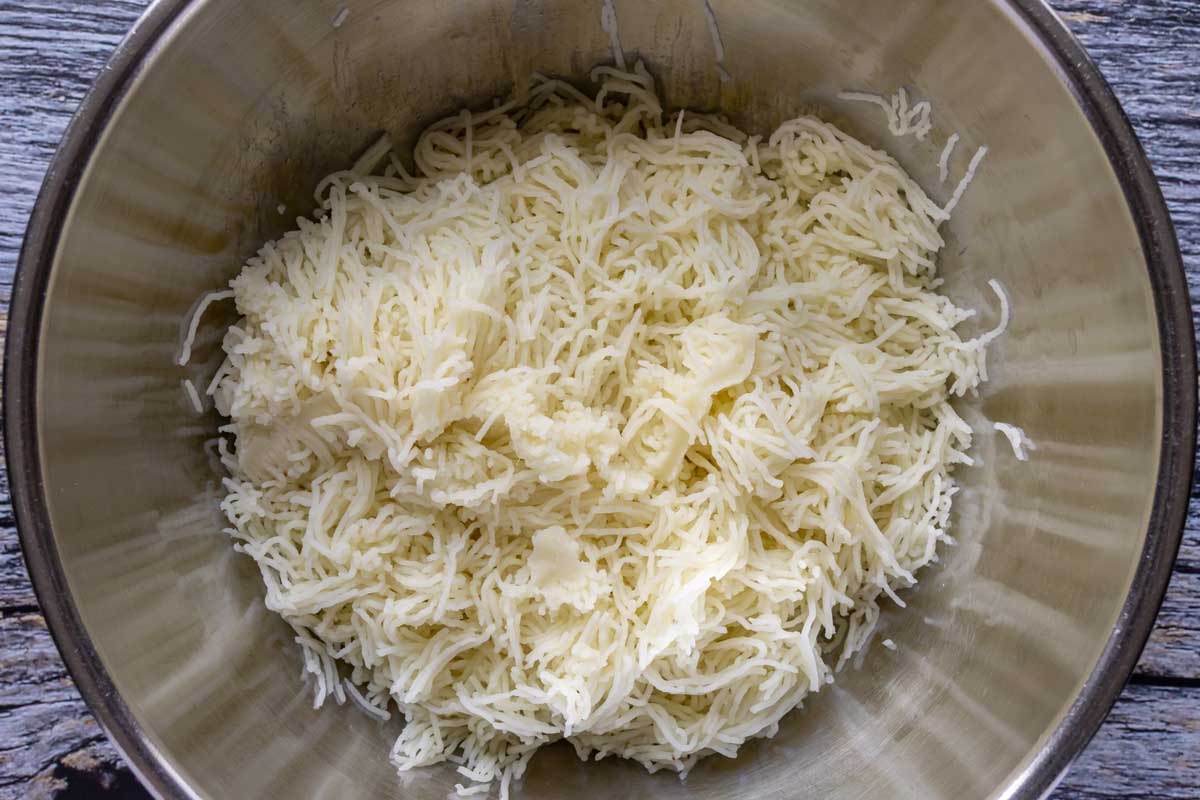
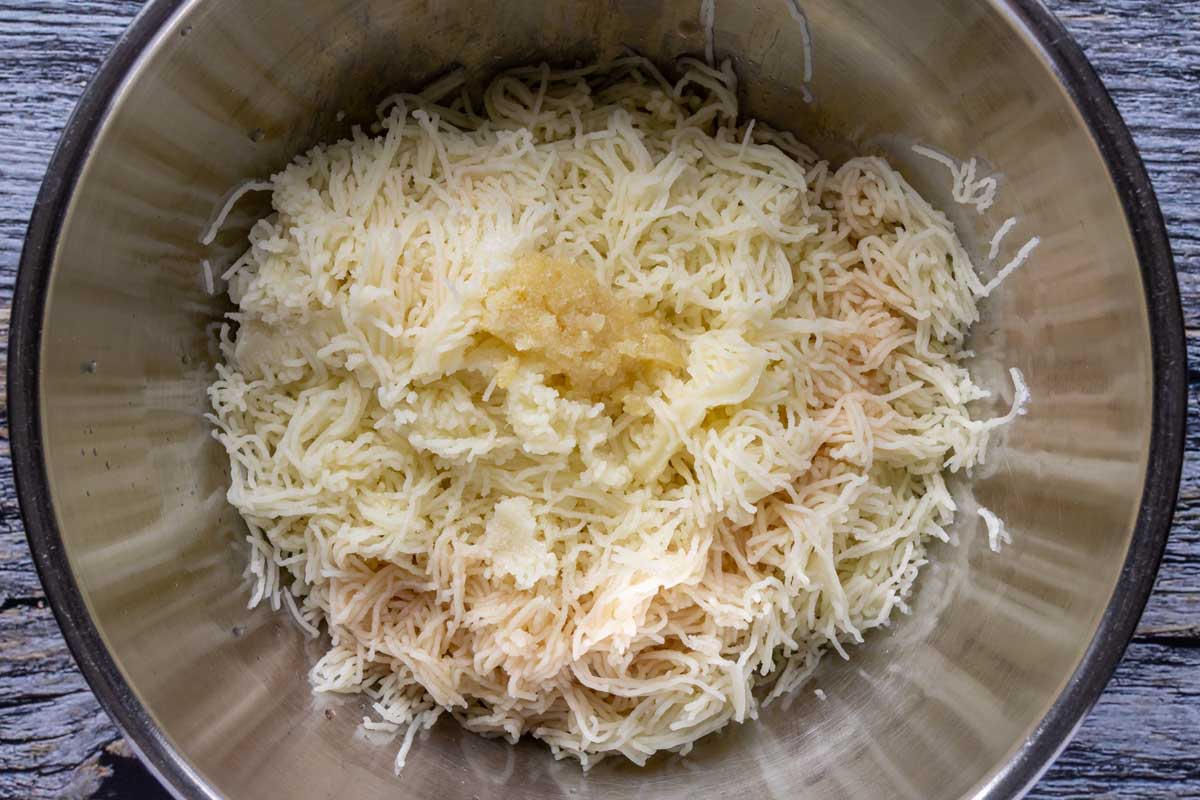
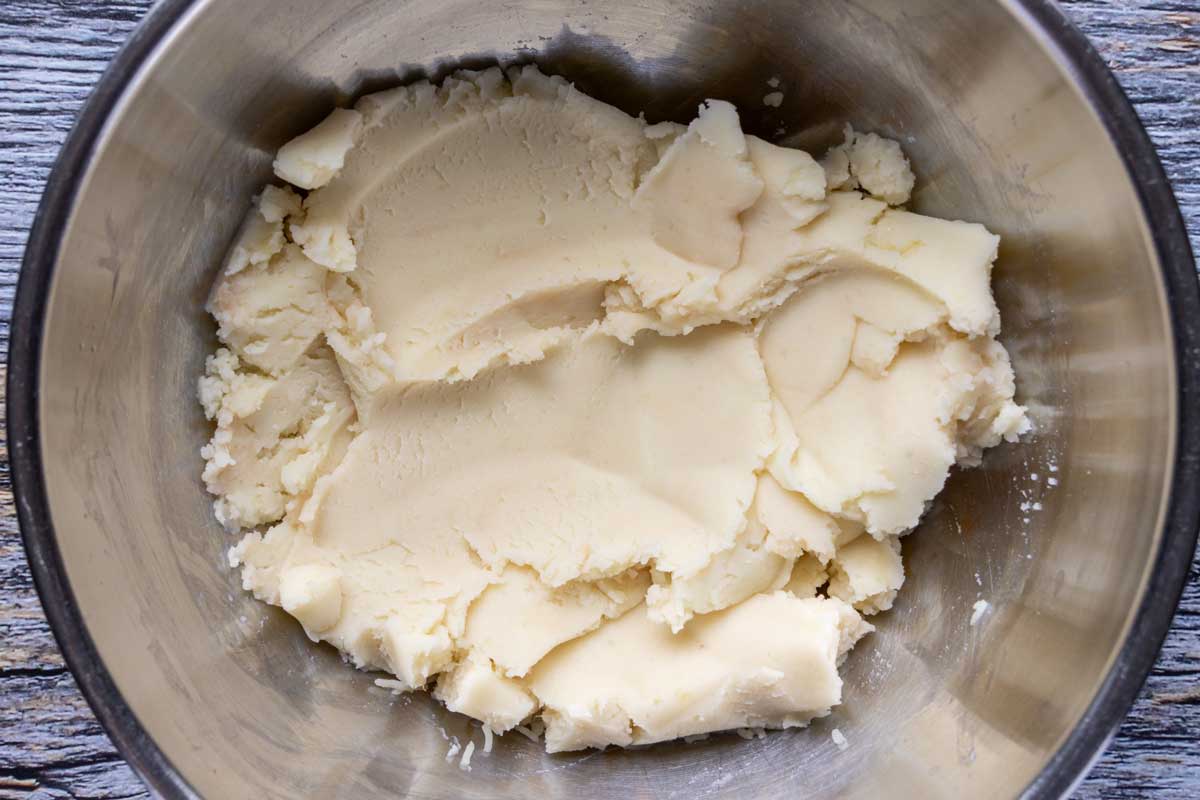
Stir until completely smooth. This may require mashing the mixture together as it will be quite thick.
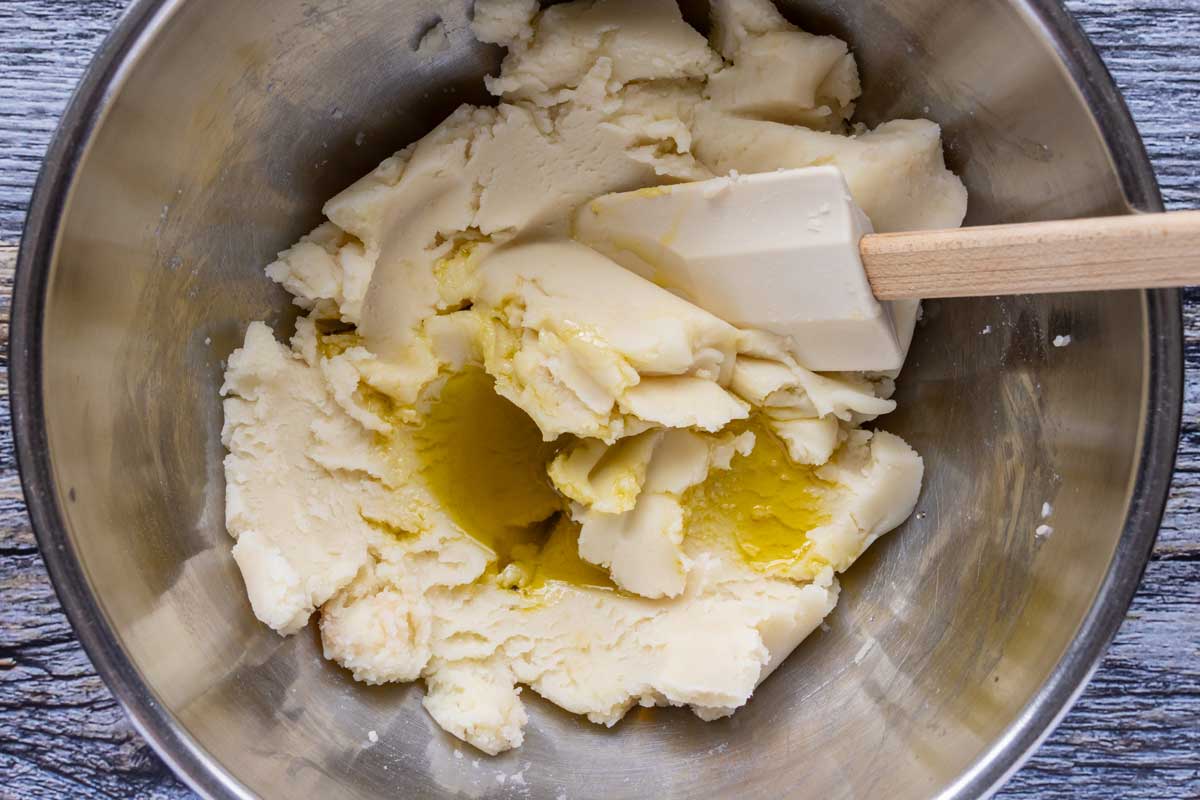
Drizzle in the olive oil a little at a time while stirring/mashing.
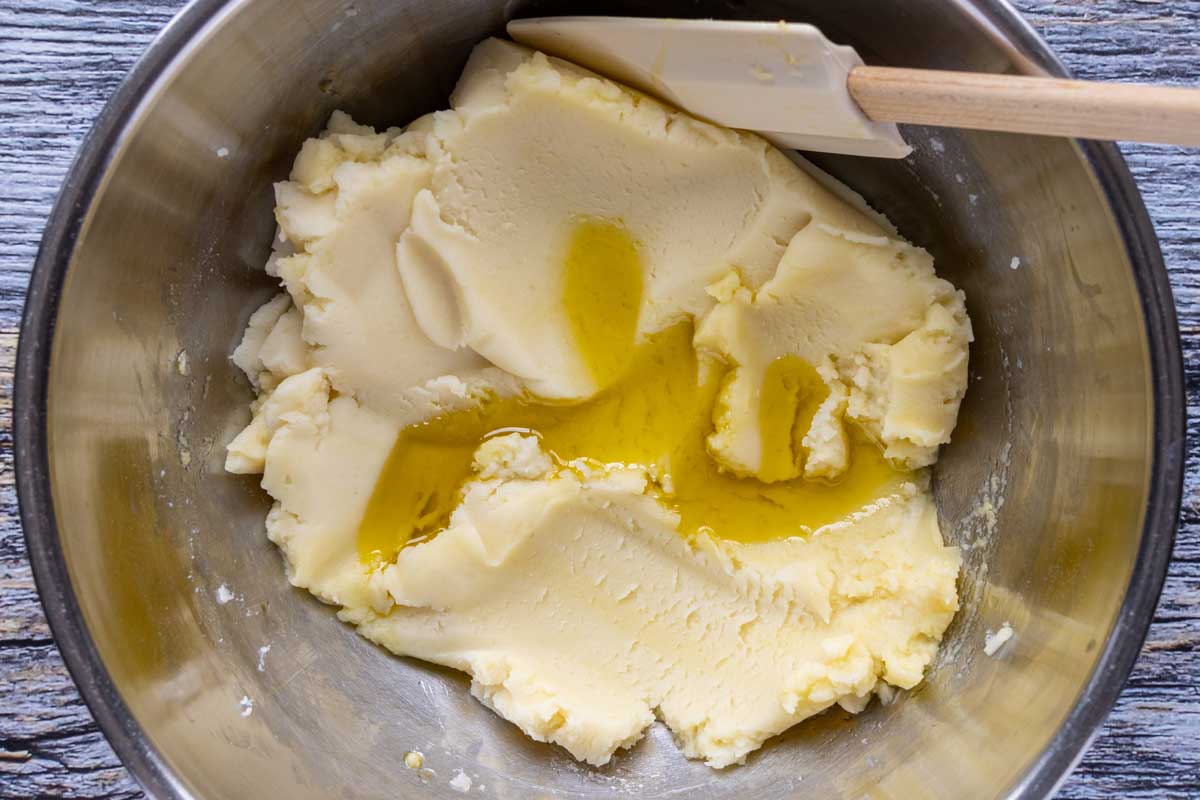
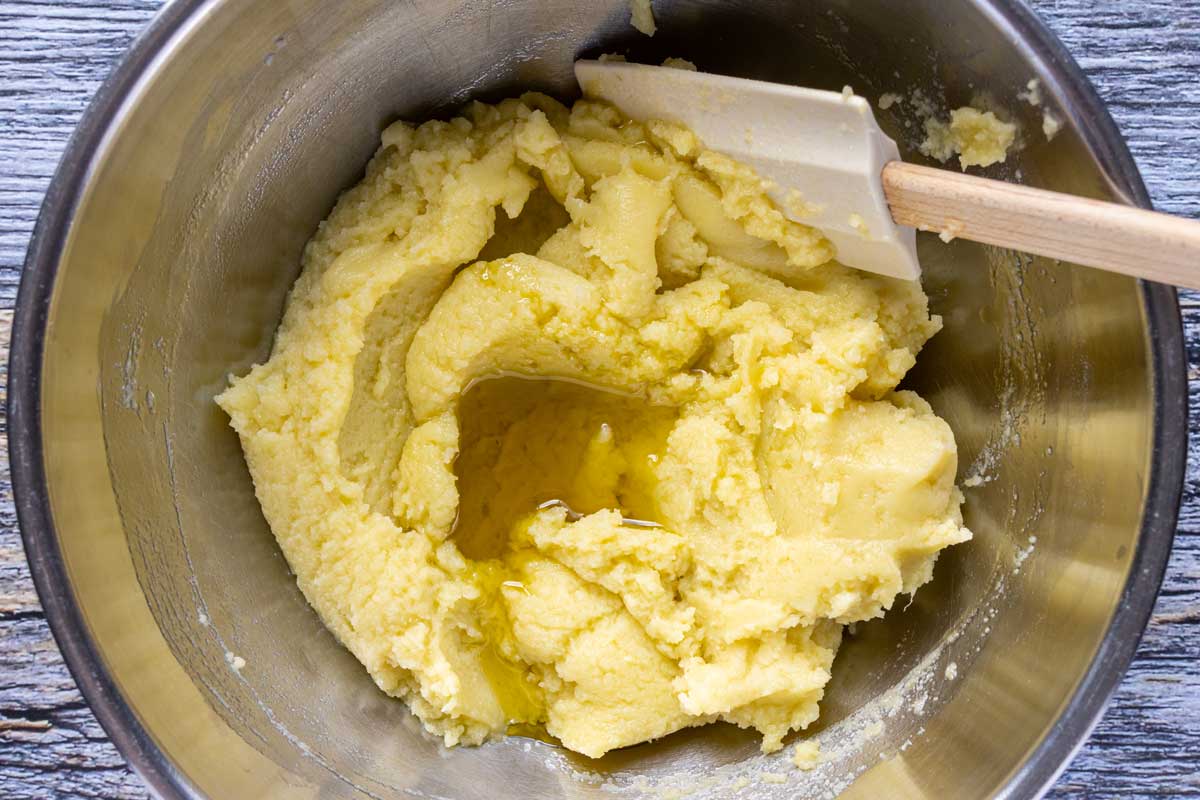
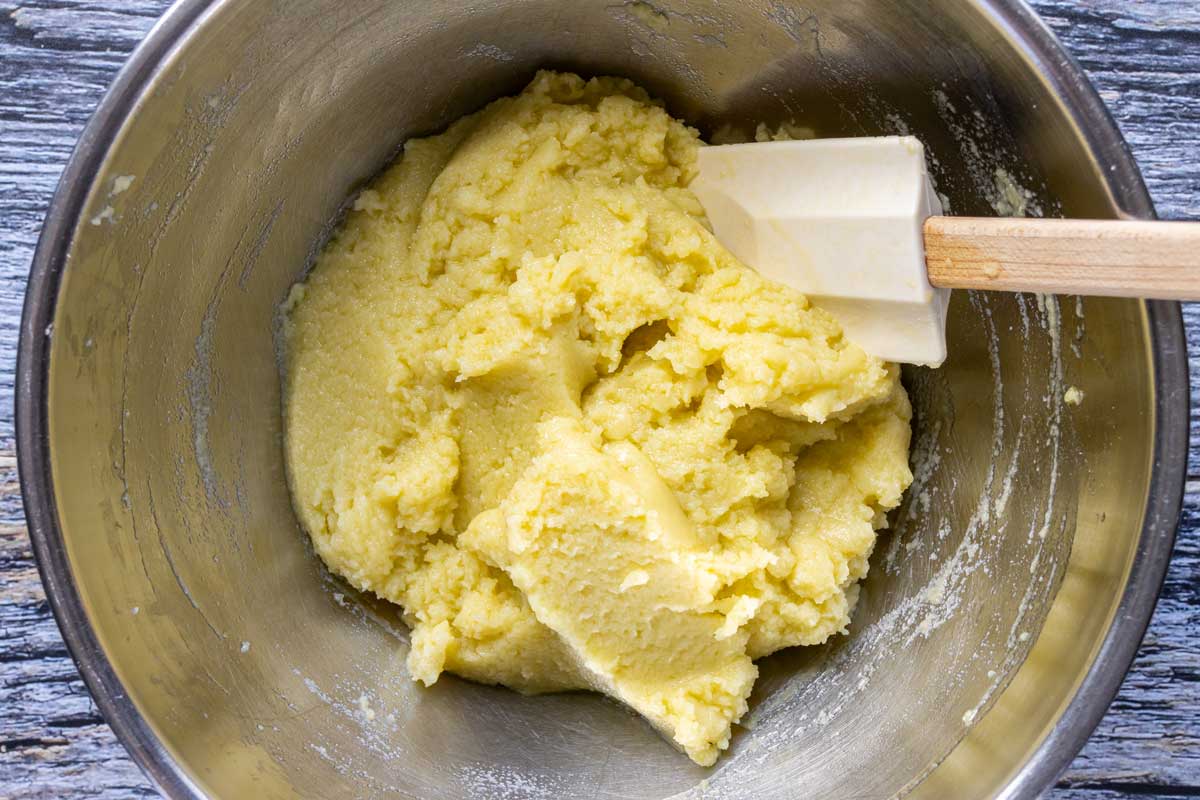
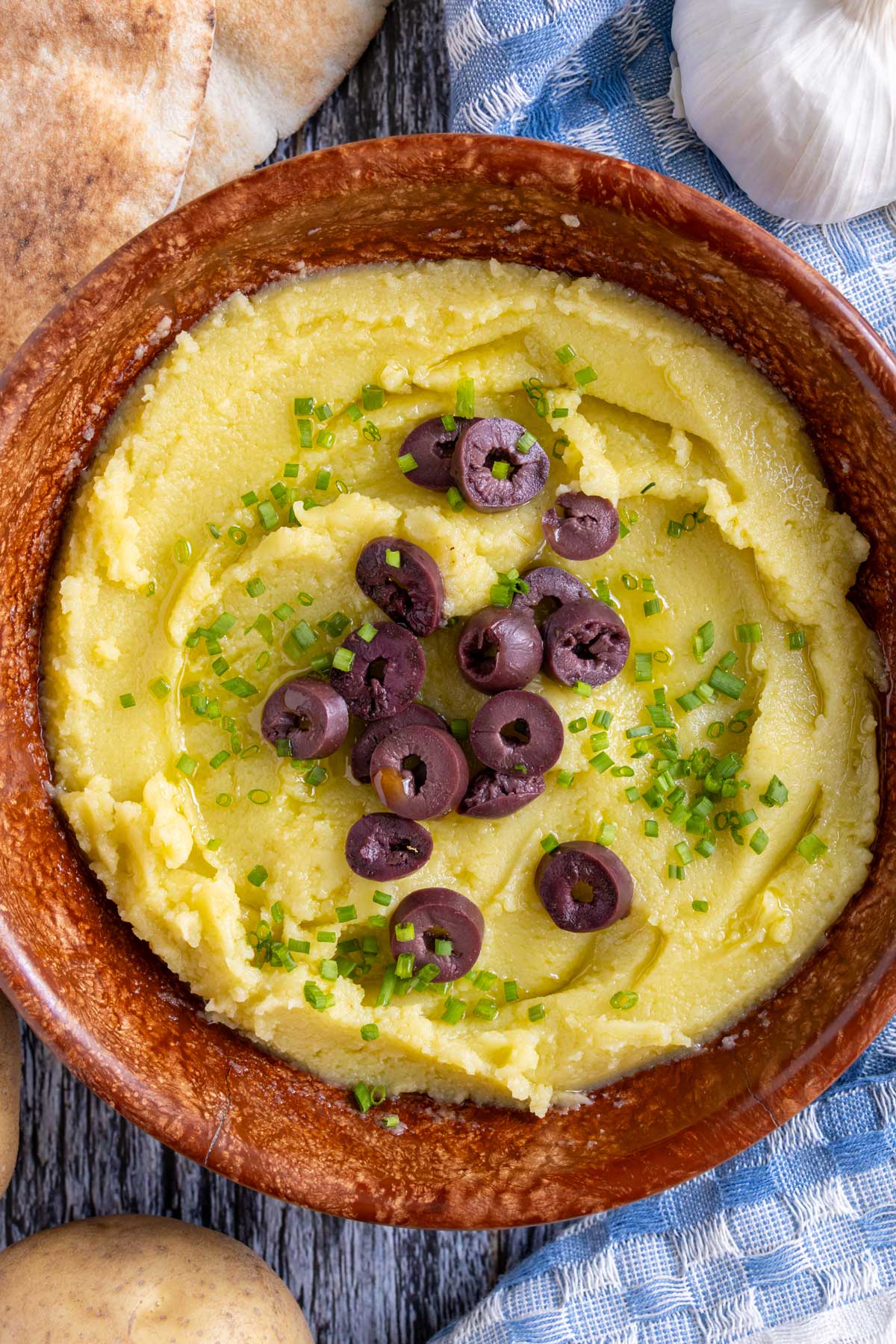
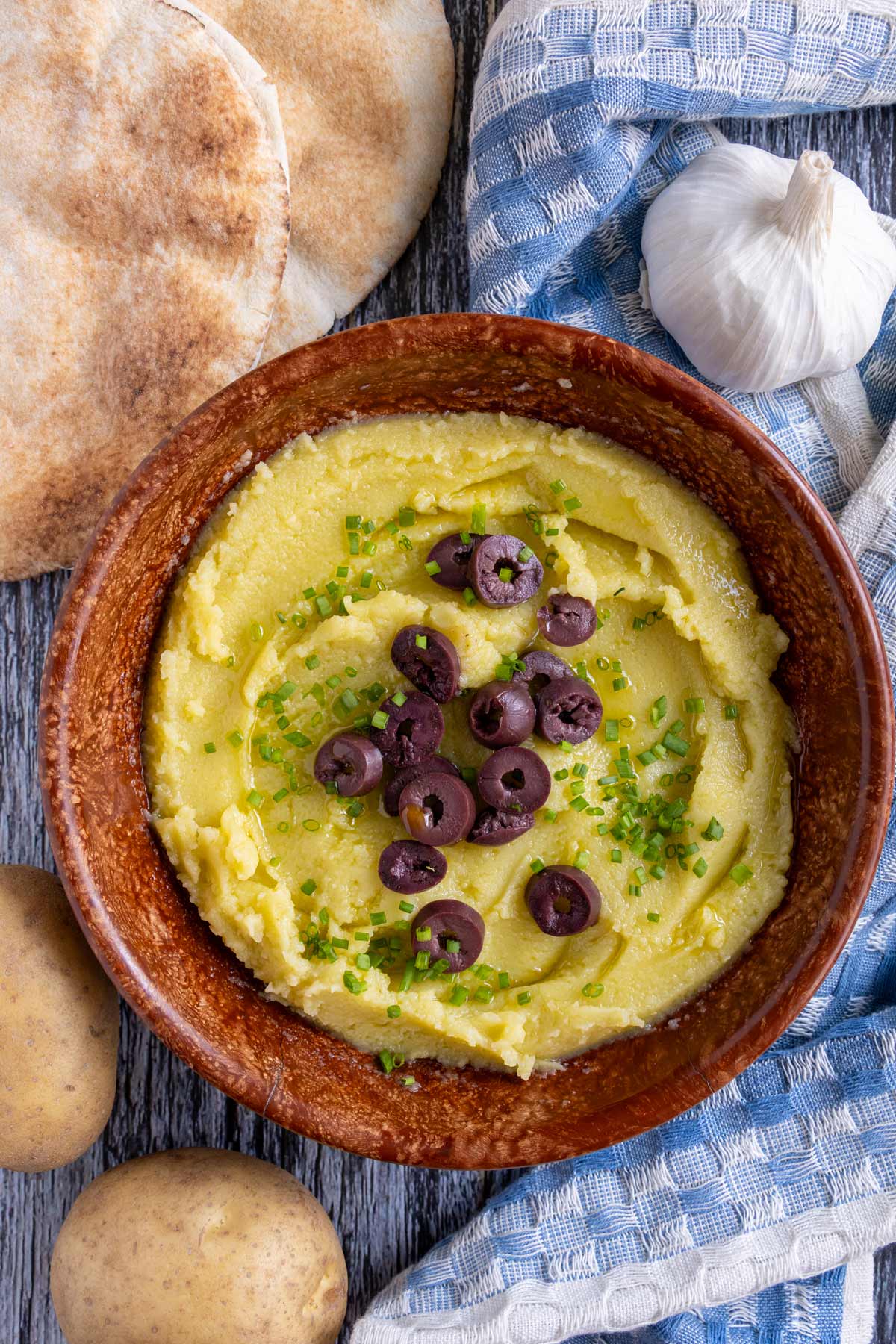
Taste and adjust seasoning as needed. Serve immediately, at room temperature, or cover and chill in the refrigerator until ready to serve. If desired, garnish with chopped chives, scallions, and/or sliced Kalamata olives.
Please scroll to the bottom of the post for the full recipe (in a printable recipe card) including ingredient amounts and detailed instructions.
Expert tips
Serve skordalia with pita bread, pita chips, or sliced baguettes for dipping or spreading, use it as a sandwich spread, or serve it as a side with fried or grilled fish or other meats. I like serving it with grilled chicken kebabs or chicken souvlaki.
Store leftover skordalia in an airtight container in the refrigerator for 4 to 5 days. Note that the garlic flavor can get more potent over time. If the skordalia has gotten too firm in the refrigerator, even after leaving out to come back to room temperature, stir in a little hot water to adjust the consistency.
Skordalia is traditionally made with a big mortar and pestle, however there are more modern ways to do it. I love using my food mill to get super smooth mashed potatoes, but a regular potato masher will work too.
If you don't have a small mortar and pestle for mashing the garlic into a paste, there are other ways you can get similar results that will work just fine for the purpose at hand.
- Mash the garlic with a big pinch of salt in a mortar and pestle until you have a paste.
- Pass it through a garlic press.
- Mince/mash the garlic into a paste by mincing on a cutting board, adding a big pinch of salt and crushing/scraping it with the side of a knife until smooth.
- Process the garlic with a big pinch of salt and the lemon juice and vinegar in a small but powerful food processor until smooth. You could also add some of the oil if needed to get the mixture smooth.
Other recipes you may like
- Zankou Chicken Garlic Sauce (Copycat Recipe)
- Garlic Noodles
- Volcano Fries (Garlic Fries with Sriracha Aioli and Furikake)
- Česnečka (Czech Garlic Soup aka Hangover Soup)
- Gambas al Ajillo (Garlic Shrimp)
- Horiatiki (Greek Salad)
Tried this recipe? Please leave a star ⭐️⭐️⭐️⭐️⭐️ rating in the recipe card below and/or a review in the comments section further down the page. You can also follow me on social media on Facebook, Instagram, and Pinterest!

Skordalia (Greek Garlic and Potato Spread)
Ingredients
- 1 pound (455 grams) potatoes peeled and cubed (both Yukon golds or russets will work)
- Kosher salt
- 6 cloves garlic
- 1 tablespoon fresh lemon juice
- 1 tablespoon red wine vinegar
- ½ cup extra-virgin olive oil
Instructions
- Add the cubed peeled potatoes to a pot and cover generously with salted water. Bring to a boil and then lower the heat to simmer, cooking the potatoes until they are tender but not falling apart, about 10 to 15 minutes. Drain the potatoes in a colander.
- Meanwhile, prepare the garlic. Peel the cloves and if there is a green sprout inside any of your garlic cloves, remove it. Then, either 1) mash the garlic with a big pinch of salt in a mortar and pestle until you have a paste 2) pass it through a garlic press, 3) mince/mash the garlic into a paste by mincing on a cutting board, adding a big pinch of salt and crushing/scraping it with the side of a knife until smooth, or 4) process the garlic with a big pinch of salt and the lemon juice and vinegar in a small but powerful food processor until smooth (you could also add some of the oil if needed to get the mixture smooth).
- Either transfer the drained potatoes to a mixing bowl to mash them by hand with a potato masher or transfer to a food mill fitted with the finest disk or potato ricer (set over a mixing bowl) to process them into the smoothest texture.
- Add the garlic paste, lemon juice, vinegar, and season with salt. Stir until completely smooth (this may require mashing the mixture together versus stirring as it will be quite thick). Drizzle in the olive oil a little at a time while stirring/mashing, just to ensure it combines evenly and doesn't "break" or separate.
- Taste and adjust seasoning as needed. Serve immediately, or cover and chill in the refrigerator until ready to serve (bring back to room temperature before serving). The flavors will develop more the longer it sits. If desired, garnish with chopped chives, scallions, and/or sliced Kalamata olives.
Notes
- Potatoes: You could use any potatoes you might use for mashed potatoes. Common options would be Yukon gold (a flavorful waxy style potato) or russets (soft and pillowy floury potatoes). Either will work in this recipe, but keep in mind that floury potatoes like russets are more apt to fall apart easily if you overcook them.
- Garlic: Because the garlic isn't cooked in this recipe and can have a strong/sharp flavor, make sure you use the freshest you can get. If your garlic has sprouted, remove the green sprout from the center before using it.
- Olive Oil: Ideally, use the best quality extra-virgin olive oil you can get/afford. You will be using quite a lot and it's an important element to the dish so make sure it tastes really good!
- Acid: Although you could use either fresh lemon juice or red wine vinegar, I am using both here because each type of acid provides its own unique flavor, and both are very common ingredients in Greek cooking.
- Storage: Store leftover skordalia in an airtight container in the refrigerator for 4 to 5 days. Note that the garlic flavor can get more potent over time. If the skordalia has gotten too firm in the refrigerator, even after leaving out to come back to room temperature, stir in a little hot water to adjust the consistency.
Nutrition
*All nutritional information is based on third-party calculations and should be considered estimates. Actual nutritional content will vary with brands used, measuring methods, portion sizes and more.*



Mimi Rippee says
I’ve made this and it’s fabulous!