

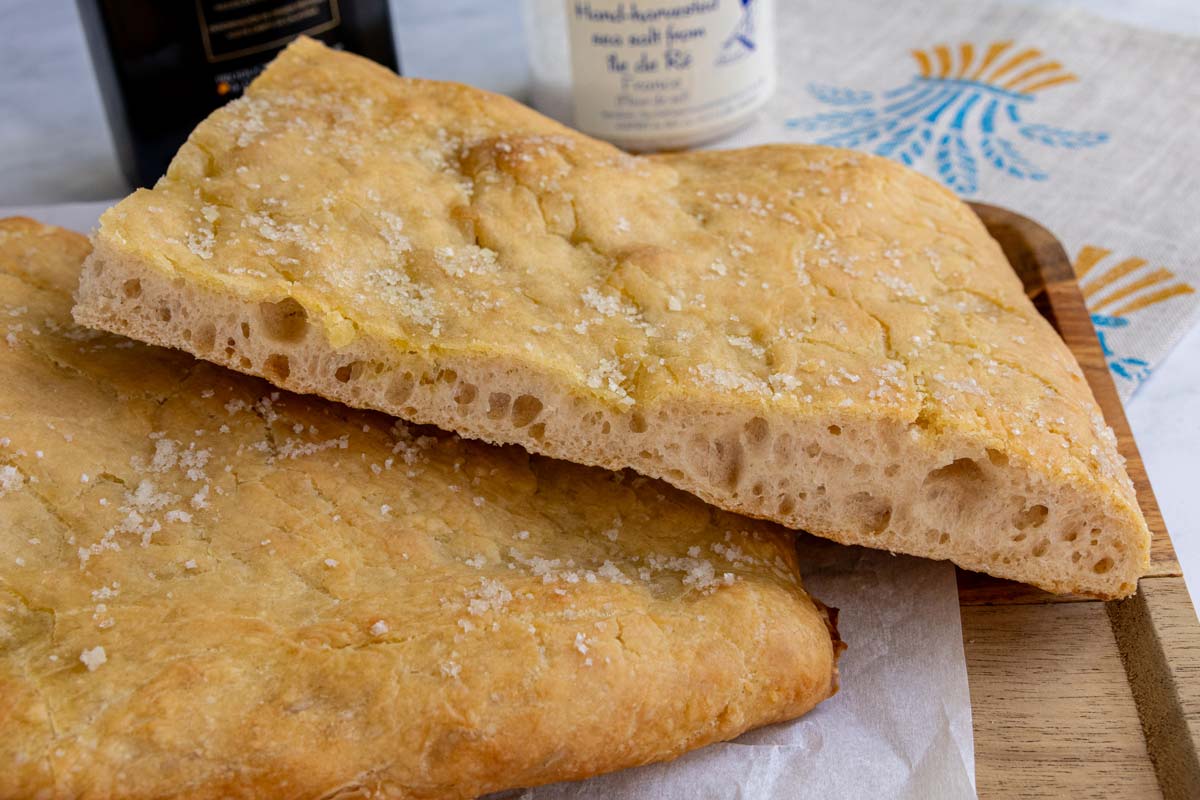
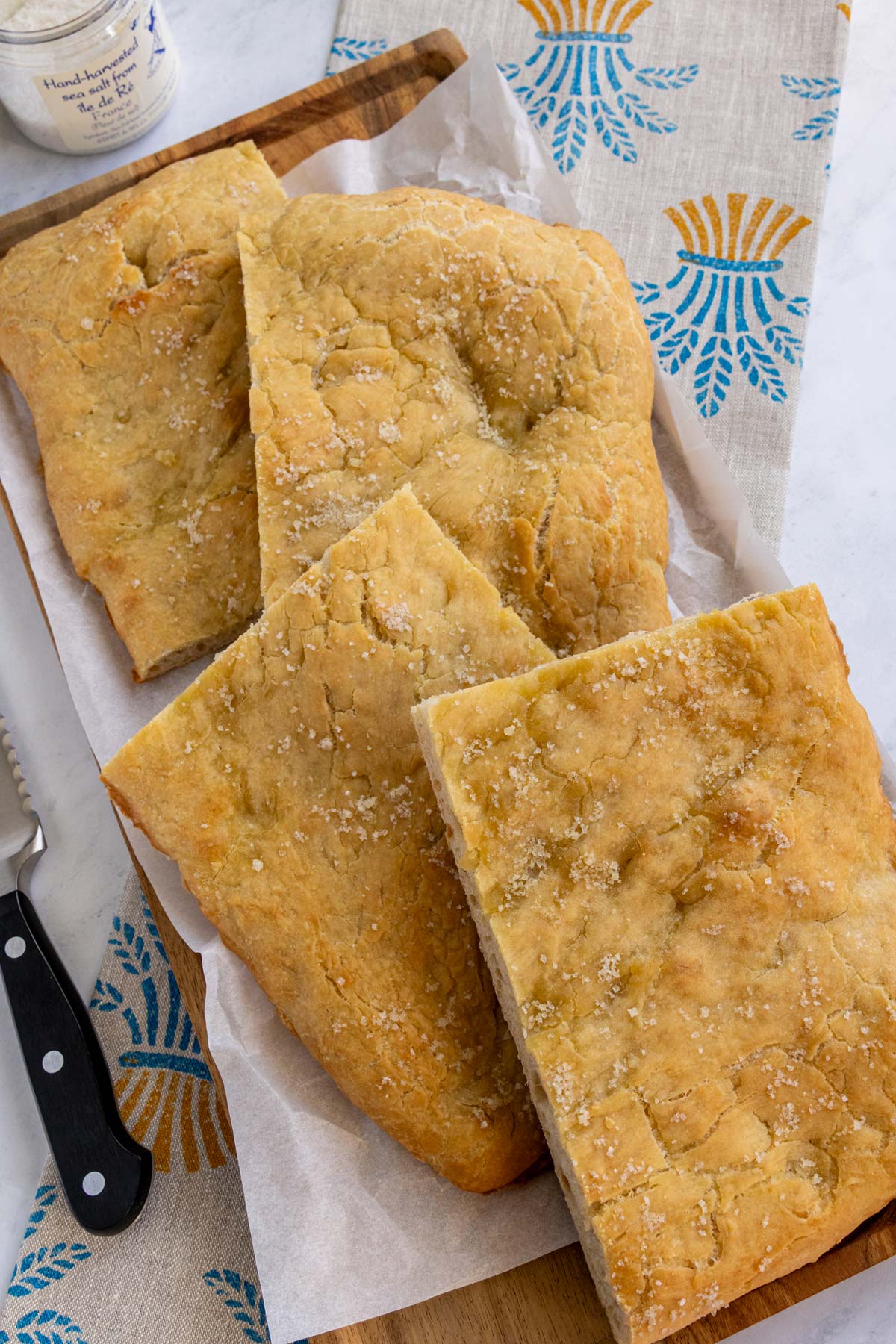
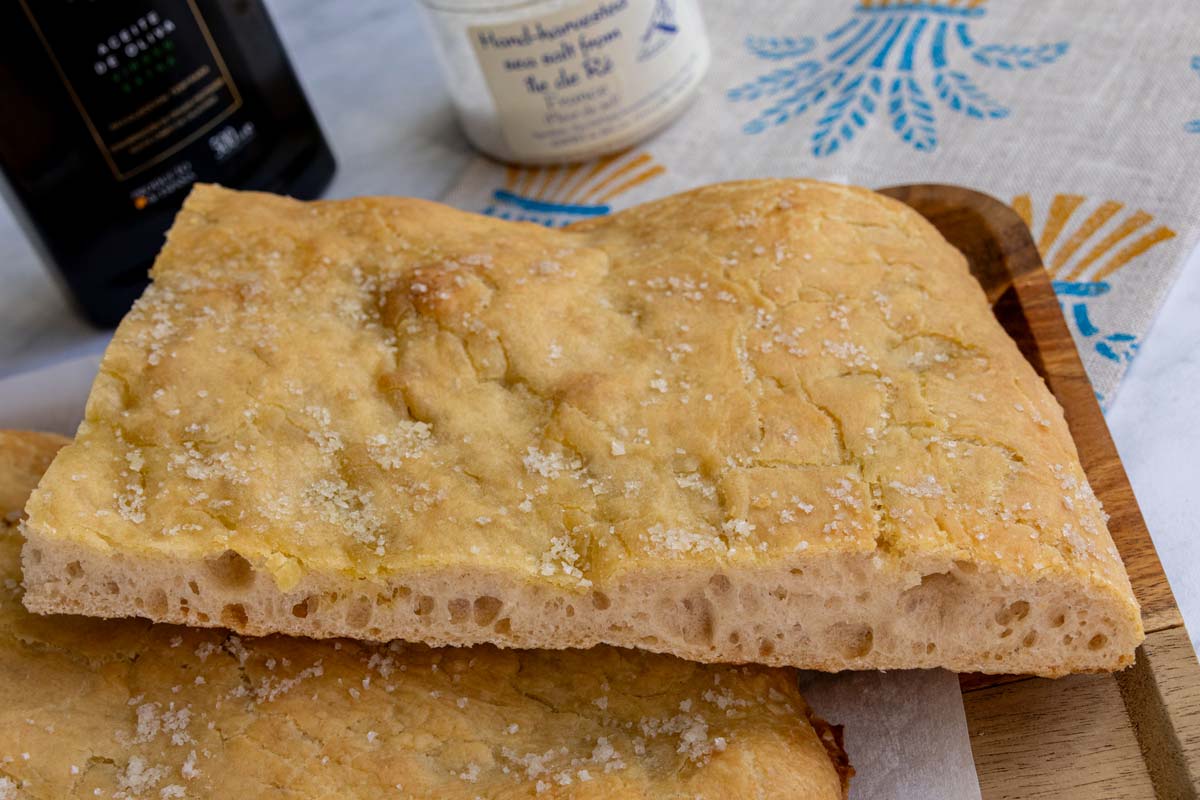
Pizza Bianca is a term often used to describe a white pizza (pizza made without a red sauce), however it's also the name of a fabulous Roman flatbread. This incredible bread features a crisp, golden crust and an open, airy interior full of wide holes.
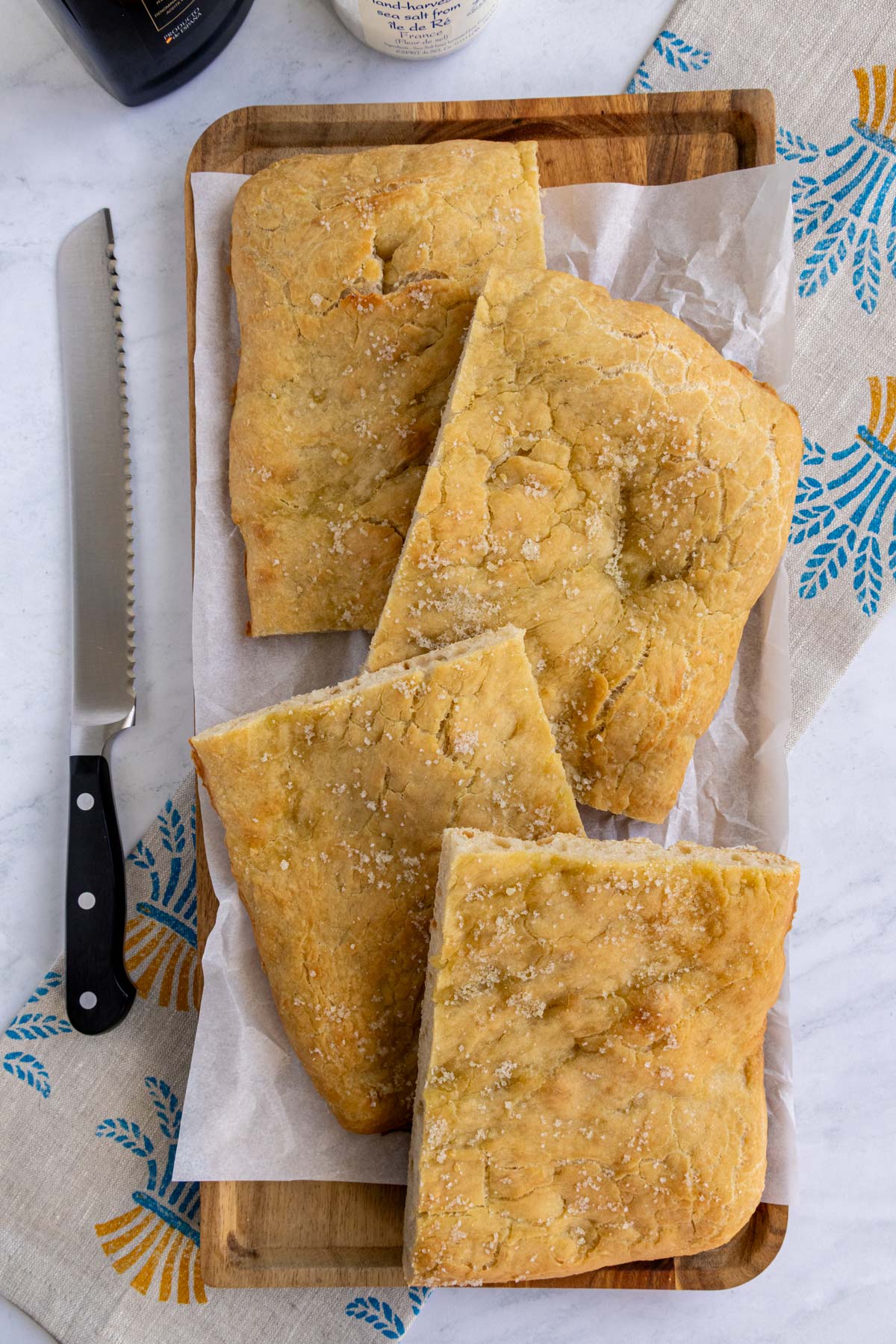
Pizza bianca is typically baked directly on the floor of a searing hot pizza oven, much like Neapolitan pizzas. This homemade version begins by baking the pizza in a sheet pan and then transfers to a hot pizza stone. This is much easier than attempting to transfer a large, flat, wet dough from a pizza peel or cutting board directly into the oven without more support beneath it.
While pizza bianca might initially resemble focaccia, their differences are fundamental. Focaccia is baked entirely in a sheet pan and made with an enriched dough containing olive oil, resulting in a softer, moister texture. In contrast, pizza bianca is baked in a pizza oven or on a hot pizza stone. It uses a lean dough, giving it significantly more chew and an overall crispier texture.
Allowing the dough to have a long, slow rise at room temperature gives it much more flavor. Meanwhile, using a wetter dough gives it a great texture with lots of wide, airy holes. Try to just give the dough the time it needs rather than rushing through the process, especially since much of the time is hands-off. It's definitely worth it!
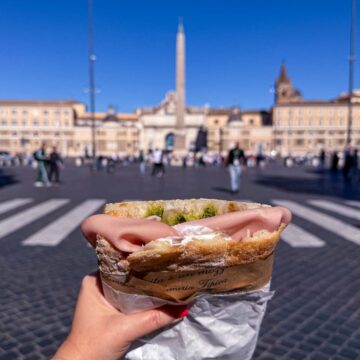
Although I enjoyed pizza bianca in Rome served simply as bread at dinner, I also had it made into a sandwich. In fact, it was one of my favorite sandwiches I've ever eaten. The incredible texture of the pizza bianca was a big part of why the sandwich was so memorable. Try using pizza bianca the next time you make panini! You won't regret it.
Ingredient notes
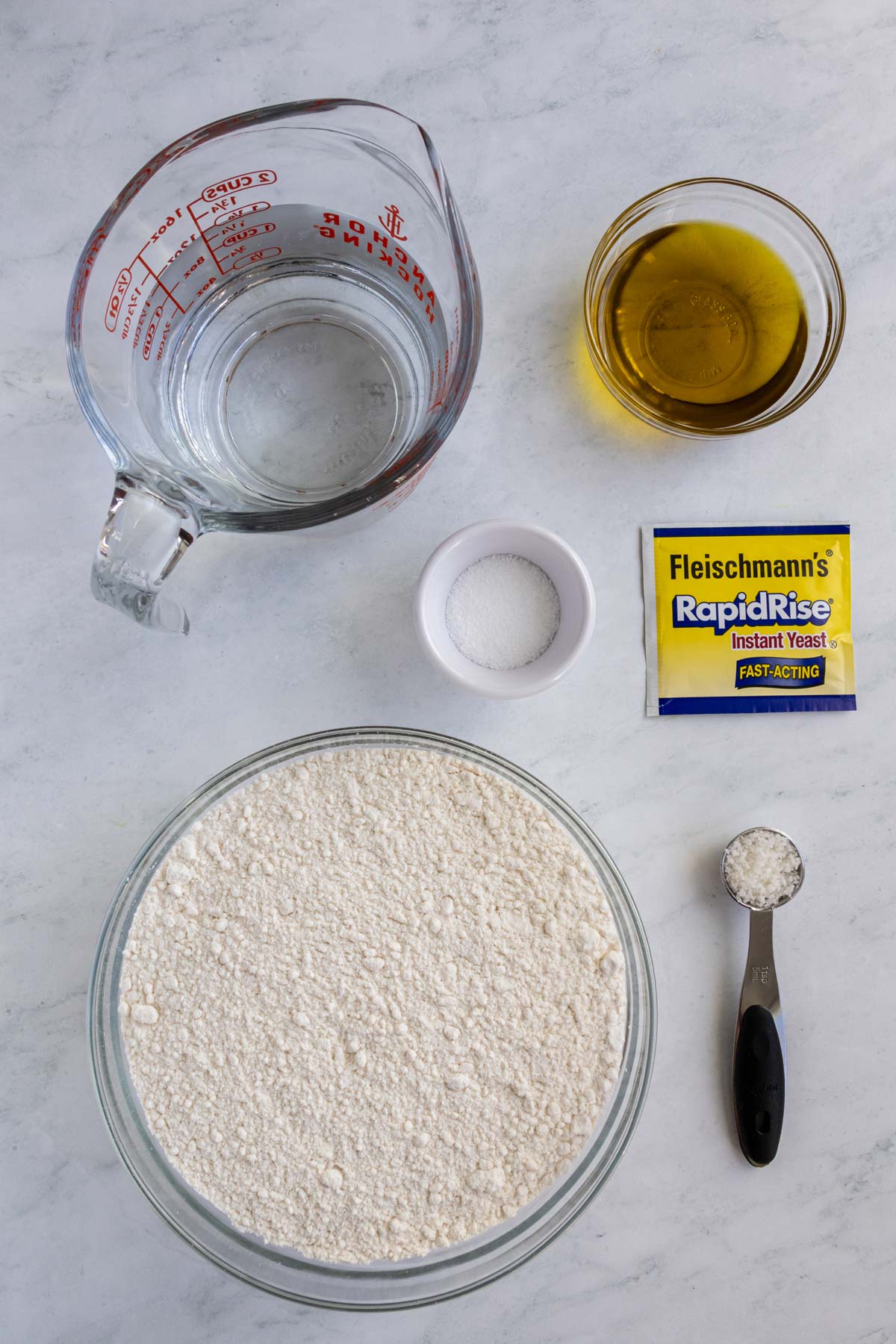
- Flour: All-purpose flour works perfectly fine for this pizza bianca. No need to get bread flour.
- Yeast: One of the benefits of instant or rapid-rise yeast is that you can stir it right into your flour mixture and you don't need to bloom it in warm water. It still does the job but cuts out an extra step. If all you have is regular active dry yeast, you can bloom it in some very warm but not hot water for about 5 minutes before adding to the flour mixture. Just make sure the water isn't very hot because that can kill the yeast.
- Extra-Virgin Olive Oil: This is one of those times you want to use the best olive oil you have in your pantry. You don't need a lot, just enough to give the bread a nice coating all over the top.
How to make it
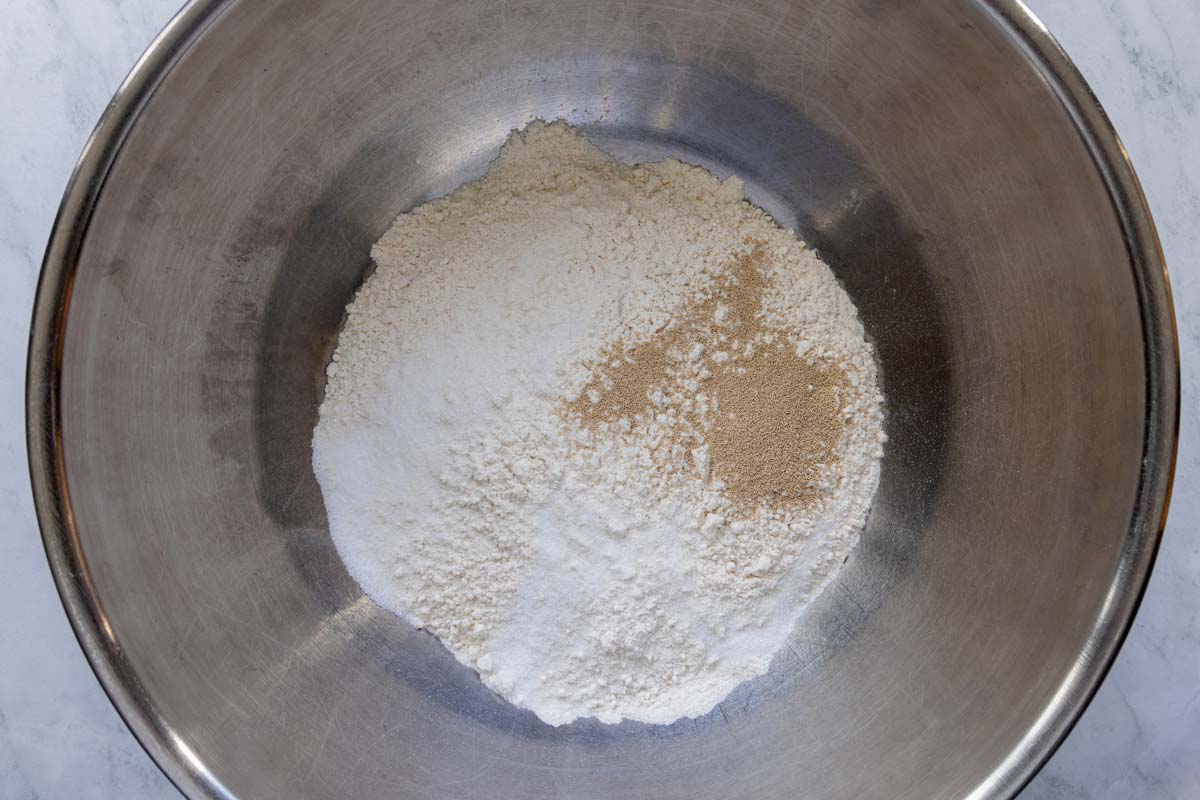
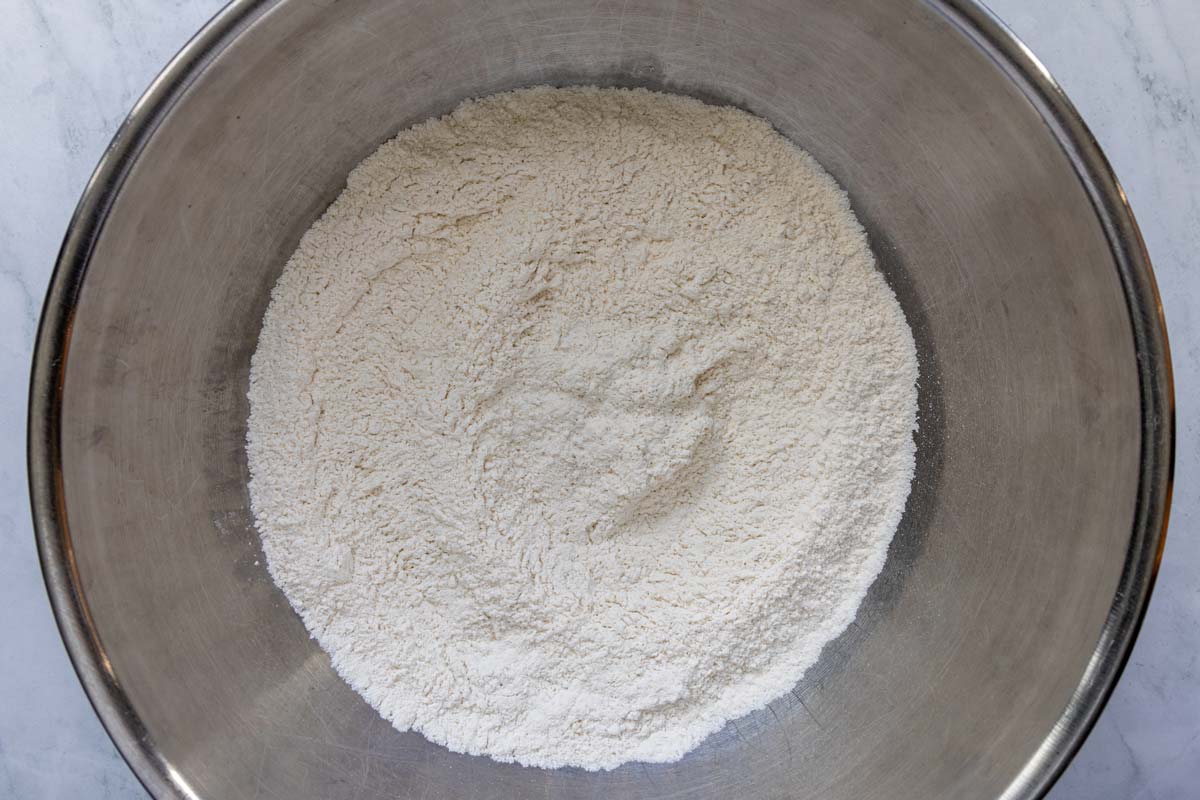
Whisk together flour, salt, and yeast in a large mixing bowl.
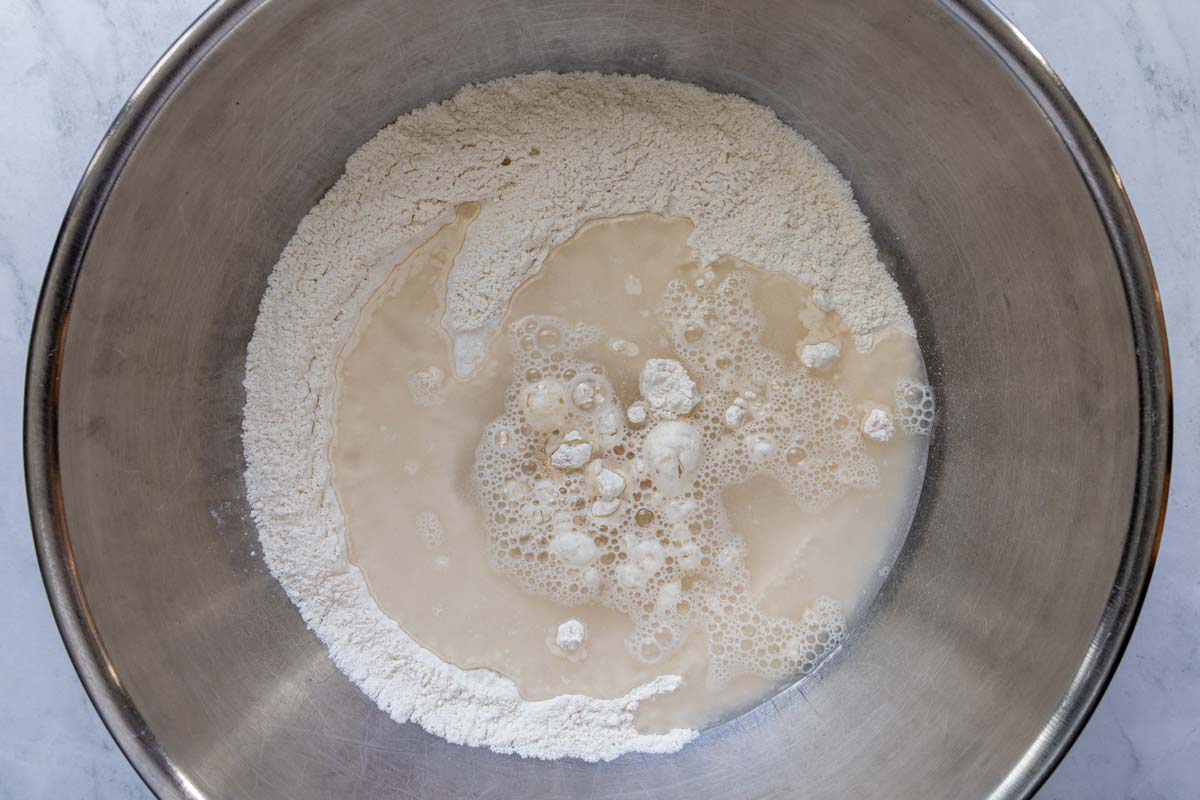
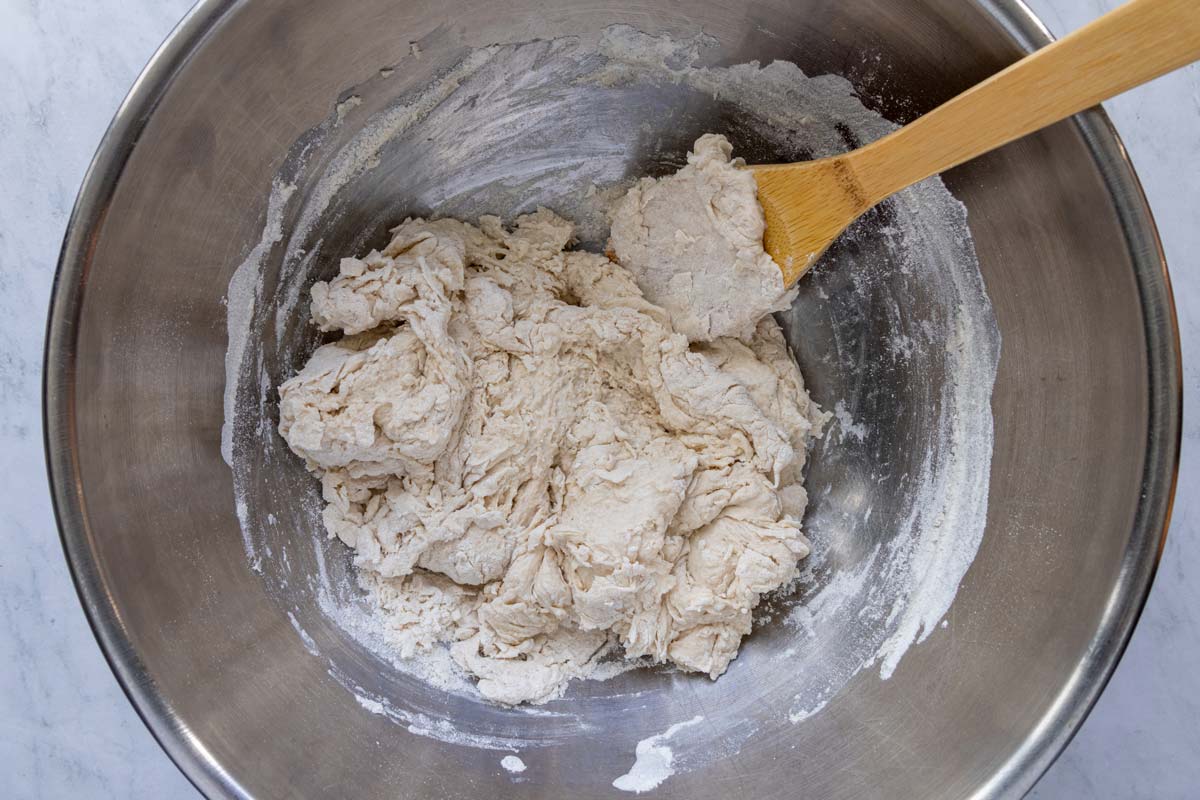
Stir in water until no dry patches remain. It will be quite sticky.
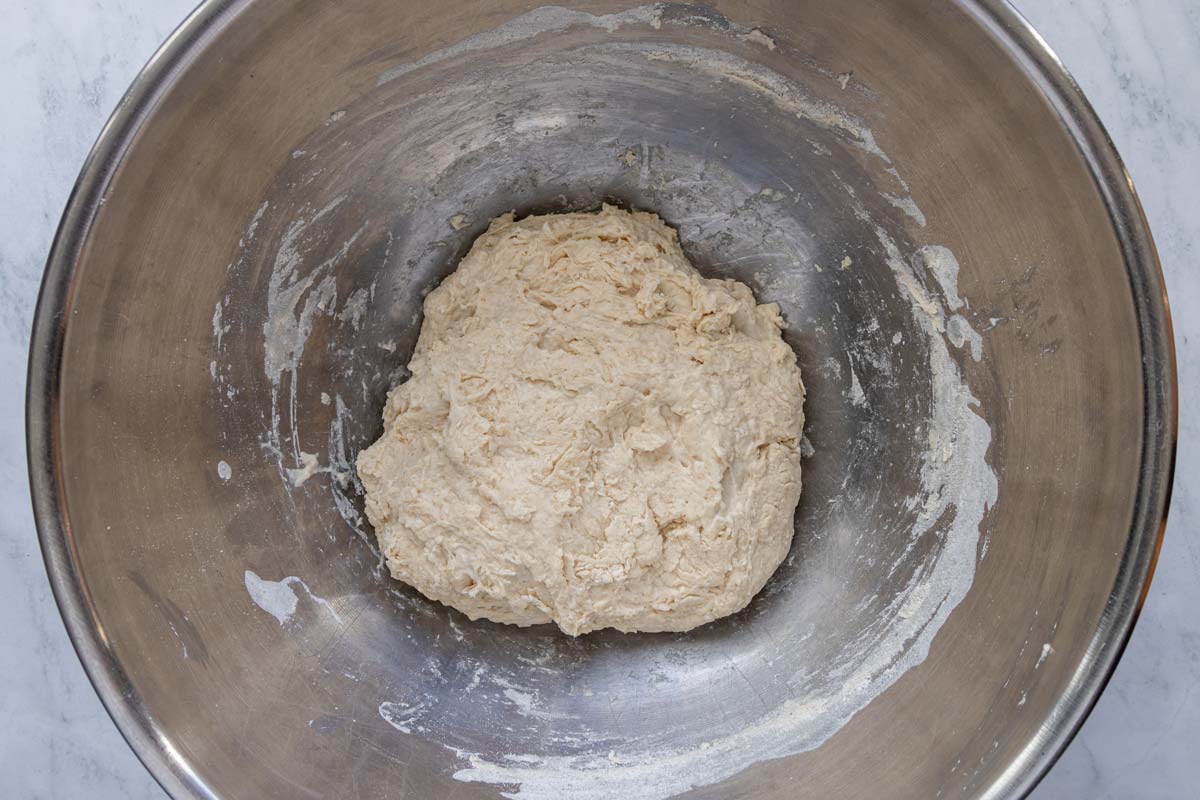
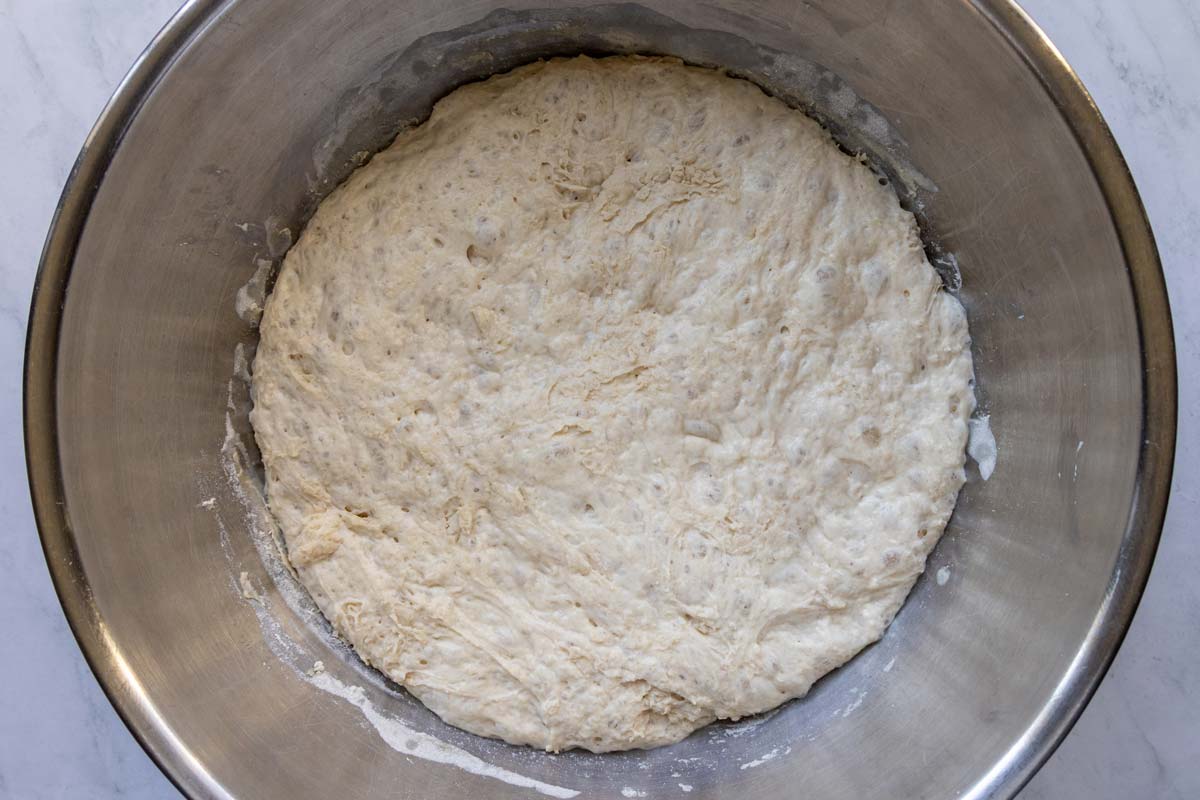
Cover the bowl with plastic wrap and let it sit out at room temperature overnight, or for at least 12 to 16 hours.
Line a baking sheet with parchment paper and dust with flour. Scrape the dough onto the parchment paper. With floured hands, gently stretch it to the edges of the baking sheet into a large rectangle (about 10-by-14-inches). If it's difficult to stretch and springs back, let it rest for 5 minutes and then try stretching again.

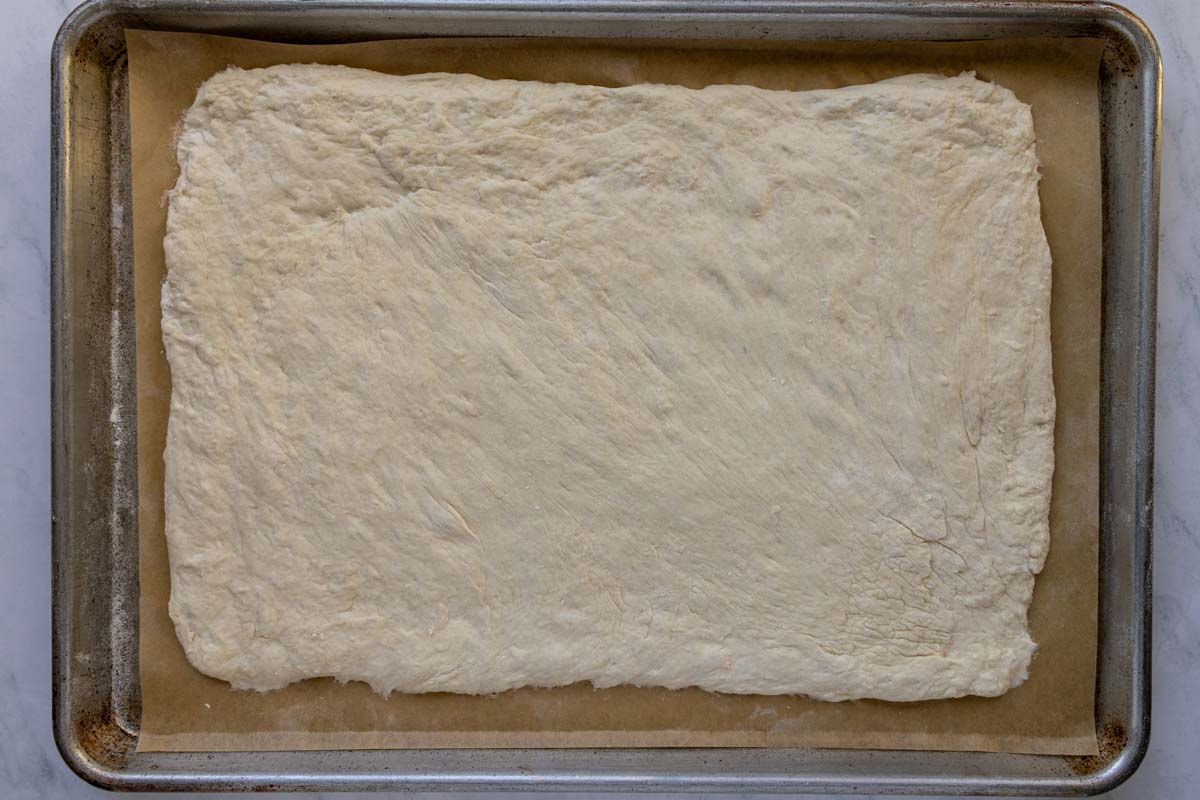
Loosely cover with a clean kitchen towel or plastic wrap and let it rise at room temperature for 1 hour.
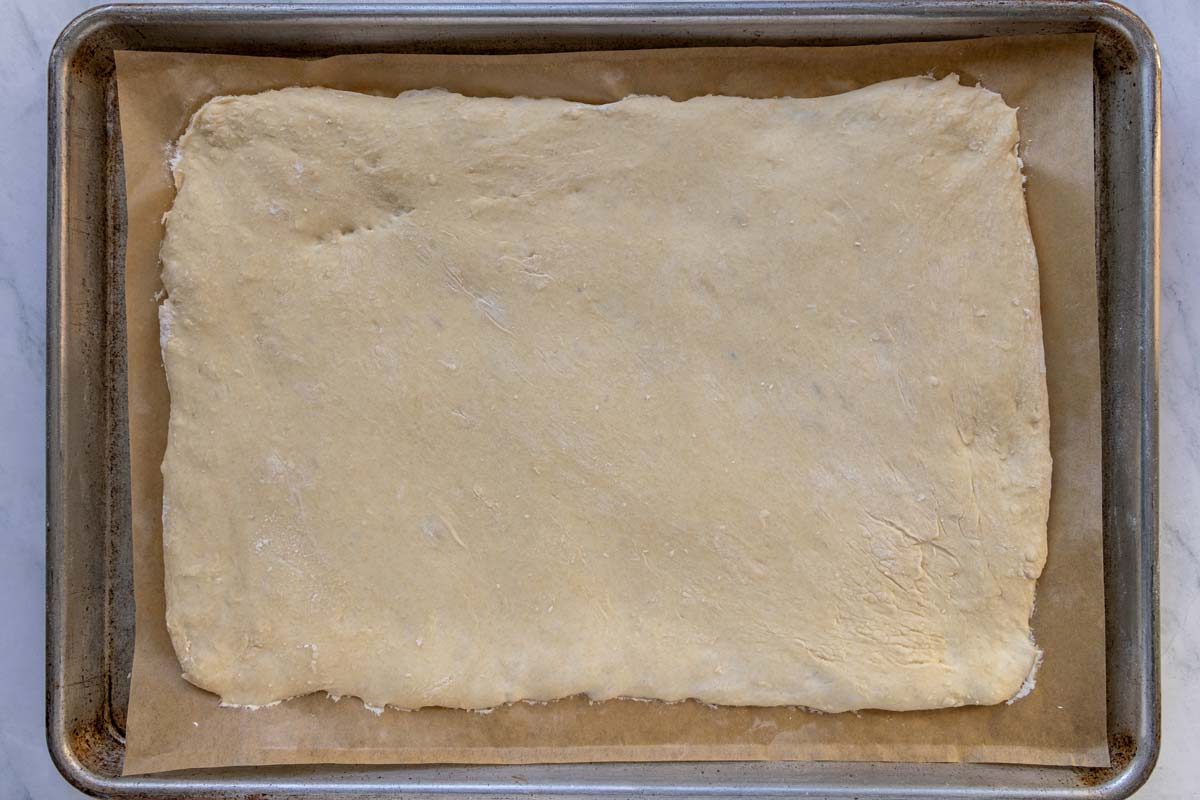
Meanwhile, at least 1 hour before baking, place a thick baking stone on the middle rack of the oven. Preheat to 550°F (280°C) or the highest temperature it goes up to.
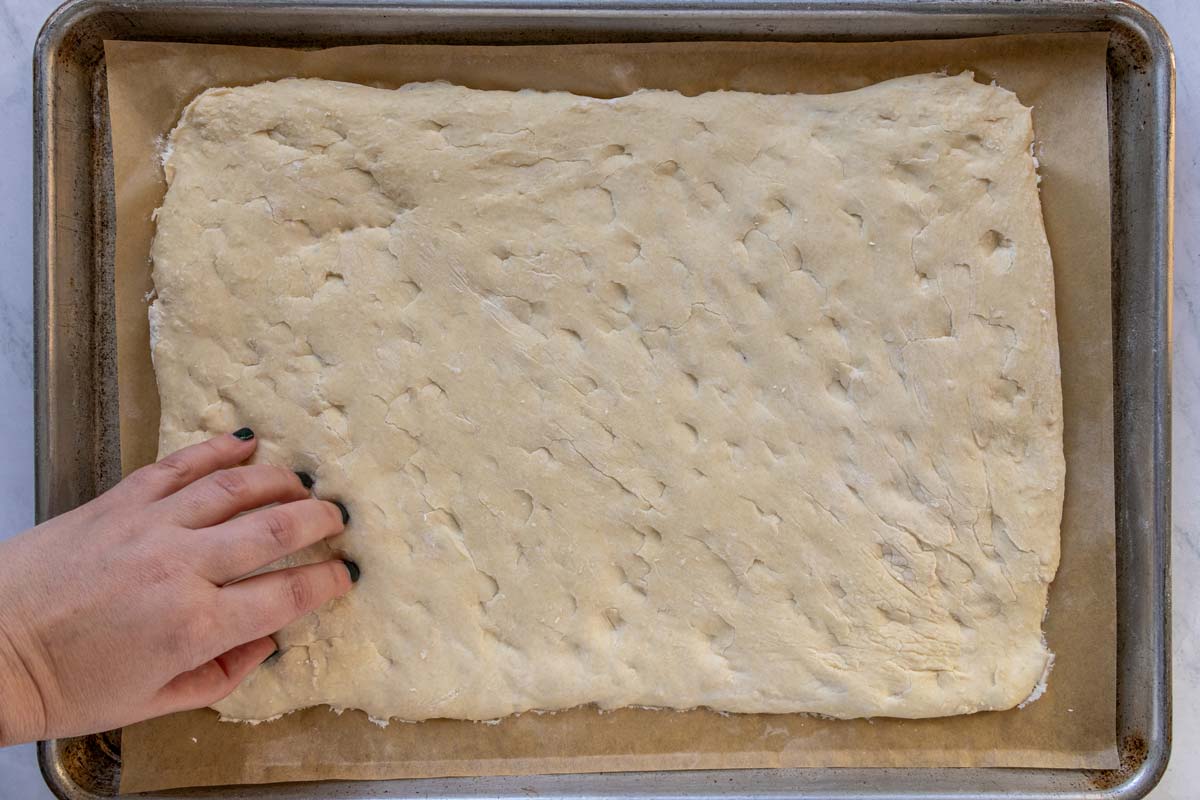
When ready to bake, dimple the top of the dough with your fingertips and drizzle the top with the olive oil, spreading it evenly with your hands. Then sprinkle with the flaky sea salt.
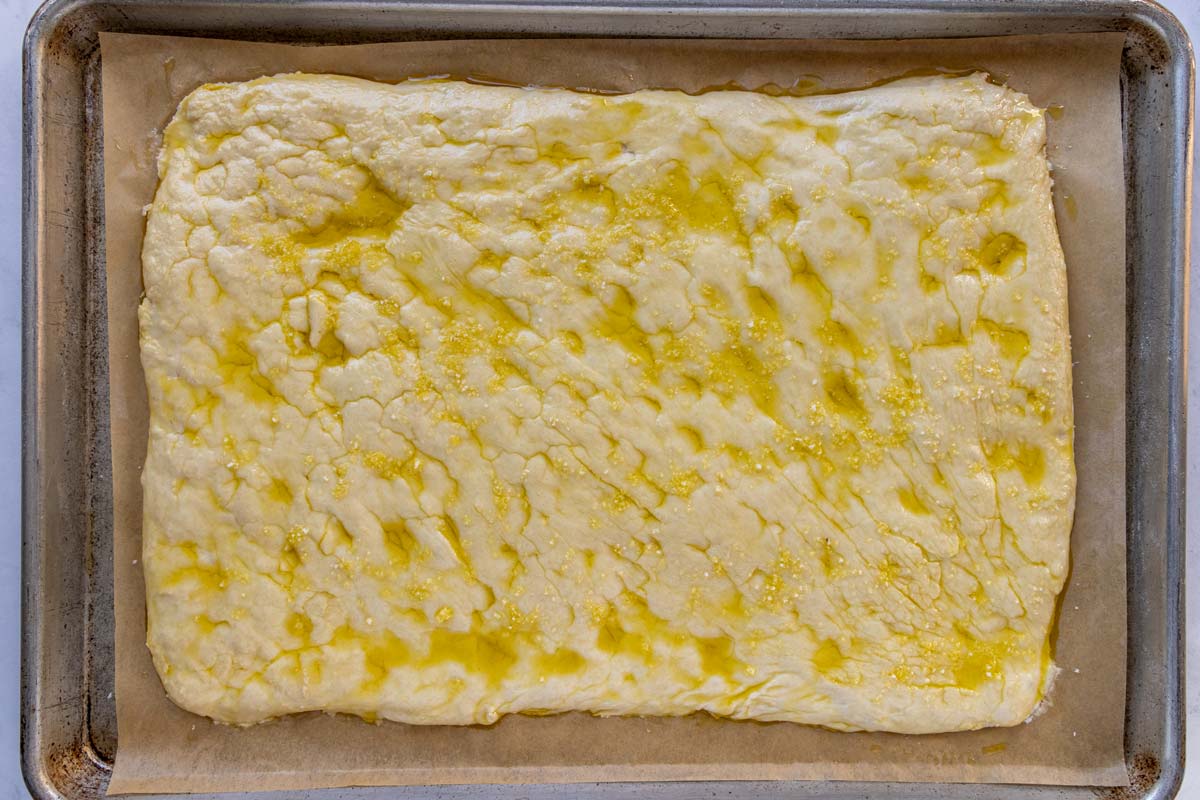
Transfer the baking sheet with the dough to the oven and place on top of the hot pizza stone. Bake for 5 minutes until the dough is firm.
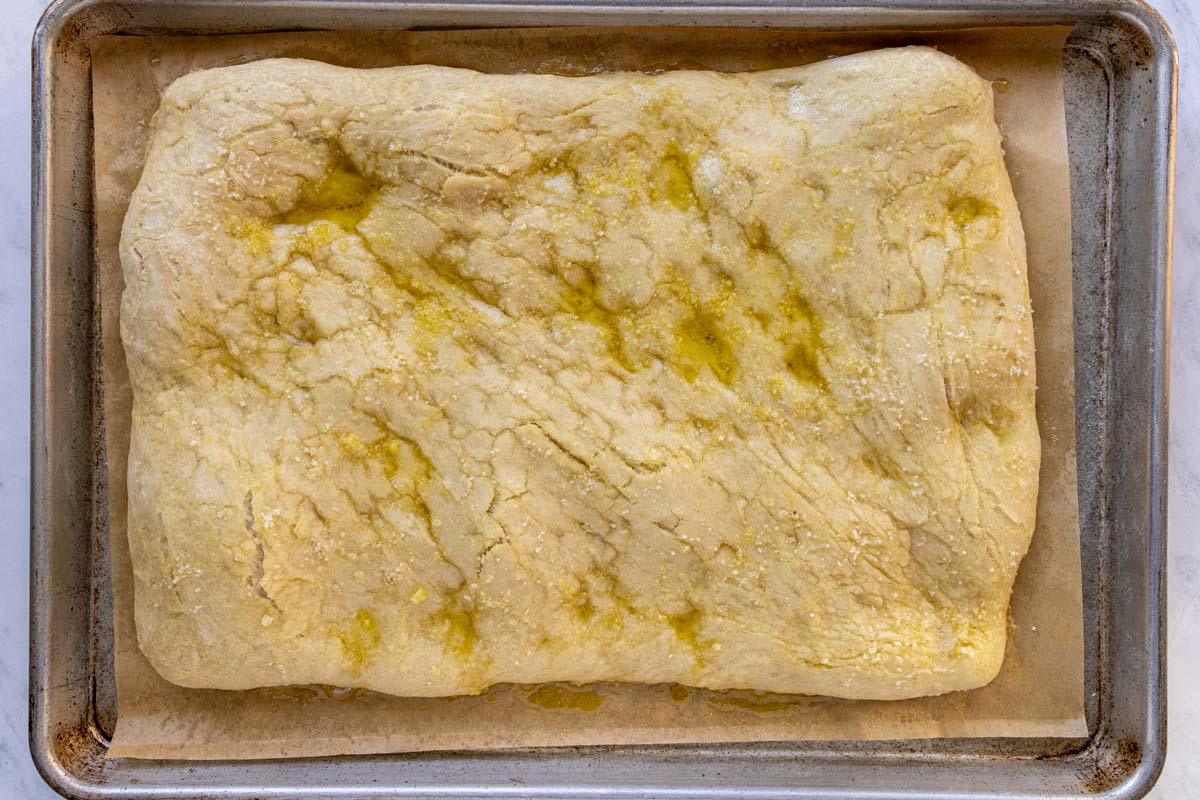
Remove the pan from the oven, slide the pizza from parchment onto a pizza peel or a cutting board, and slide it back onto the pizza stone, discarding the parchment.
Bake for another 10 minutes (or longer if your oven heat is lower than 550°F) or until golden brown and crispy. Transfer to a cutting board and use a serrated knife to cut into square or rectangular pieces as desired.
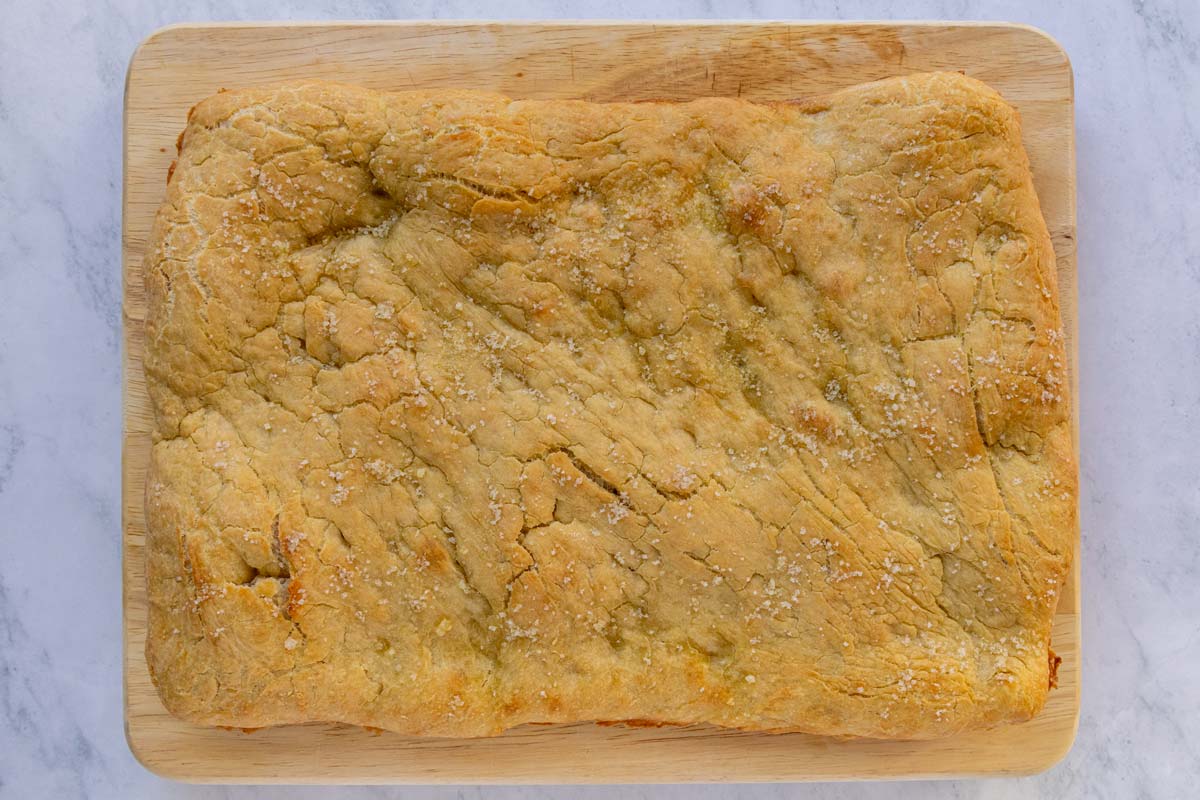
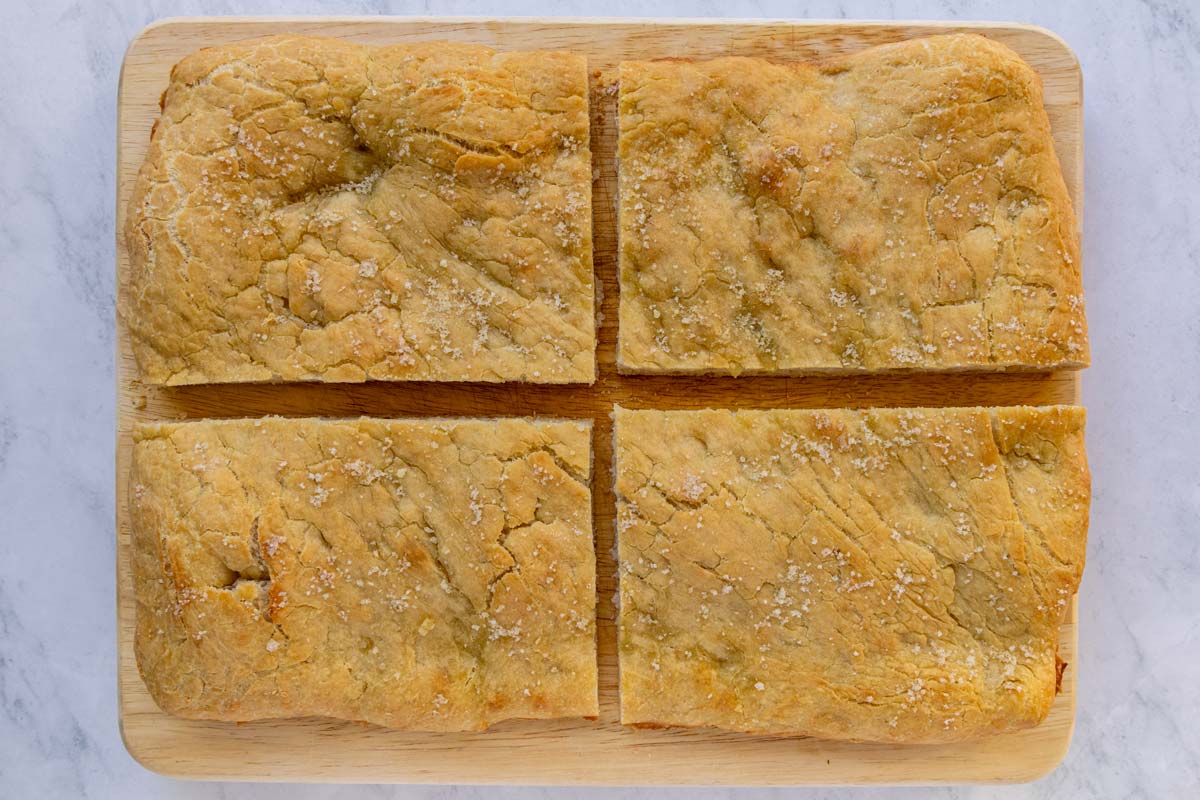
If you're using this pizza bianca for sandwiches, split each piece in half along the equator to add fillings.
Please scroll to the bottom of the post for the full recipe (in a printable recipe card) including ingredient amounts and detailed instructions.
Expert tips
As with any baking recipe, but especially bread baking, I highly encourage you to use the weight measurements as opposed to the volume measurements, even though I've included them. Weighing in grams is the most accurate way to bake. Invest in a digital scale if you don't have one. It's one of the most important kitchen tools one can have.
Pizza bianca will have the best texture the day it is baked. You can wrap and store it at room temperature for a couple days but the texture will change (the crust will soften). If you plan to use it for hot sandwiches, it will crisp back up a bit in a panini or sandwich press when you heat up your sandwiches.
You can enjoy this pizza bianca as a bread on its own rather than as a sandwich bread. In this case, try adding some chopped fresh rosemary over the top along with the flaky sea salt before baking.
Other recipes you may like
- The Best Mortadella Sandwich in Rome
- Pinsa Romana (Roman-Style Pizza)
- Rigatoni all' Amatriciana
- Spaghetti alla Carbonara
- Authentic Bucatini Cacio e Pepe (Roman Cheese and Pepper Pasta)
- Pizza Marinara (Cheeseless Pizza)
- Corn and Tomato Pizza
- Italian Stromboli with Soppressata, Rapini, and Provolone
- Flammkuchen / Tarte Flambée (German Pizza with Bacon and Onions)
Tried this recipe? Please leave a star ⭐️⭐️⭐️⭐️⭐️ rating in the recipe card below and/or a review in the comments section further down the page. You can also follow me on social media on Facebook, Instagram, and Pinterest!
Pizza Bianca (Roman Flatbread)
Ingredients
- 500 grams (4 cups) all-purpose flour plus more for dusting
- 10 grams (1 tablespoon) kosher salt preferably Diamond Crystal brand (if using Morton, you may need half the amount in volume)
- 5 grams (1 ½ teaspoons) instant or rapid-rise yeast
- 375 grams (1 ½ cups + 3 tablespoons) water at room temperature or just lukewarm (not hot)
- 25 grams (2 tablespoons) extra-virgin olive oil good quality
- 1 teaspoon flaky sea salt such as Maldon or fleur de sel
Instructions
- Whisk together the flour, salt, and yeast in a large mixing bowl. Stir in the water with a wooden spoon until no dry patches remain. It will be quite sticky. Cover the bowl with plastic wrap and let it sit out at room temperature overnight, or for at least 12 to 16 hours.
- The next day, line a baking sheet with parchment paper and dust the parchment with flour. Using a dough scraper or rubber spatula, scrape the dough onto the parchment paper and, with floured hands, gently stretch it to the edges of the baking sheet into a large rectangle (about 10-by-14-inches). If it's difficult to stretch and springs back, let it rest for 5 minutes and then try stretching again. Loosely cover with a clean kitchen towel or plastic wrap and let it rise at room temperature for 1 hour.
- Meanwhile, at least 1 hour before baking, place a baking stone on the middle rack of the oven and preheat to 550°F (280°C) or the highest temperature it goes up to.
- When ready to bake, dimple the top of the dough with your fingertips and drizzle the top with the olive oil, spreading it evenly with your hands. Then sprinkle with the flaky sea salt. Transfer the baking sheet with the dough to the oven and place on top of the hot pizza stone.
- Bake for 5 minutes until the dough is firm. Remove the pan from the oven, slide the pizza from parchment onto a pizza peel or a cutting board, and slide it back onto the pizza stone, discarding the parchment. Bake for another 10 minutes (or longer if your oven heat is lower than 550°F) or until golden brown and crispy. It will shrink about 1-inch in each direction after baking.
- Transfer to a cutting board and use a serrated knife to cut into square or rectangular pieces as desired. If you're using this pizza bianca for sandwiches, split each piece in half along the equator to add fillings.
Notes
- One of the benefits of instant or rapid-rise yeast is that you can stir it right into your flour mixture and you don't need to bloom it in warm water. It still does the job but cuts out an extra step. If all you have is regular active dry yeast, you can bloom it in some very warm but not hot water for about 5 minutes before adding to the flour mixture. Just make sure the water isn't very hot because that can kill the yeast.
- As with any baking recipe, but especially bread baking, I highly encourage you to use the weight measurements as opposed to the volume measurements, even though I've included them. Weighing in grams is the most accurate way to bake. Invest in a digital scale if you don't have one. It's one of the most important kitchen tools one can have.
- Pizza bianca will have the best texture the day it is baked. You can wrap and store it at room temperature for a couple days but the texture will change (the crust will soften). If you plan to use it for hot sandwiches, it will crisp back up a bit in a panini or sandwich press when you heat up your sandwiches.
- You can enjoy this pizza bianca as a bread on its own rather than as a sandwich bread. In this case, try adding some chopped fresh rosemary over the top along with the flaky sea salt before baking.
Nutrition
*All nutritional information is based on third-party calculations and should be considered estimates. Actual nutritional content will vary with brands used, measuring methods, portion sizes and more.*


Comments
No Comments