
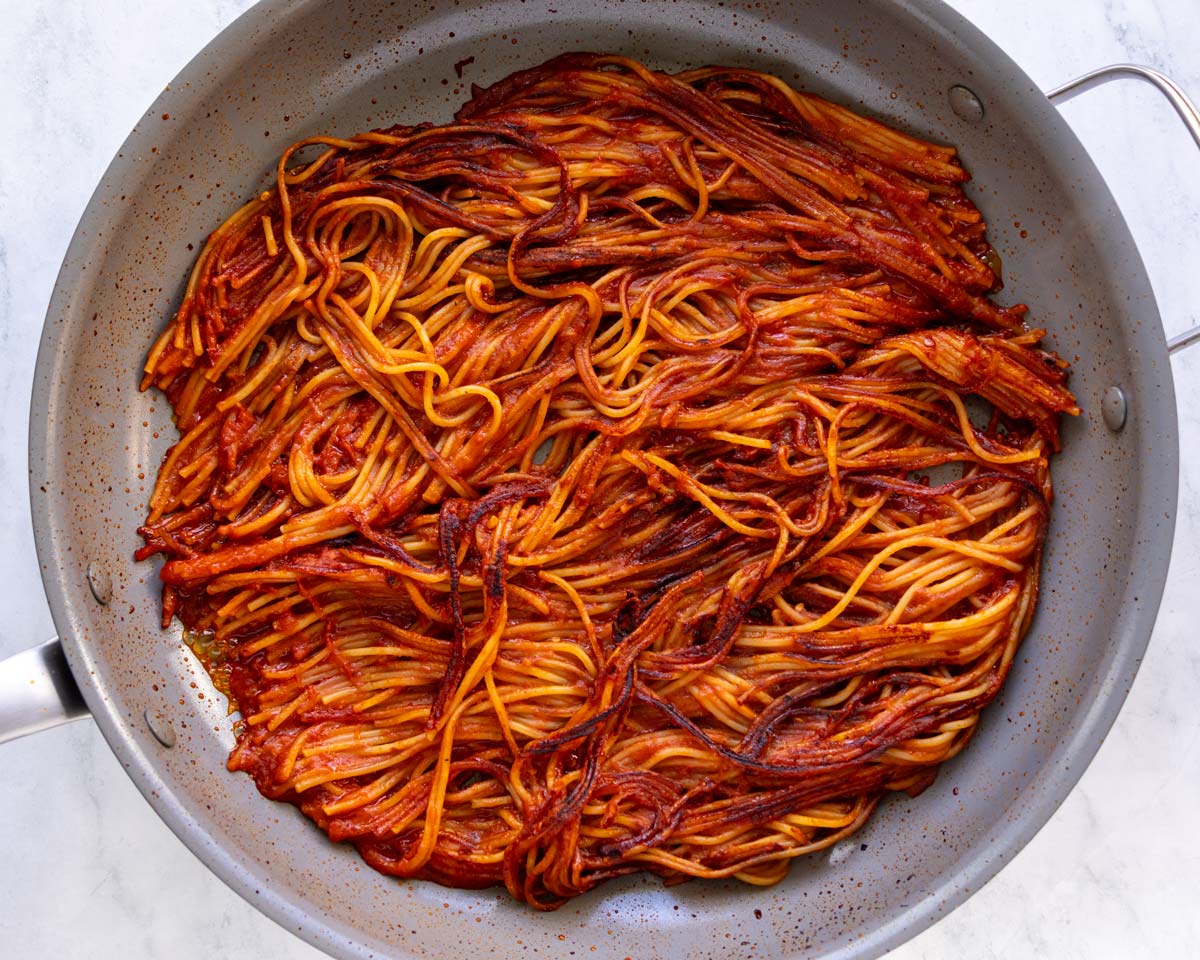
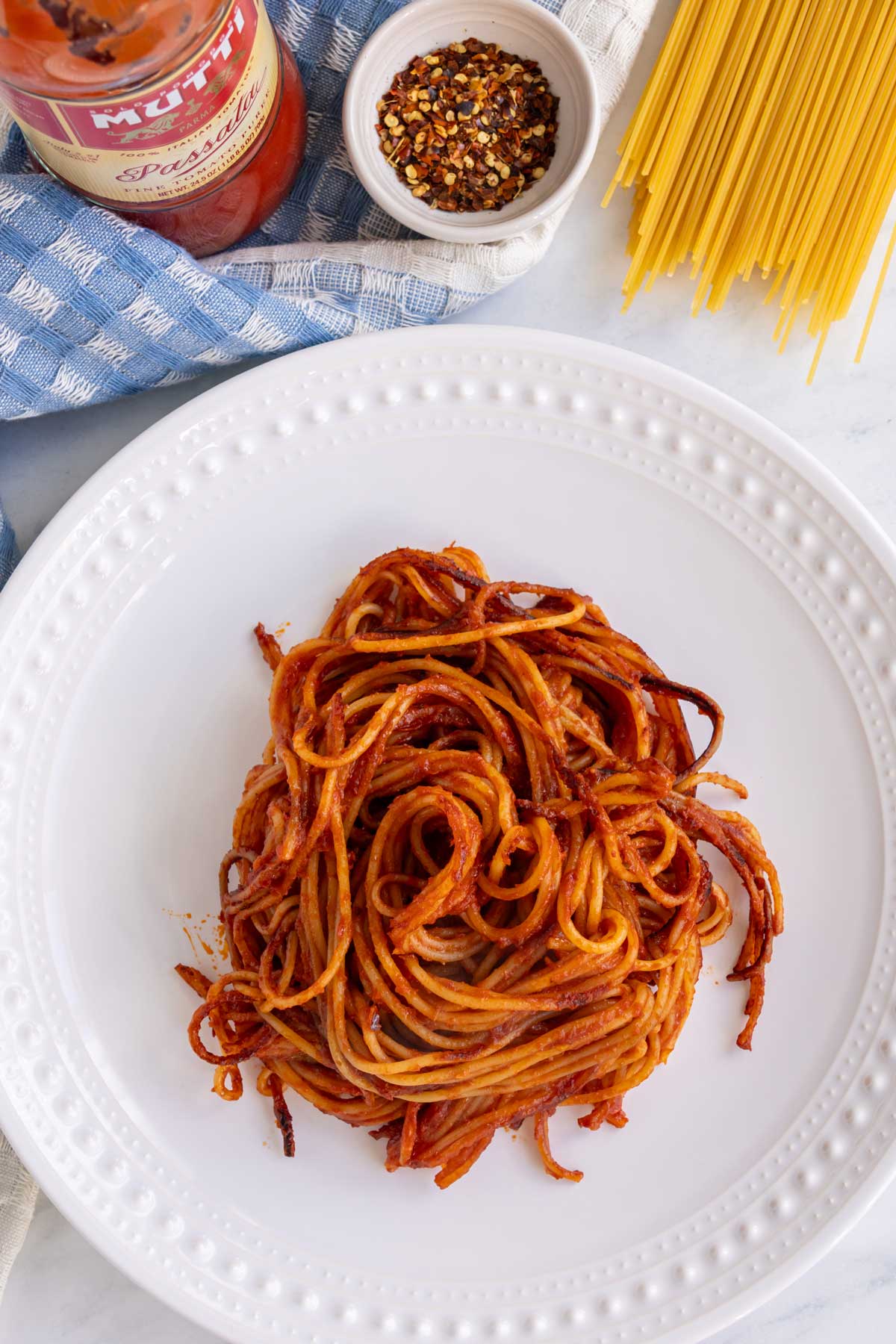
Spaghetti all'Assassina or "Assassin's Spaghetti" is a spicy charred pasta dish that really breaks the mold. A pasta dish popularized by Stanley Tucci: Searching For Italy, it gives new meaning to the term "one pot pasta." In this intriguing dish, the spaghetti is cooked risotto-style in a hot skillet, adding tomato broth little by little until scorched and crunchy.
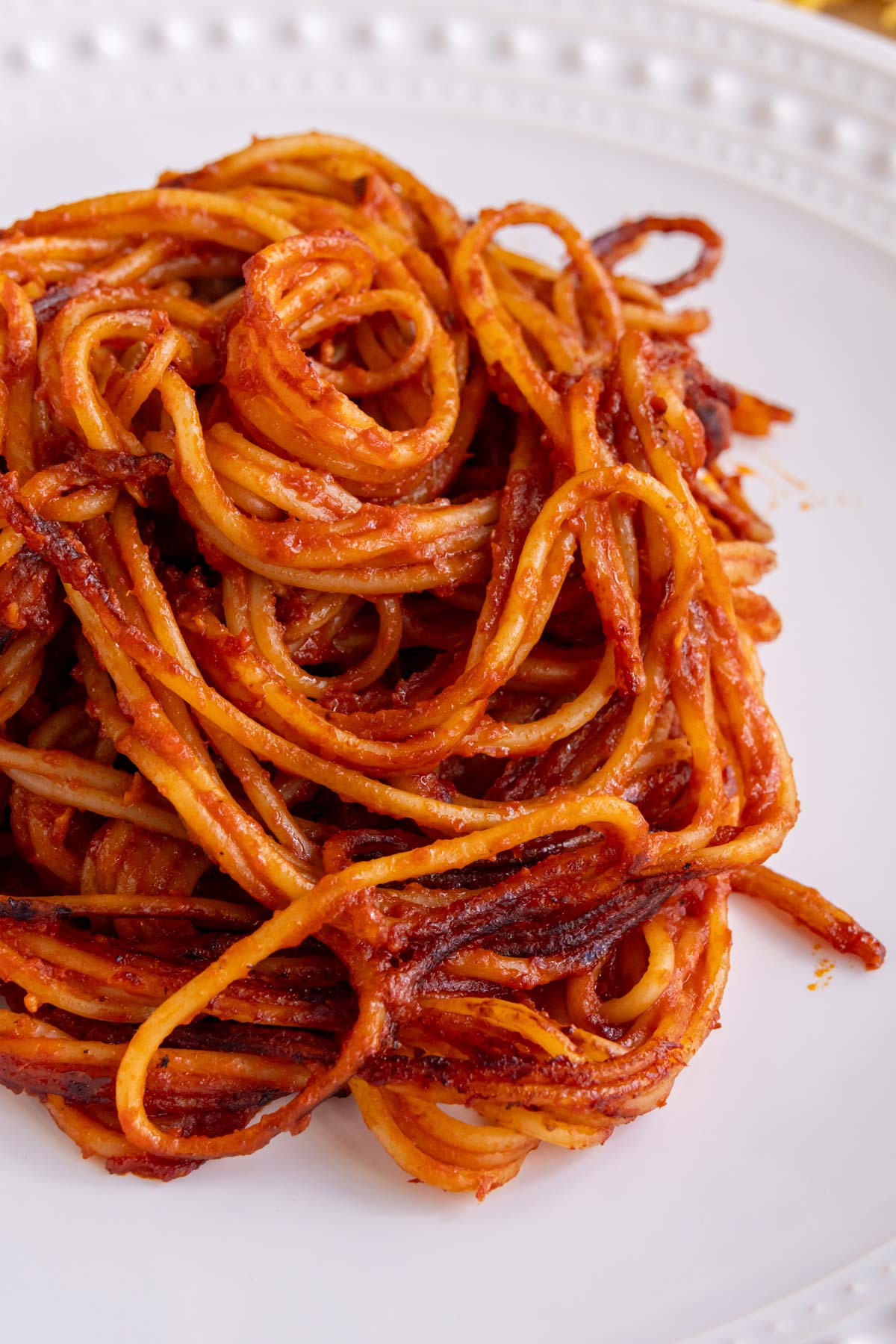
Spaghetti all'Assasina takes everything you think you know about cooking pasta and turns it on its head. Directly cooking the pasta in spicy tomato sauce yields a complex, rich flavor while allowing the noodles to brown and caramelize. Those crispy and chewy bits are arguably the best part!
This spicy, partially pan-fried spaghetti is both unusual and totally delicious. Its origins are a bit unclear though it's believed to be invented in the late 1960s in the Italian city of Bari in the region of Puglia, the heel of the boot.
The name? It could easily refer to the "killer" spice or the fact that it's meant to be a bit burnt or charred. You're killing that spaghetti, but with purpose. This is not a delicate dish. It's bold, both in flavor and texture.
Making spaghetti all'assassina will inevitably make your stovetop look like a scene from Dexter. (Fun fact: I used to work at Dexter!). Maybe that's the real origin of the name. There's no beating around the bush. The tomato sauce will splatter. You can briefly cover your skillet in between additions to somewhat tame the splatter or just lean into it and embrace it as part of the ritual of making this dish.
Ingredient notes
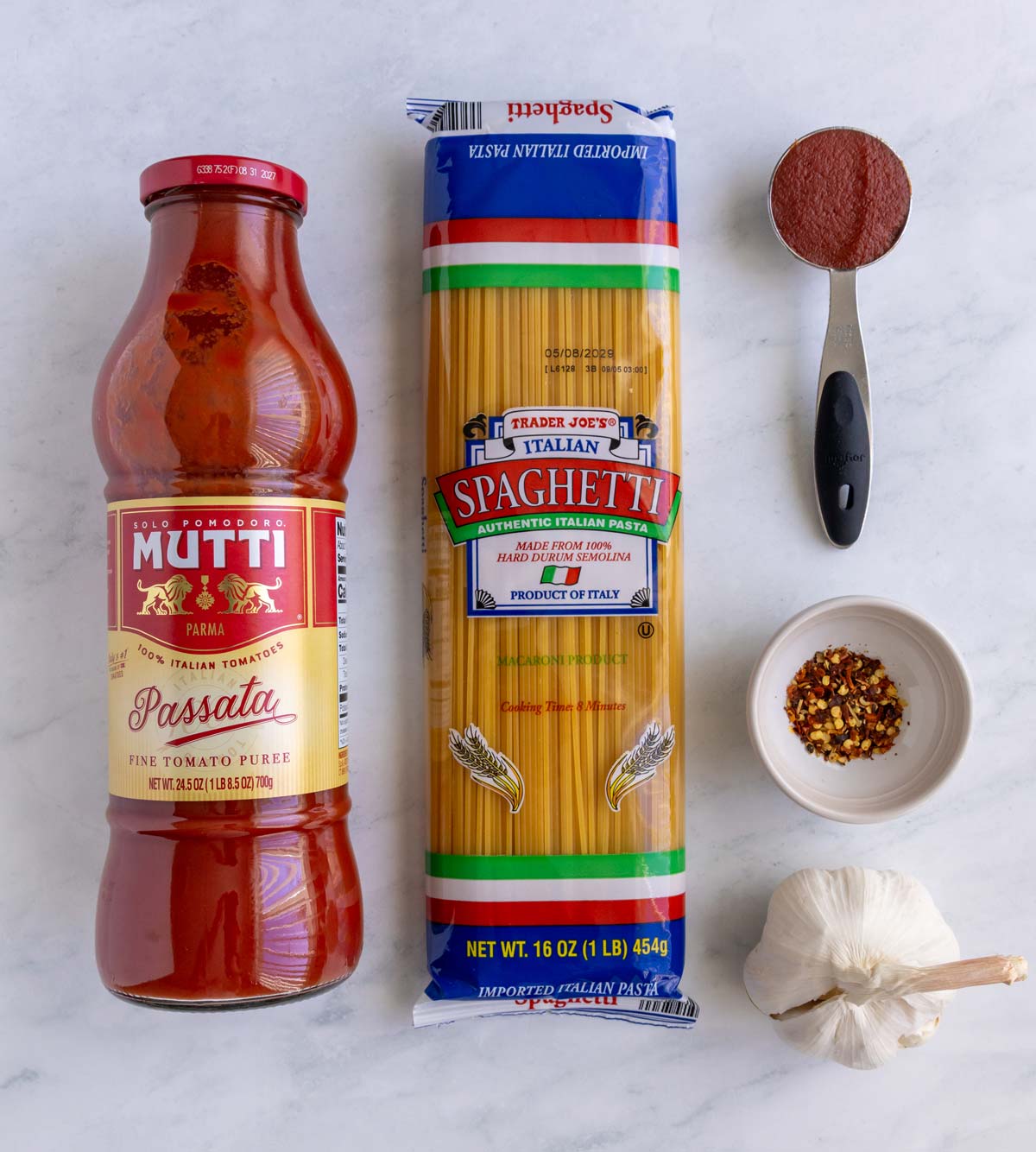
- Pasta: Only use dried spaghetti and save your other long pasta shapes for another day. It's usually recommended to use a cheaper variety rather than premium bronze extruded pasta here. The starch level of premium pastas can interfere with the charring.
- Tomato Passata: The ability to purchase bottles of tomato passata is a game changer. Passata is an uncooked tomato purée that has been strained of seeds and skins. It's not the same as canned tomato sauce, which has seasoning added to it.
- Tomato Paste: Tomato paste adds a deeply saturated tomato flavor to the sauce. It's definitely worth adding a tablespoon to get the most complex flavors in your finished spaghetti all'assassina.
- Dried Chili Flakes: This is meant to be a spicy pasta, but you can certainly modify the amount of chili flakes to your preference. I think ½ a teaspoon is plenty for 8 ounces of spaghetti but you can definitely add more. Calabrian chili flakes are the authentic option here, but any dried chili flakes will work in a pinch.
- Garlic: I'm a garlic-lover through and through. I call for 2-ish cloves but feel free to measure with your heart (I often do!).
How to make it
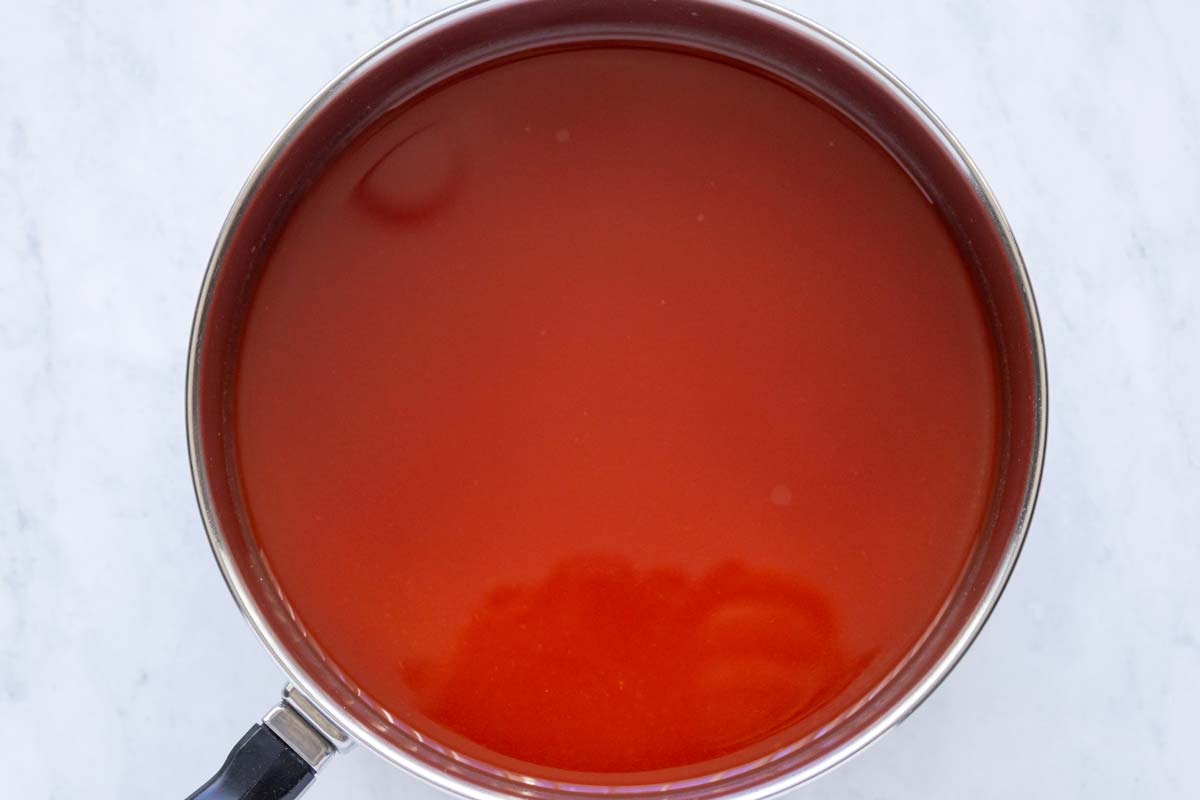
Combine water, tomato passata and salt in a medium saucepan and bring to a simmer.
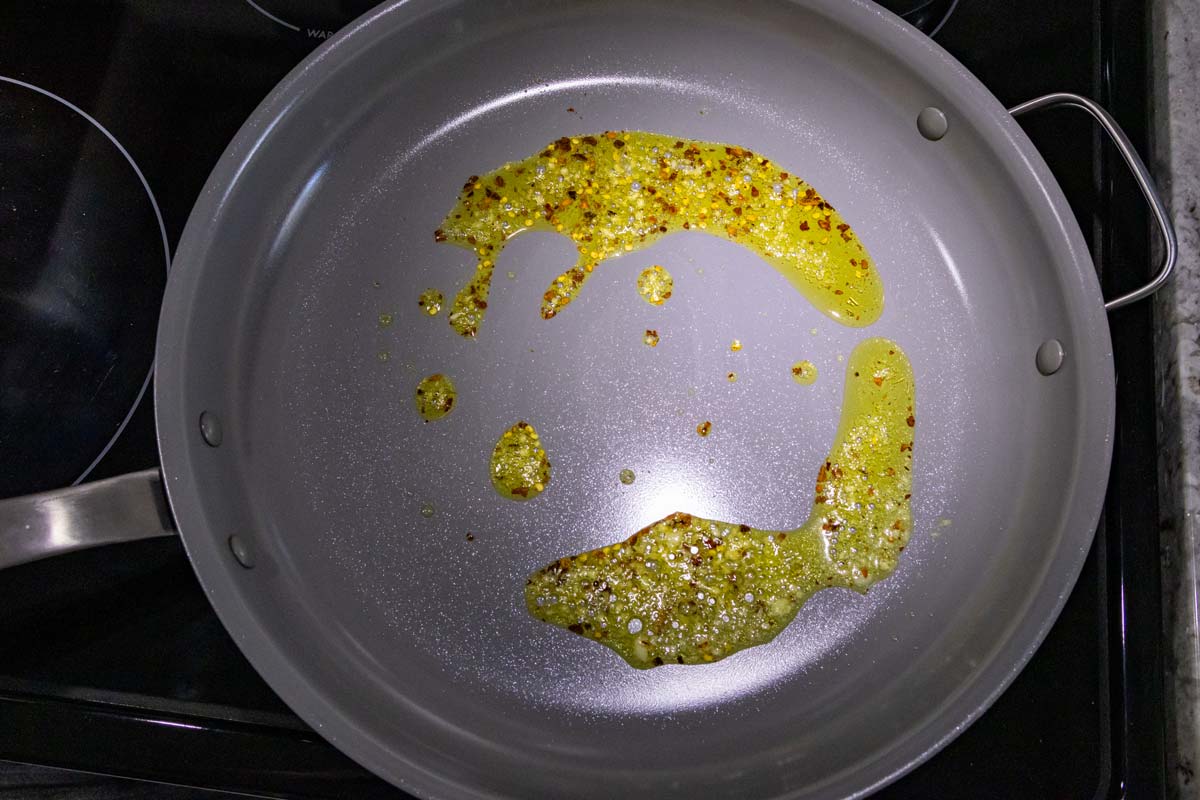
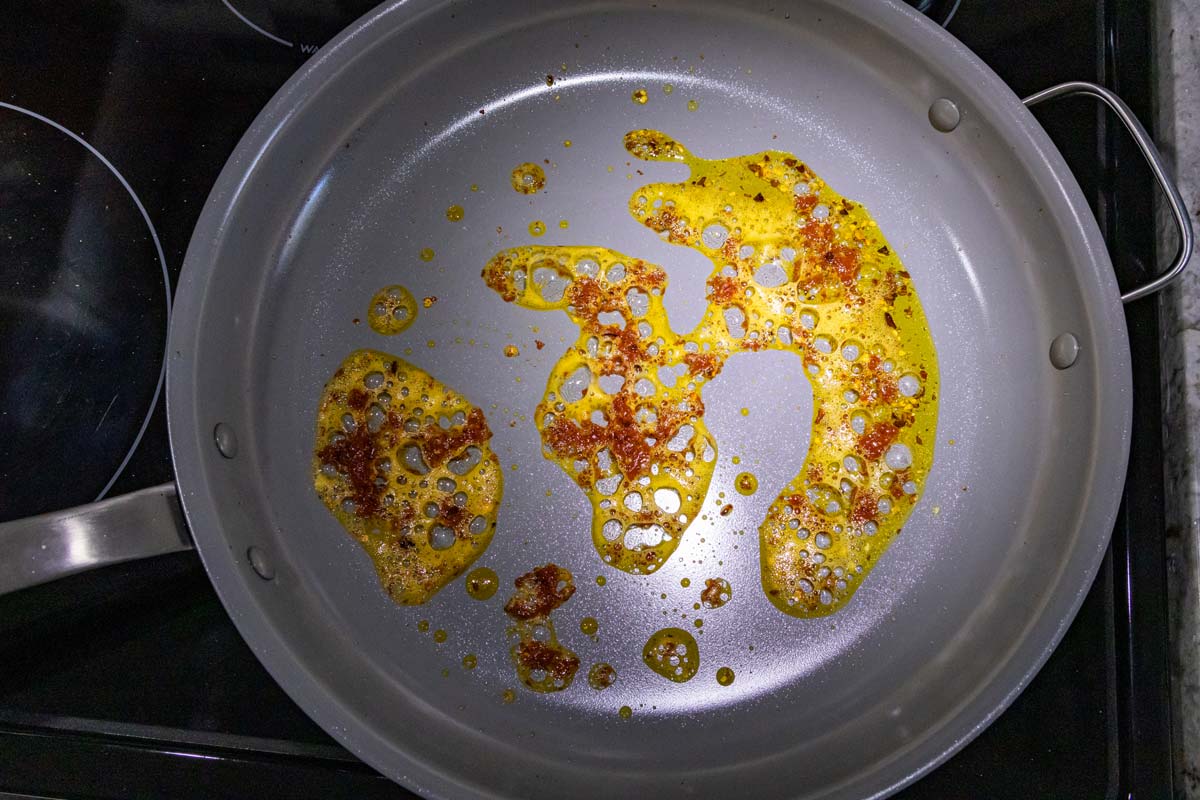
Add olive oil to a 12-inch or larger nonstick skillet over medium-high heat. Add garlic and dried chili flakes. Cook for about 30 seconds until fragrant but not too browned. Stir in tomato paste and cook for another 30 seconds.
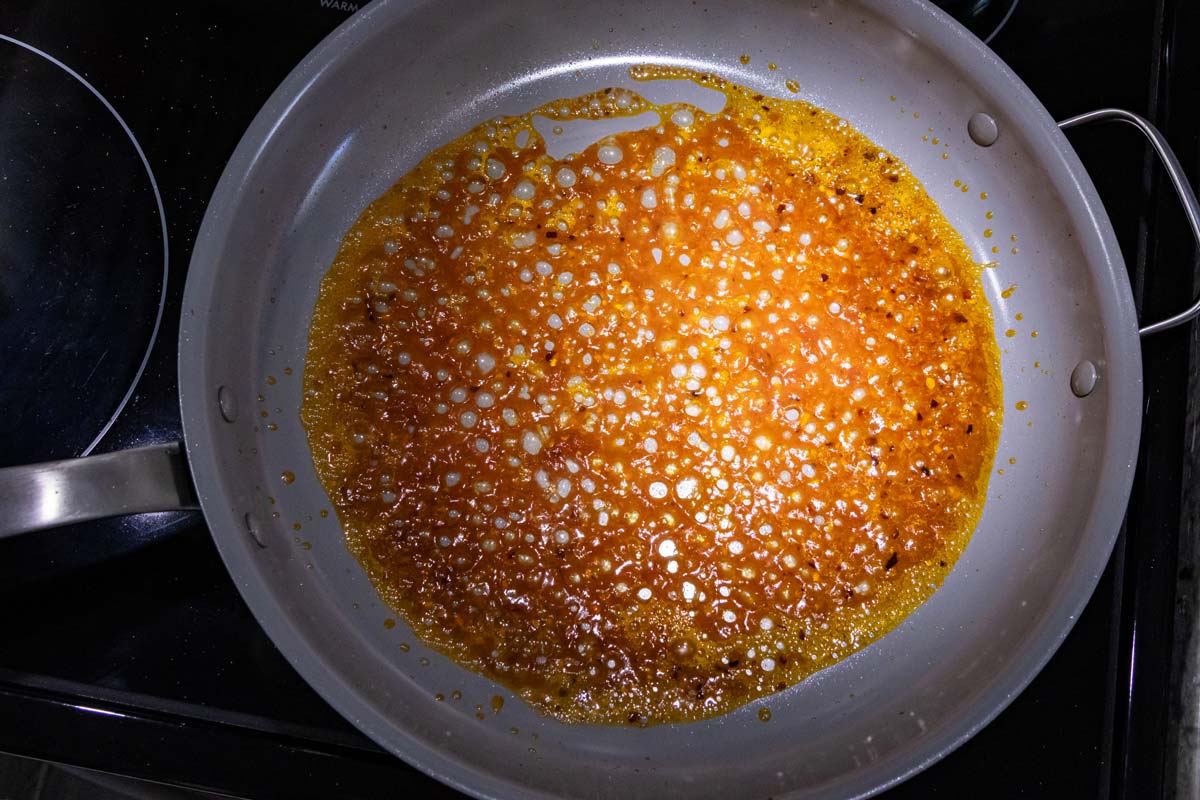
Ladle in just enough of the diluted tomato passata mixture from the saucepan to evenly cover the bottom of the skillet, about ½ cup. Add the spaghetti in an even layer spreading it out in the skillet.
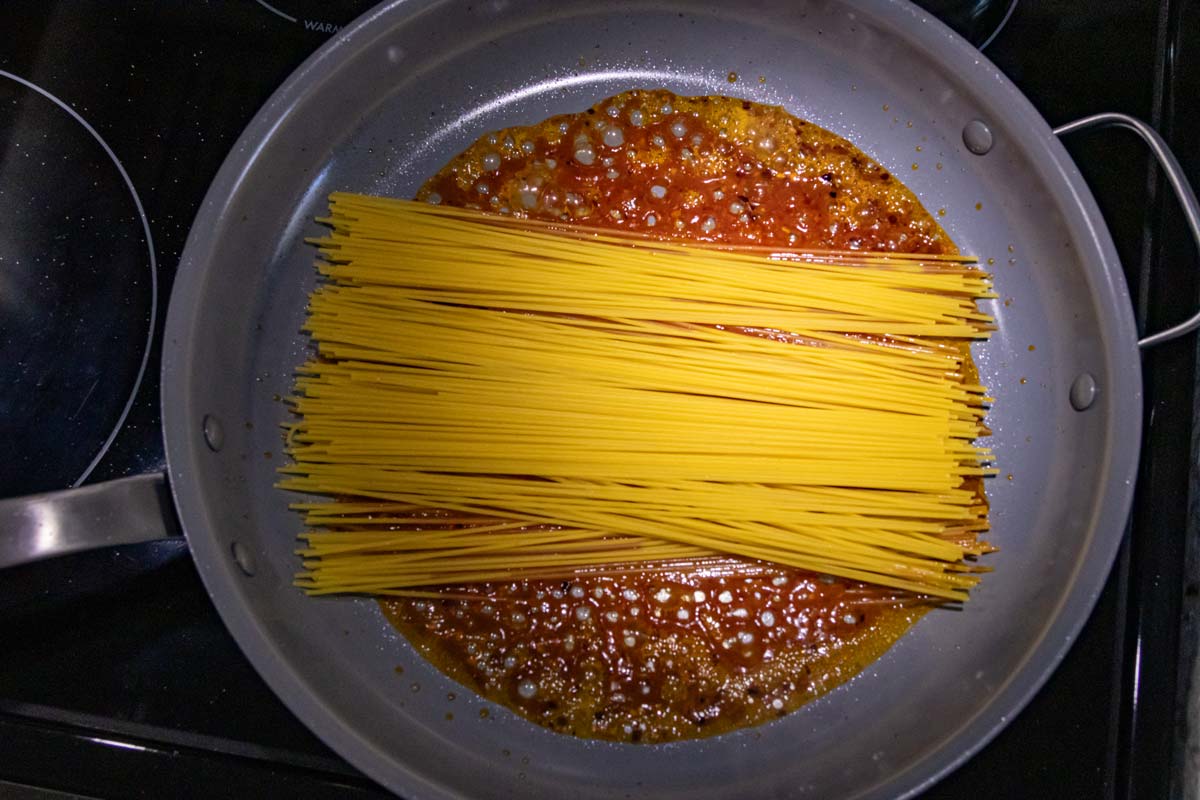
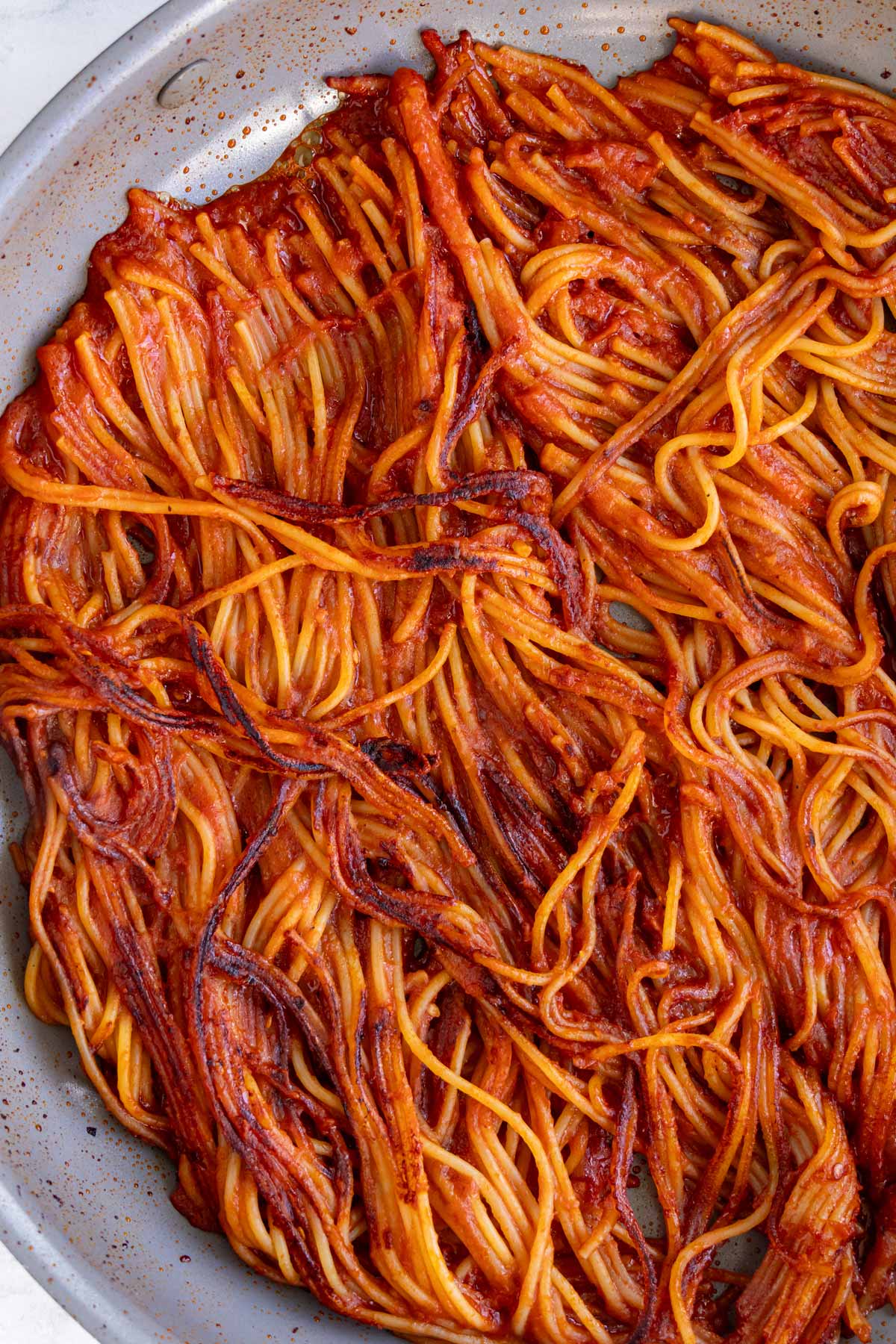
Cover with about 1 ½ cups more of the tomato passata mixture. Wiggle the spaghetti around a bit to make sure it's mostly submerged, but otherwise don't move it too much. You want it to stick and char to the bottom a bit. Let it cook undisturbed until most of the broth is absorbed and the spaghetti is starting to stick to the bottom, about 5 to 7 minutes.
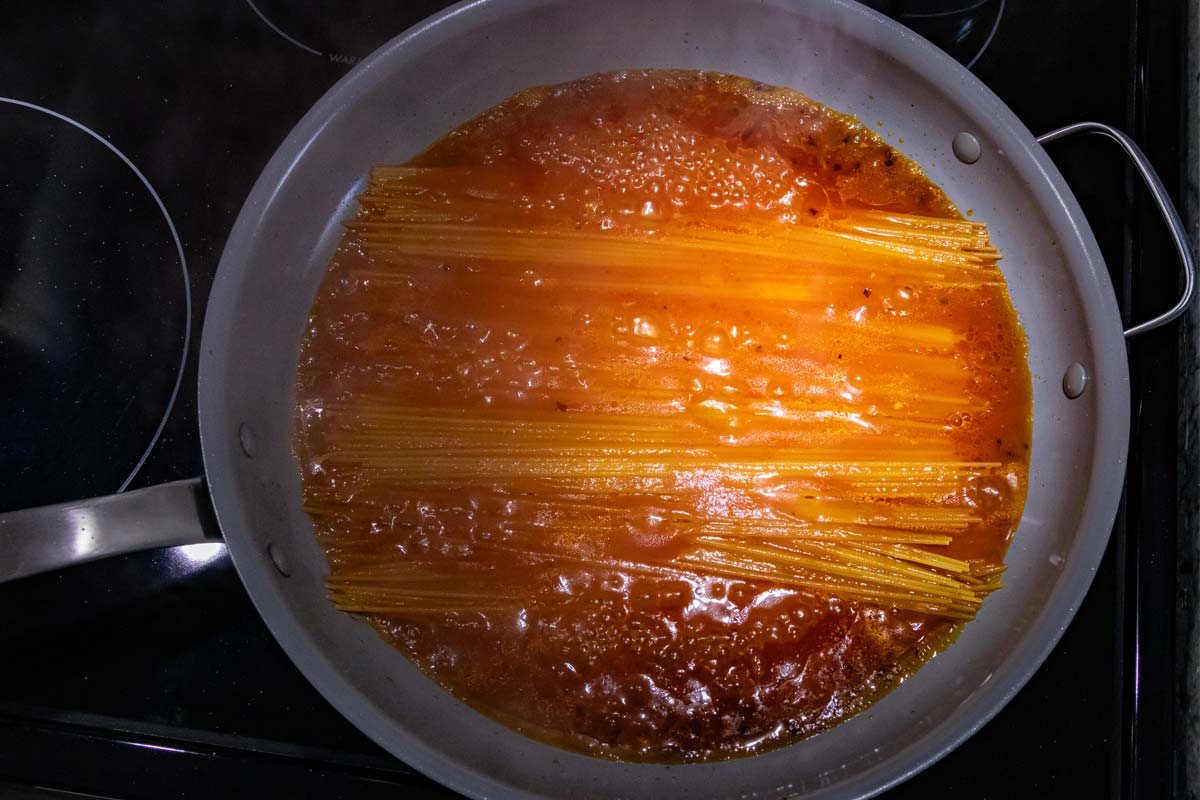
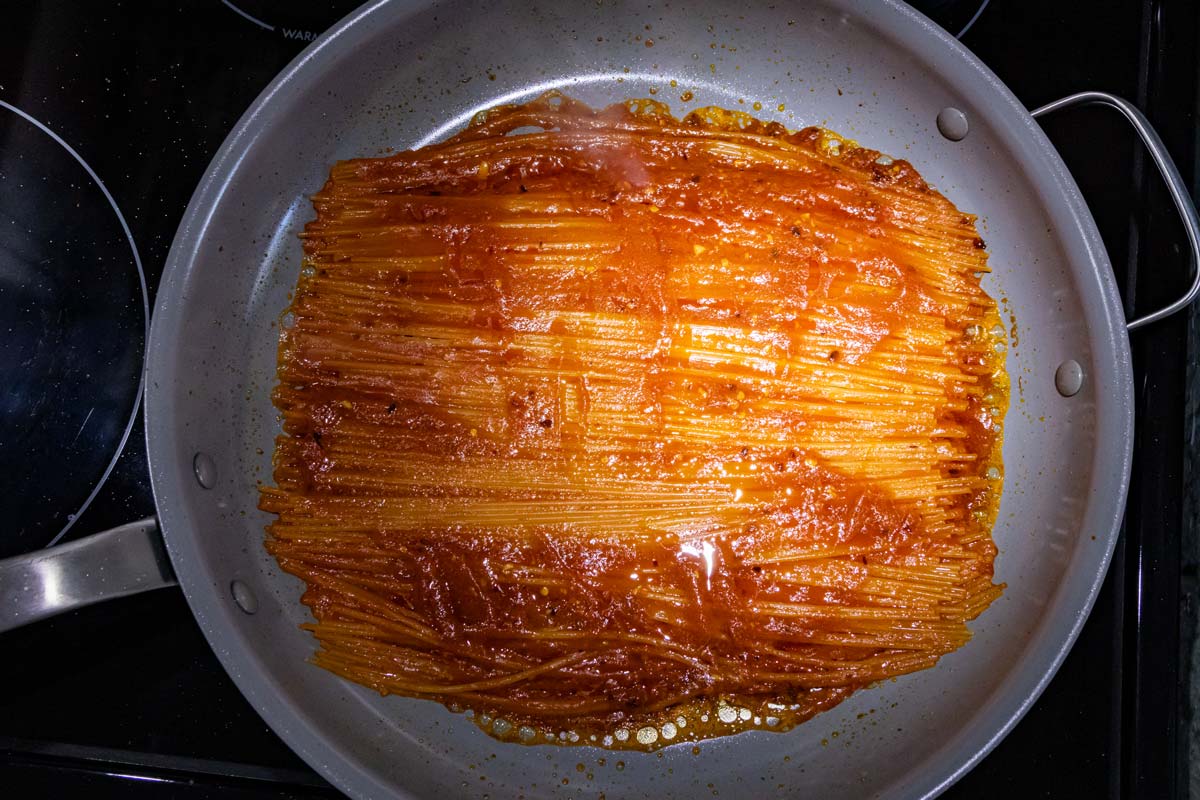
Use silicone spatulas or tongs to carefully flip the spaghetti over so the bottom is now facing up. It may be easier to flip the spaghetti over in two halves.
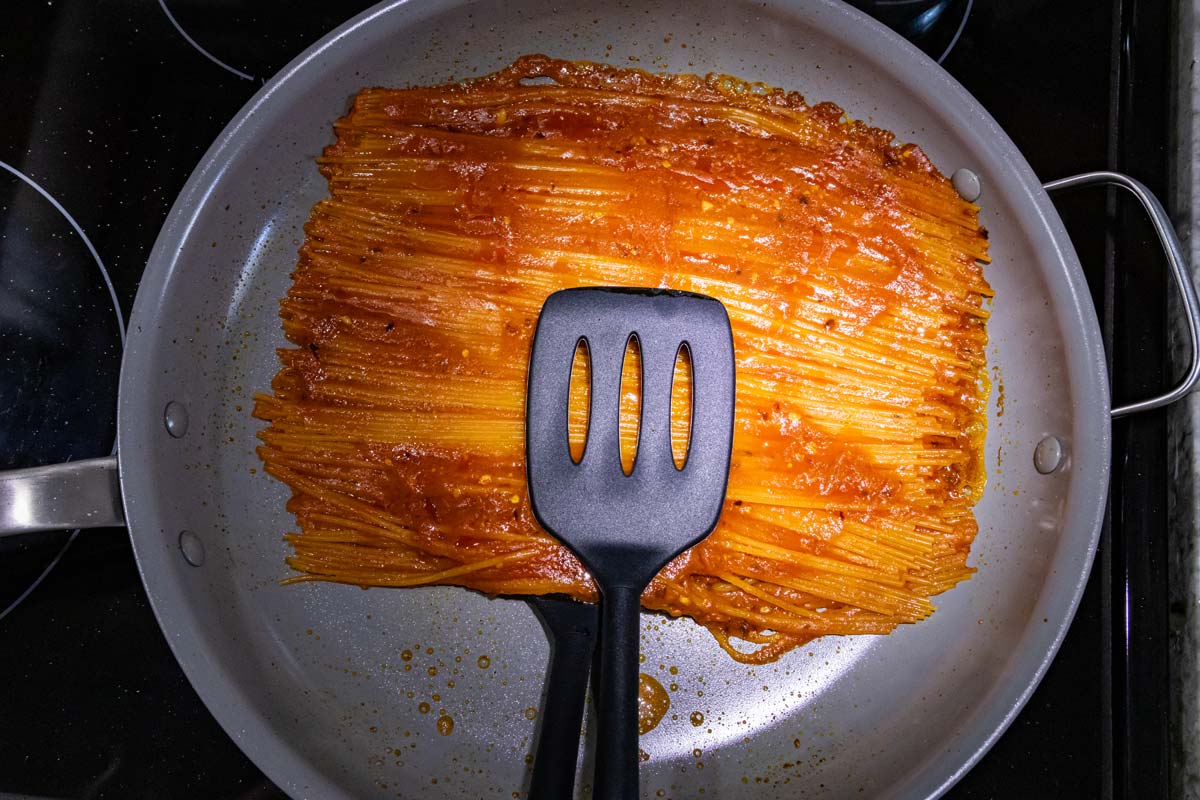
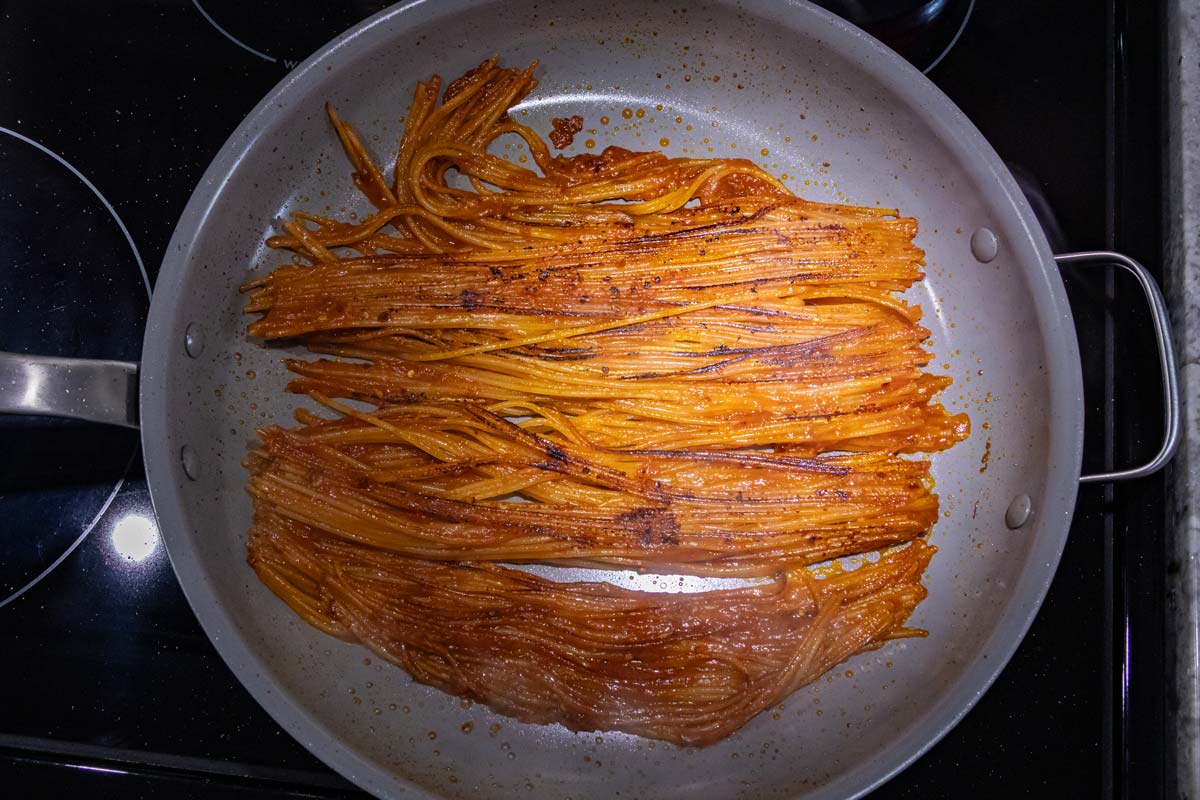
Continue to add about 1 cup of tomato passata mixture at a time, letting each addition absorb into the spaghetti undisturbed for about 3 to 5 minutes as needed. Between additions, continue to carefully flip the spaghetti over so it cooks evenly.
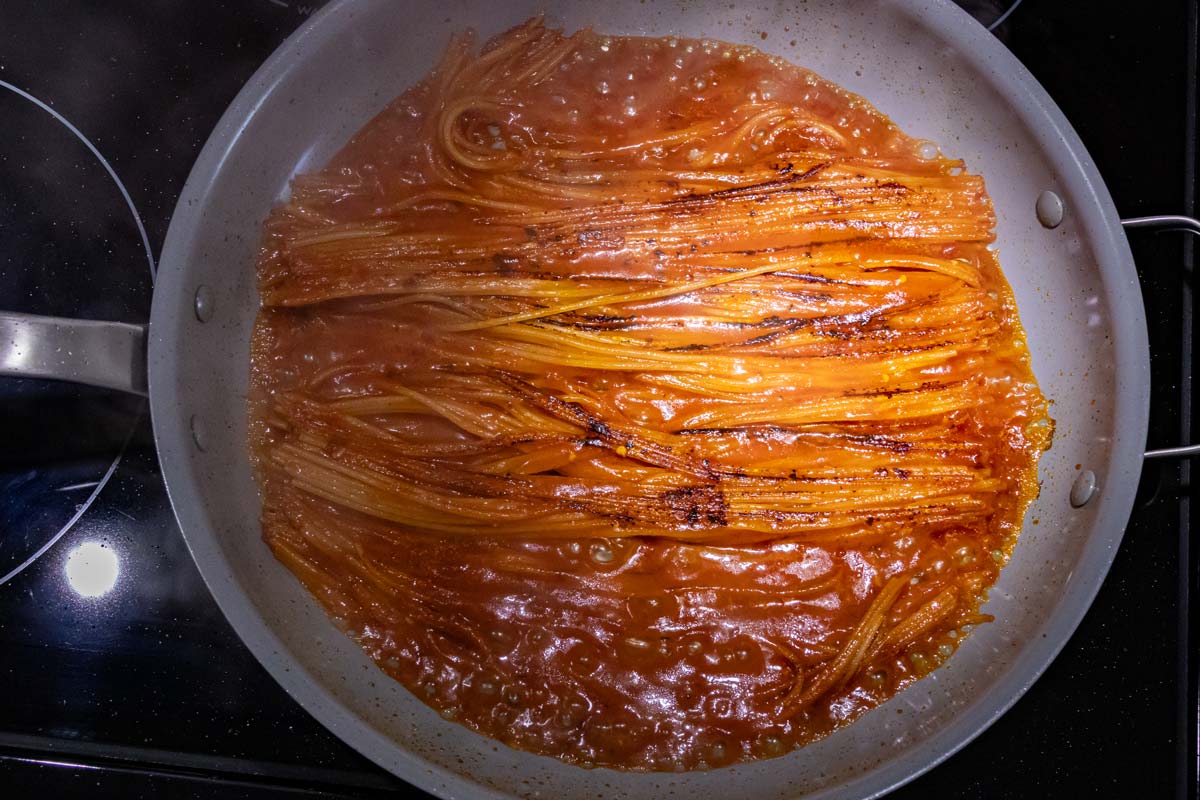
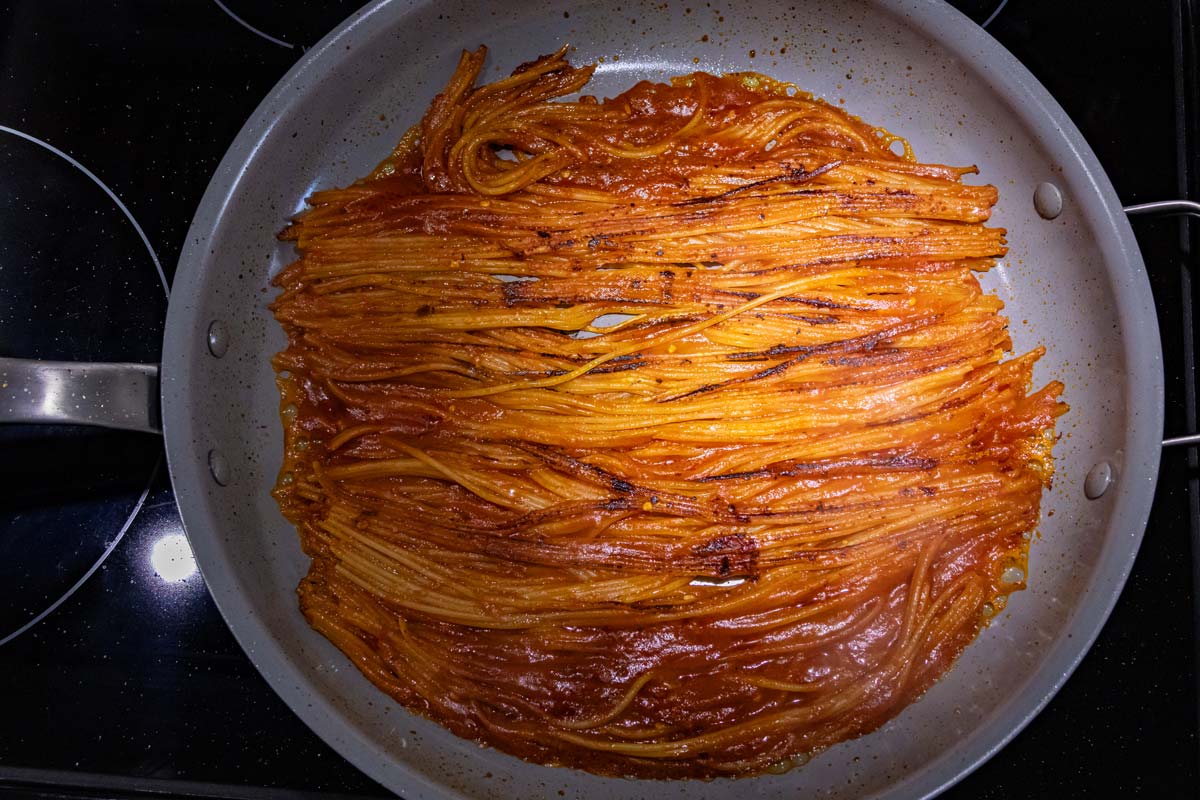
Repeat the process until the spaghetti is al dente, sticks to the bottom of the pan and is a bit charred. It will take about 20 to 25 minutes from when you start adding broth. Serve immediately.
Please scroll to the bottom of the post for the full recipe (in a printable recipe card) including ingredient amounts and detailed instructions.
Expert tips
Refrigerate leftovers for up to 4 days. This is a dish that would be best reheated on the stovetop in a nonstick pan (with a few splashes of water added as needed) rather than in a microwave.
You really need a wide enough skillet to accommodate the length of unbroken spaghetti. You may be killing the spaghetti and scorching it in the pan, but the real crime would be breaking the spaghetti to fit it into a smaller pan. Please don't do that. Use a 12-inch or wider nonstick skillet or cast iron pan. I use a 13.5-inch diameter GreenPan skillet.
Before cooking your spaghetti all'assassina, measure how much water your ladle holds. I used a ladle with a ½ cup capacity. This made it easy for me to ladle tomato broth knowing exactly how much I was adding each time. I used one ladle to start (½ cup), then three ladles over the spaghetti (1 ½ cups) and then two ladles for each of the following additions (1 cup).
For flipping over the spaghetti, I like to do it in two halves using two silicone spatulas, one underneath the spaghetti and one over the top to hold it down. Then I flip each half of the spaghetti.
You could double the recipe, but it would be a bit more challenging to flip over the spaghetti each time. I think it's easier to cook a smaller amount of spaghetti in the pan.
Some restaurants in Bari, where spaghetti all'assassina originates, top the finished dish with a big scoop of gooey stracciatella cheese (this is the inside of burrata). It's not super traditional, but it can be a delicious way to finish your dish especially if you want to add some moisture back to the crispy noodles, and balance out the spice with something creamy and decadent.
Other recipes you may like
- Spaghetti alla Nerano (Spaghetti with Fried Zucchini) (another Stanley Tucci favorite!)
- Penne all' Arrabbiata (Spicy Tomato Pasta)
- Rigatoni all' Amatriciana
- Pasta e Piselli (Pasta and Peas) (another authentic one-pot pasta dish)
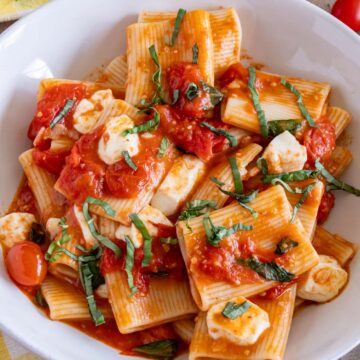
- Pasta alla Sorrentina (Pasta with Tomatoes, Basil, and Fresh Mozzarella)
Tried this recipe? Please leave a star ⭐️⭐️⭐️⭐️⭐️ rating in the recipe card below and/or a review in the comments section further down the page. You can also follow me on social media on Facebook, Instagram, and Pinterest!
Spaghetti all'Assassina (Assasin's Spaghetti)
Ingredients
- 3 ½ cups water
- 1 ½ cups tomato passata
- 1 ½ teaspoons kosher salt plus more as needed
- 2 tablespoons extra-virgin olive oil
- 2 cloves garlic minced or crushed
- ½ teaspoon dried chili flakes scale up or down based on spice preference
- 1 tablespoon tomato paste
- 8 ounces (225 grams) dried spaghetti
Instructions
- Combine the water, tomato passata and salt in a medium saucepan and bring to a simmer. You will add this mixture to your skillet occasionally throughout the cooking process.
- Add the olive oil to a 12-inch or larger nonstick skillet or cast iron pan over medium-high heat. Add the garlic and dried chili flakes and cook for about 30 seconds or just until fragrant but not too browned. Stir in the tomato paste and cook for another 30 seconds or so.
- Ladle in just enough of the diluted tomato passata mixture from the saucepan to evenly cover the bottom of the skillet, about ½ cup. Add the spaghetti in an even layer spreading it out in the skillet.
- Cover with about 1 ½ cups more of the tomato passata mixture. Wiggle the spaghetti around a bit to make sure it's mostly submerged, but otherwise don't move it too much. You want it to stick and char to the bottom a bit. Let it cook undisturbed until most of the broth is absorbed and the spaghetti is starting to stick to the bottom, about 5 to 7 minutes.
- Use silicone spatulas or tongs to carefully flip the spaghetti over so the bottom is now facing up (it may be easier to flip the spaghetti over in two halves). Continue to add about 1 cup of tomato passata mixture at a time, letting each addition absorb into the spaghetti undisturbed for about 3 to 5 minutes as needed. Between additions, continue to carefully flip the spaghetti over from top to bottom so it cooks evenly.
- Repeat the process until the spaghetti is al dente, sticks to the bottom of the pan and is a bit charred. The process requires some patience and attention. The total cooking time will be about 20 to 25 minutes from when you start adding broth. Serve immediately.
Notes
- Pasta: Only use dried spaghetti and save your other long pasta shapes for another day. It's usually recommended to use a cheaper variety rather than premium bronze extruded pasta here since the starch level of premium pastas can interfere with the charring.
- Tomato Passata: The ability to purchase bottles of tomato passata is a game changer. Passata is an uncooked tomato purée that has been strained of seeds and skins. It's not the same as canned tomato sauce, which has seasoning added to it.
- Dried Chili Flakes: This is meant to be a spicy pasta, but you can certainly modify the amount of chili flakes to your preference. I think ½ a teaspoon is plenty for 8 ounces of spaghetti but you can definitely add more. Calabrian chili flakes are the authentic option here, but any dried chili flakes will work in a pinch.
- Refrigerate leftovers for up to 4 days. This is a dish that would be best reheated on the stovetop in a nonstick pan (with a few splashes of water added as needed) rather than in a microwave.
- You really need a wide enough skillet to accommodate the length of unbroken spaghetti. You may be killing the spaghetti and scorching it in the pan, but the real crime would be breaking the spaghetti to fit it into a smaller pan. Please don't do that. Use a 12-inch or wider nonstick skillet or cast iron pan.
- Before cooking your spaghetti all'assassina, measure how much water your ladle holds. I used a ladle with a ½ cup capacity. This made it easy for me to ladle tomato broth knowing exactly how much I was adding each time. I used one ladle to start (½ cup), then three ladles over the spaghetti (1 ½ cups) and then two ladles for each of the following additions (1 cup).
- For flipping over the spaghetti, I like to do it in two halves using two silicone spatulas, one underneath the spaghetti and one over the top to hold it down. Then I flip each half of the spaghetti.
Nutrition
*All nutritional information is based on third-party calculations and should be considered estimates. Actual nutritional content will vary with brands used, measuring methods, portion sizes and more.*
Comments
No Comments