

Considered by many to be the drink of the summer in 2025, the Hugo Spritz is a delightfully refreshing cousin of the Aperol Spritz. This low-ABV cocktail features the sweet floral flavors of elderflower liqueur combined with fizzy prosecco and seltzer. Fresh mint and a slice of lime are the finishing touches to transport you straight to the Mediterranean coast.
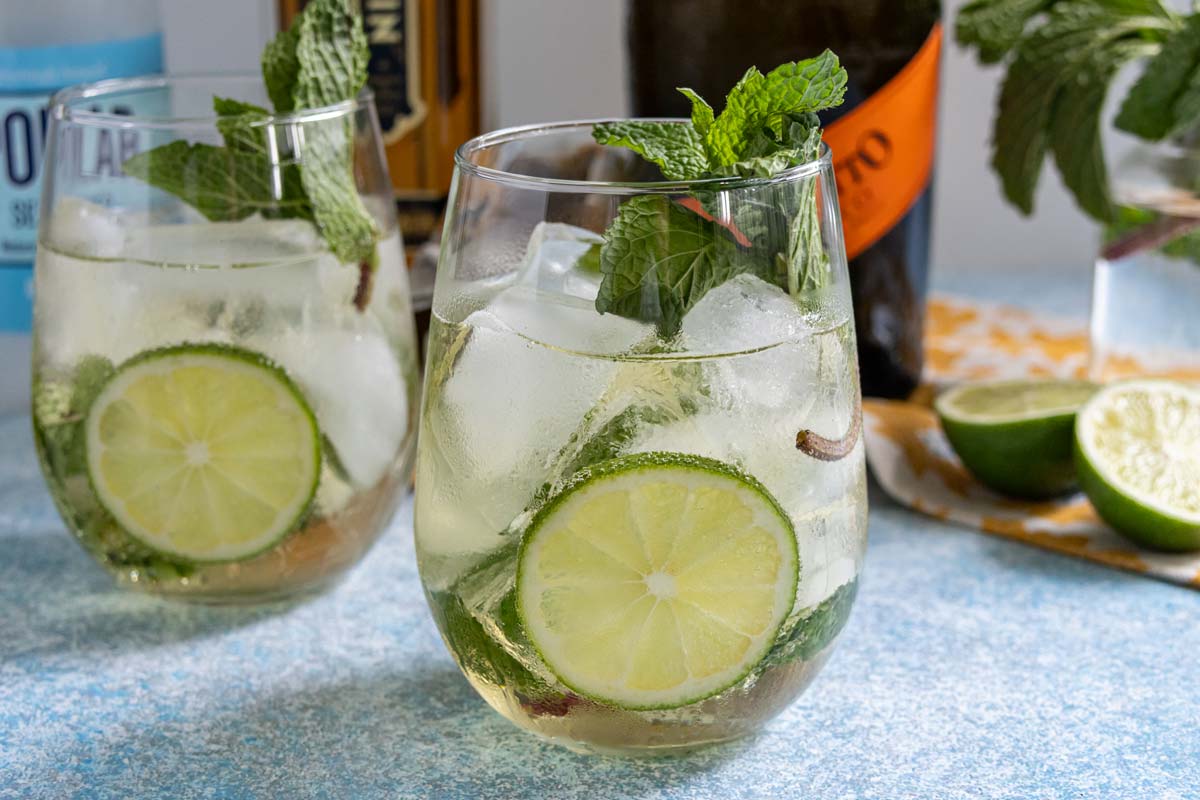
The Hugo or Hugo Spritz cocktail is a derivative of its most famous cousin the Aperol Spritz. Unlike the inclusion of the bittersweet aperitif, Aperol, this version originating in the South Tyrol region of Northern Italy features sweet and floral elderflower liqueur. This more delicate inclusion yields a light and refreshing sparkling cocktail which is perfect for summer.
In fact, Business Insider, Gary Janetti, and many others have proclaimed the Hugo Spritz to be the drink of the summer in 2025. Aperol Spritz had its moment in the spotlight in 2023. It became particularly popular due to The White Lotus season 2 which was filmed in Sicily. Its polarizing bittersweet namesake ingredient is replaced with the decidedly inspiring elderflower liqueur to create this "it" drink.
Fun fact: The Hugo Spritz cocktail was invented by bartender Roland Gruber in 2005 in the Italian town of Naturno along the Italian-Austrian border. Its popularity quickly extended from its origins to nearby nations such as Austria and Germany.
The Hugo Spritz is an aperitif, thus it's ideally enjoyed before meals to whet your appetite without filling you up. It's lower in alcohol and less sweet than other cocktails, making it a great option at brunch as well!
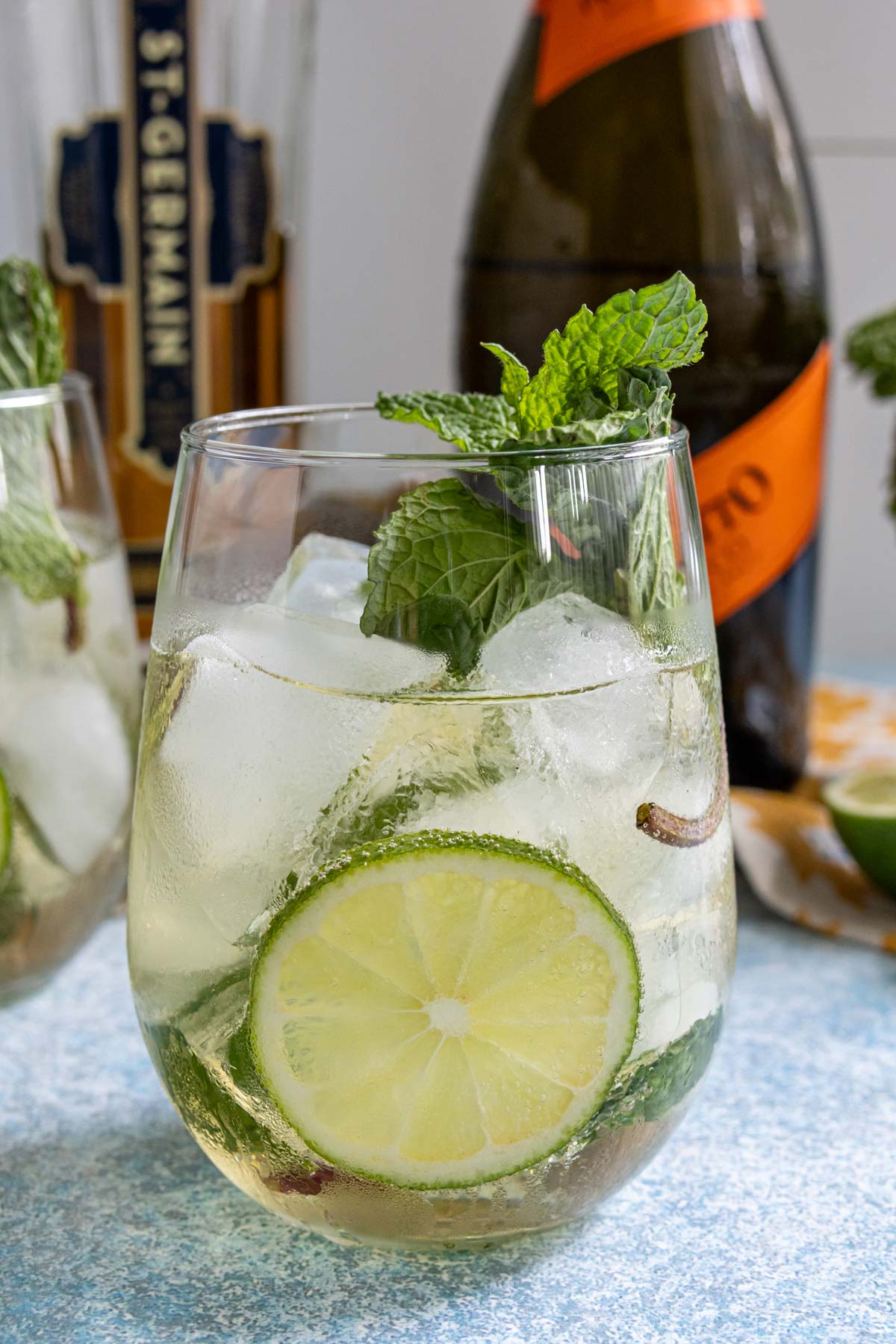
The typical ratio for the spritz family of cocktails is a 3:2:1 ratio of prosecco, liqueur, and seltzer water. Elderflower liqueur can be quite potent and too floral and sweet for some. Thus I tend to tamp down the amount and instead replace a portion with an extra splash of prosecco.
The ratio I use for my Hugo Spritz is 4:1:1 of prosecco, liqueur, and seltzer. Instead of measuring in ounces, if you want a bigger drink, you can also measure those parts in shot glasses, which are typically 1 ½ ounces in volume. Use 4 parts prosecco (4 shot glasses, or 6 ounces), and 1 part each St-Germain and seltzer (1 shot glass, or 1 ½ ounces of each).
Ingredient notes
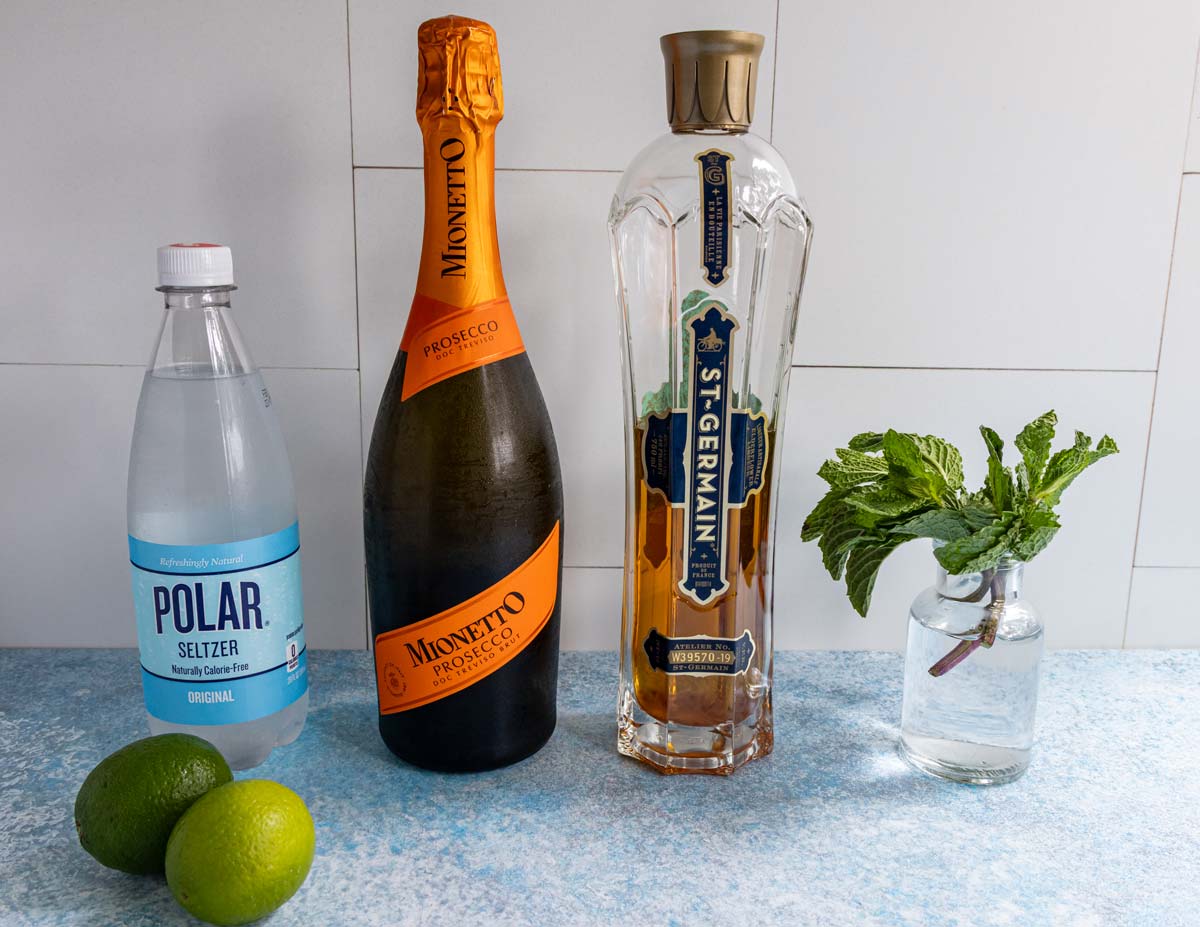
- Prosecco: Although you could use another sparkling wine like Spanish cava or French Champagne, as the origin of Hugo Spritz cocktail is Italian I recommend sticking with prosecco which comes from Italy. Ideally, select a brut or dry prosecco for this cocktail to avoid making it overly sweet.
- Elderflower Liqueur: Although there are other brands of elderflower liqueur, my preferred choice is the original, St-Germain. It's produced in an artisanal manner. Elderflowers are hand-picked in the hillsides of the French Alps during a four-to-six week period in late spring. The flowers are then bicycled (how French!) to where they are macerated and processed into liqueur using a secret method. The bottles are individually numbered reflecting the year in which the flowers were picked. The result is a beautifully floral (yet not medicinal or soapy) essence with hints of fruit. It's the magic ingredient in some of my favorite cocktails, and in my opinion worth the hefty price tag. A little goes a long way.
- Club Soda or Seltzer Water: This adds volume and more bubbles to the drink, balances the wine and liqueur, and dilutes some of the sweetness. Make sure you use unflavored club soda or seltzer, as to not change the flavor of the drink.
- Fresh Mint: You'll muddle some directly into the cocktail but also add some as a garnish later. I've had hugo spritzes without the mint, and they're fantastic as well, but I think adding the mint really takes the drink to another level. If you don't have fresh mint, you can certainly omit it.
- Lime or Lemon: A wheel or slice of lime or lemon adds a pop of color and freshness. It doesn't, however, contribute much flavor and is truly optional if you want to skip this garnish.
How to make it
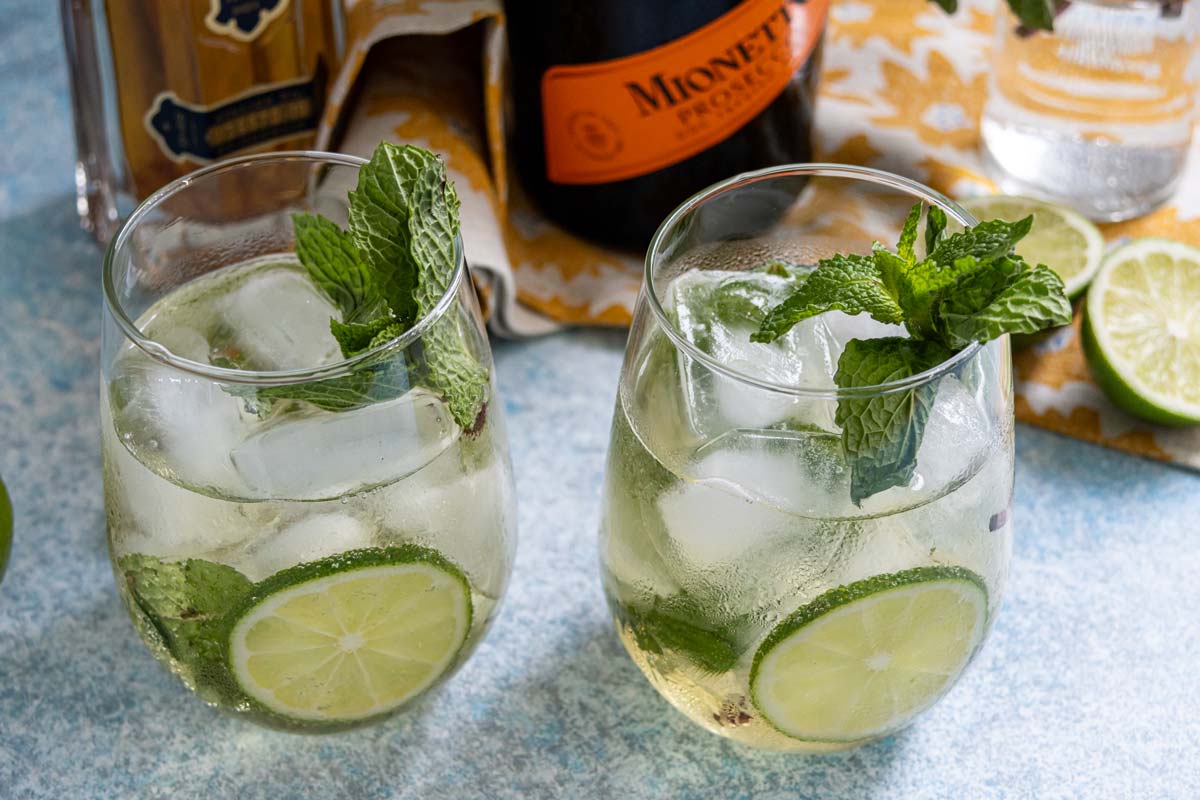
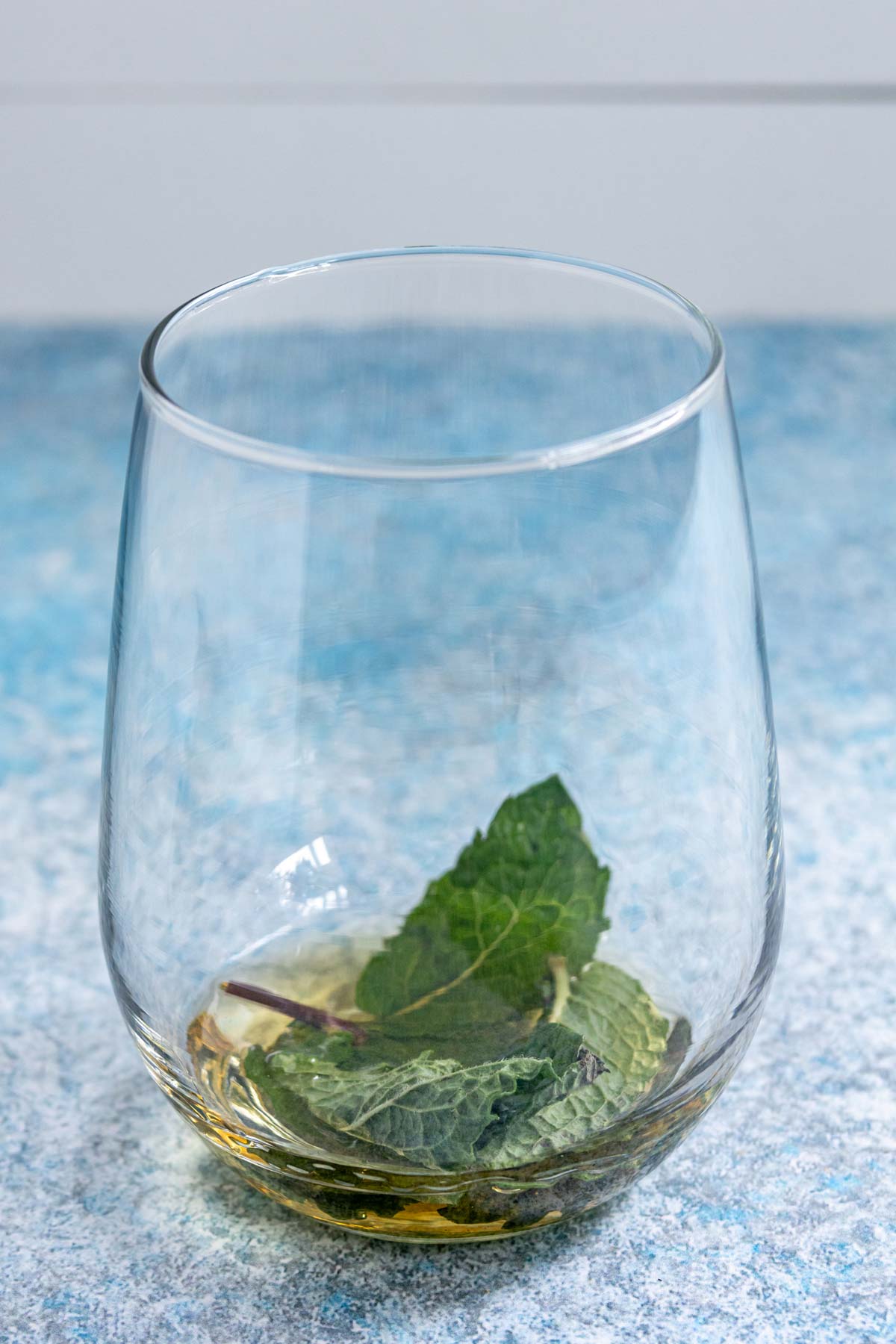
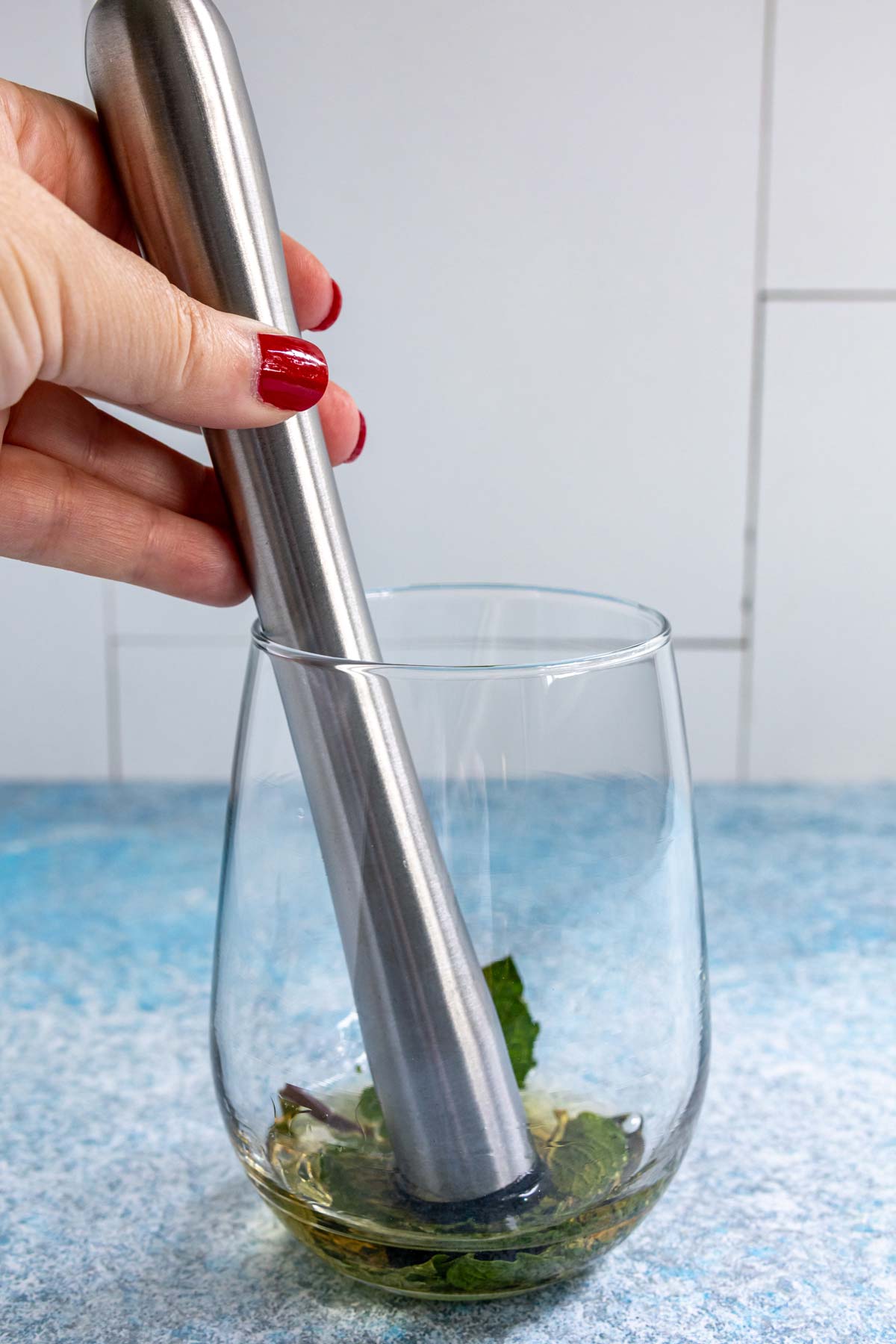
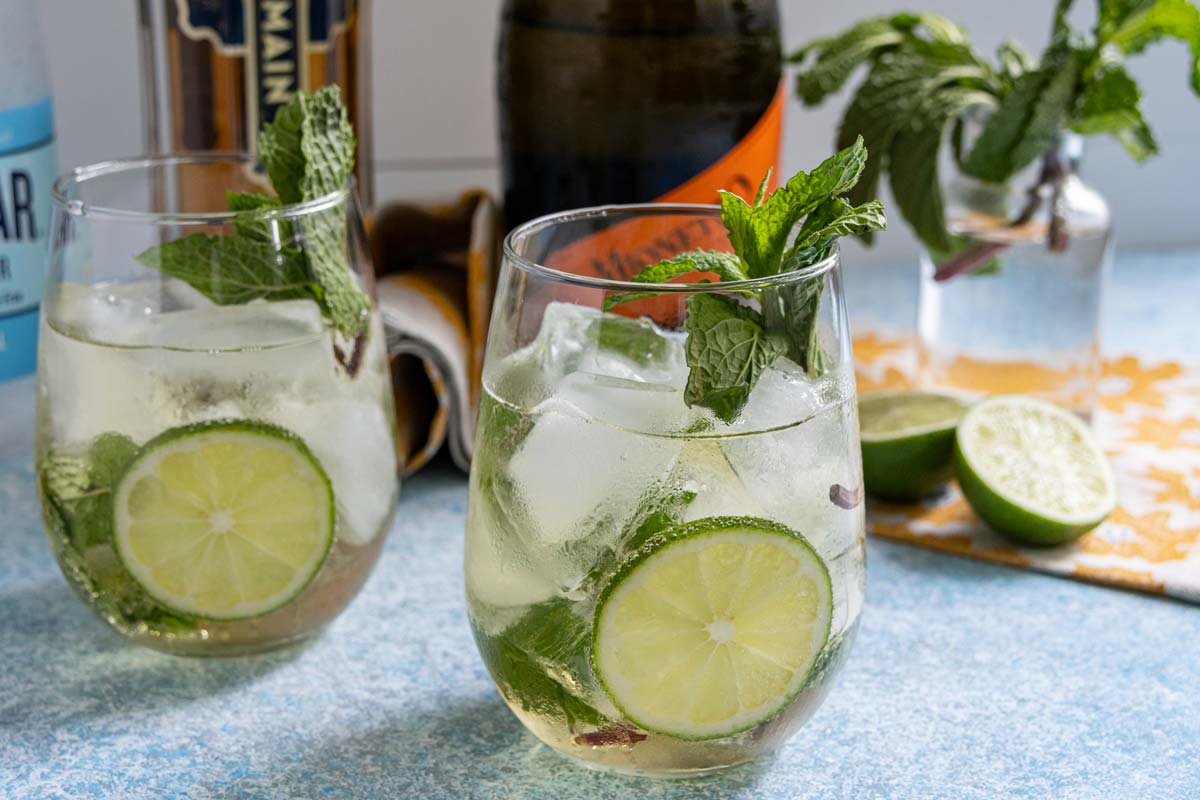
Add St-Germain and a fresh mint sprig to a wine glass and gently muddle. Let it sit for about 3 minutes for the flavors to infuse.
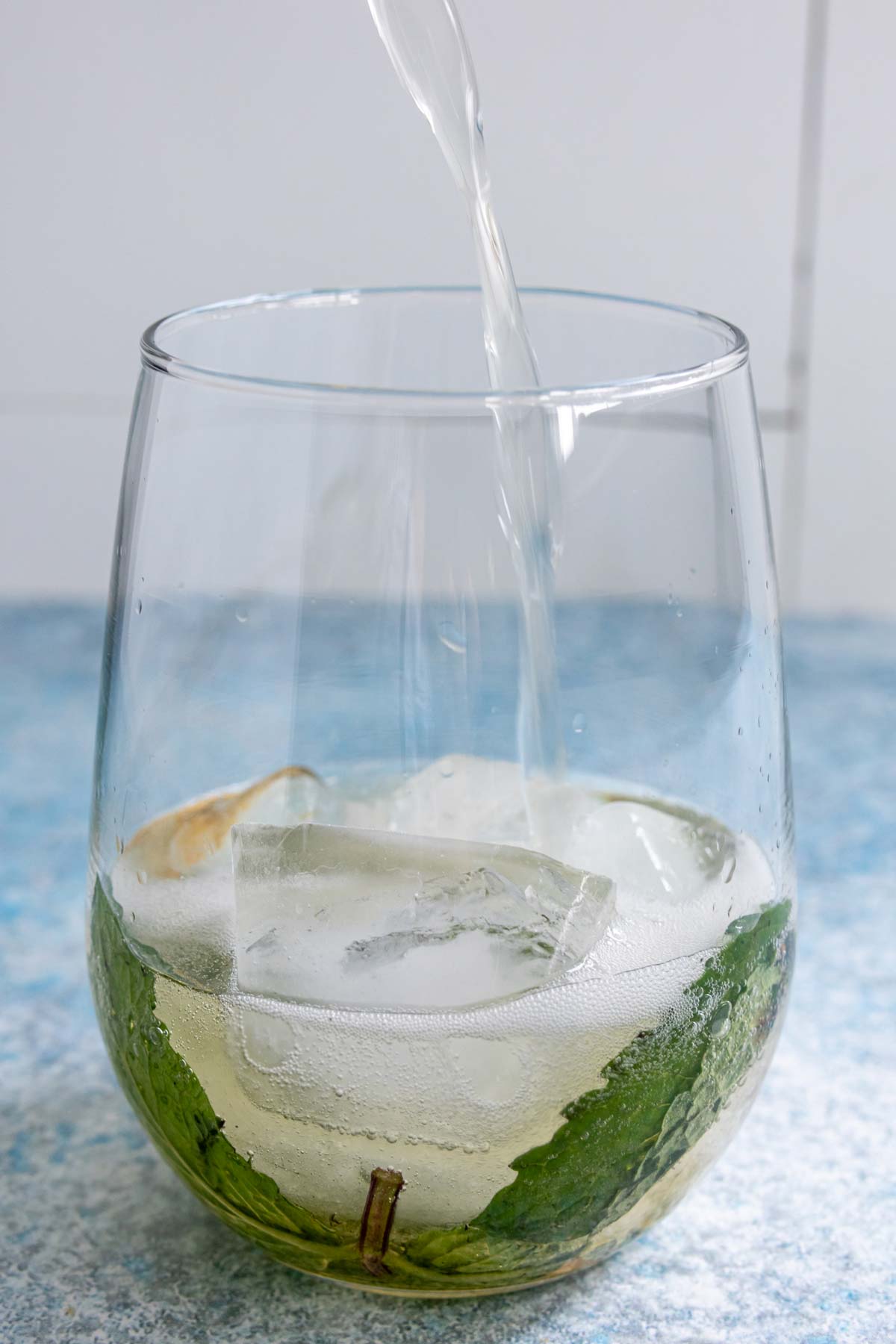
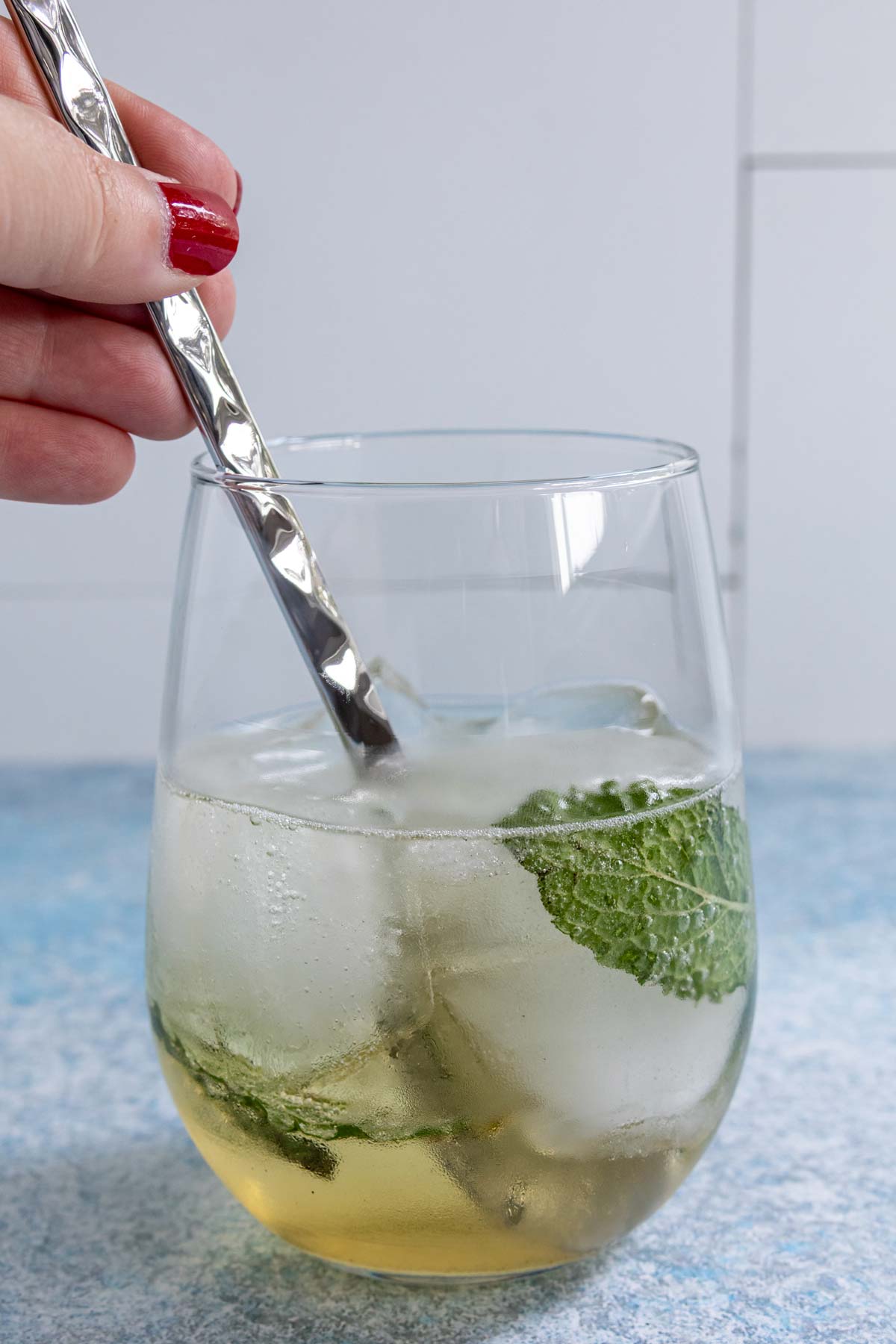
Next, add some ice to the glass along with prosecco and seltzer water. Give the mixture a gentle stir to combine.
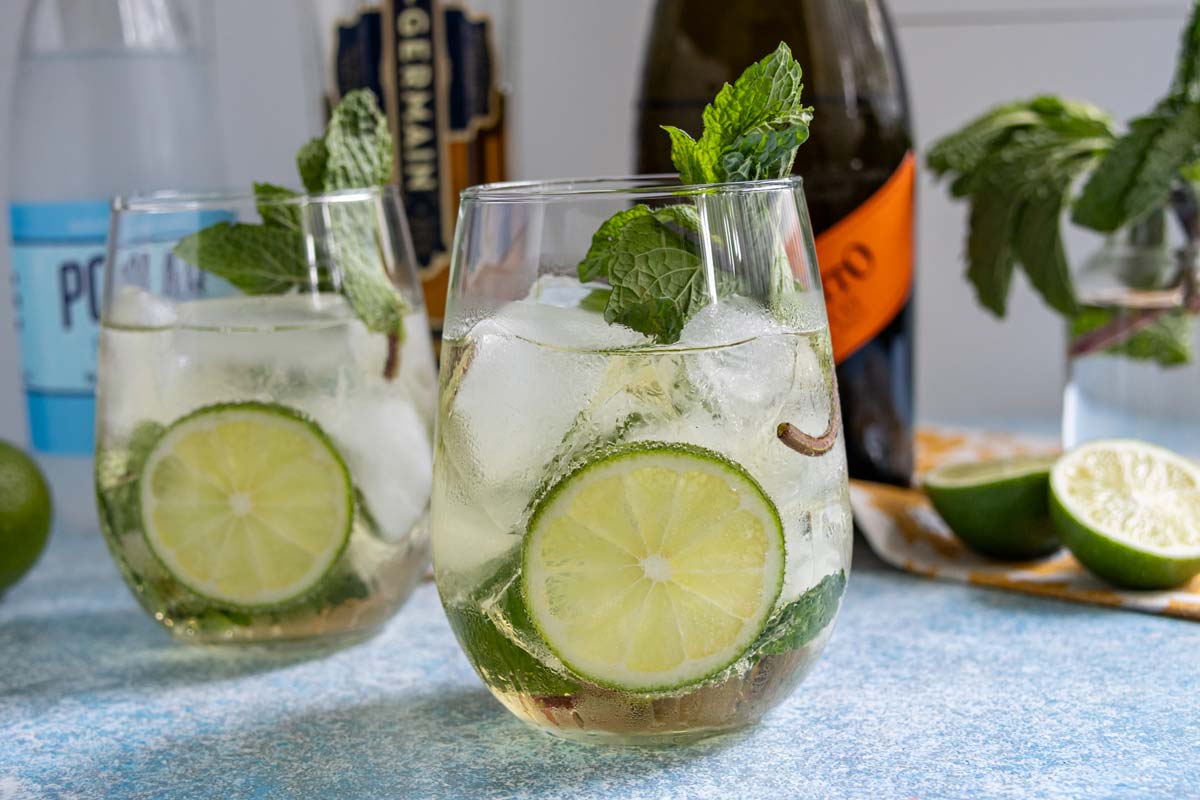
Garnish with a lime or lemon wheel and a sprig of mint. Serve immediately.
Please scroll to the bottom of the post for the full recipe (in a printable recipe card) including ingredient amounts and detailed instructions.
Expert tips
Make sure to chill all the ingredients before making your Hugo Spritz cocktail. This will dilute less of the ice when mixing everything together. Your drink will stay cool, refreshing, and better tasting longer.
Be gentle when combining the ingredients. You don't want to lose the carbonation in the prosecco and club soda/seltzer water. For the same reason, serve your drink immediately after making it to retain all those fizzy bubbles!
Only making one or two cocktails? Purchase small individual bottles of prosecco and cans of seltzer instead of larger bottles. You can easily put together a glass or two without having to open a big bottle!
A regular 750 ml bottle of prosecco will yield 6 to 7 hugo spritzes (using my ratio of 4:1:1) while a mini 187 ml bottle will yield about 1 ½ spritzes. The larger bottle is better bang for your buck but sometimes it's worth it to have the mini ones on hand.
Need to keep your full size bottle of prosecco bubbly for a while longer? Use a Champagne stopper to seal the bottle tight and retain its bubbles. It will keep sparkling wine bubbly for up to 3 days after opening.
On the opposite end of the spectrum, if you're having a party, you could make a larger batch in a pitcher. Muddle the mint and St-Germain but wait until right before serving to add the chilled prosecco, club soda, and ice. Cheers!
Variation: To make a St-Germain Spritz rather than a Hugo Spritz, omit the mint and adjust the amounts to 1 ½ ounces St-Germain, 2 ounces prosecco and 2 ounces club soda or seltzer.
Other recipes you may like
- Limoncello Spritz
- Sarti Spritz
- Lillet Spritz
- Sangria de Cava (Cava Sangria)
- Ooh La La (A Mojito Inspired Elderflower Cocktail from Disney)
- Fleming's Blueberry Lemon Drop Martini
- Cranberry Daiquiri
Tried this recipe? Please leave a star ⭐️⭐️⭐️⭐️⭐️ rating in the recipe card below and/or a review in the comments section further down the page. You can also follow me on social media on Facebook, Instagram, and Pinterest!
Hugo Spritz (St-Germain Elderflower Spritz)
Ingredients
- 1 ounce St-Germain elderflower liqueur
- 1 sprig fresh mint
- Ice
- 4 ounces prosecco chilled
- 1 ounce club soda or seltzer water chilled
- Lime or lemon wheel for garnish
- Mint sprig for garnish
Instructions
- Add the St-Germain and fresh mint sprig to a wine glass and gently muddle. Let it sit for about 3 minutes for the flavors to infuse.
- Next, add some ice to the glass along with the prosecco and club soda or seltzer water. Give the mixture a gentle stir to combine.
- Garnish with a lime or lemon wheel and a sprig of mint. Serve immediately.
Notes
- I've had hugo spritzes without the mint, and they're fantastic as well, but I think adding the mint really takes the drink to another level. If you don't have fresh mint, you can certainly omit it.
- Although you could use another sparkling wine like Spanish cava or French Champagne, as the origin of Hugo Spritz cocktail is Italian I recommend sticking with prosecco which comes from Italy. Ideally, select a brut or dry prosecco for this cocktail to avoid making it overly sweet.
- Although there are other brands of elderflower liqueur, my preferred choice is the original, St-Germain.
- Make sure to chill all the ingredients before making your Hugo Spritz cocktail. This will dilute less of the ice when mixing everything together. Your drink will stay cool, refreshing, and better tasting longer.
- Need to keep your full size bottle of prosecco bubbly for a while longer? Use a Champagne stopper to seal the bottle tight and retain its bubbles. It will keep sparkling wine bubbly for up to 3 days after opening.
- Variation: To make a St-Germain Spritz rather than a Hugo Spritz, omit the mint and adjust the amounts to 1 ½ ounces St-Germain, 2 ounces prosecco and 2 ounces club soda or seltzer.
Nutrition
*All nutritional information is based on third-party calculations and should be considered estimates. Actual nutritional content will vary with brands used, measuring methods, portion sizes and more.*
Comments
No Comments