

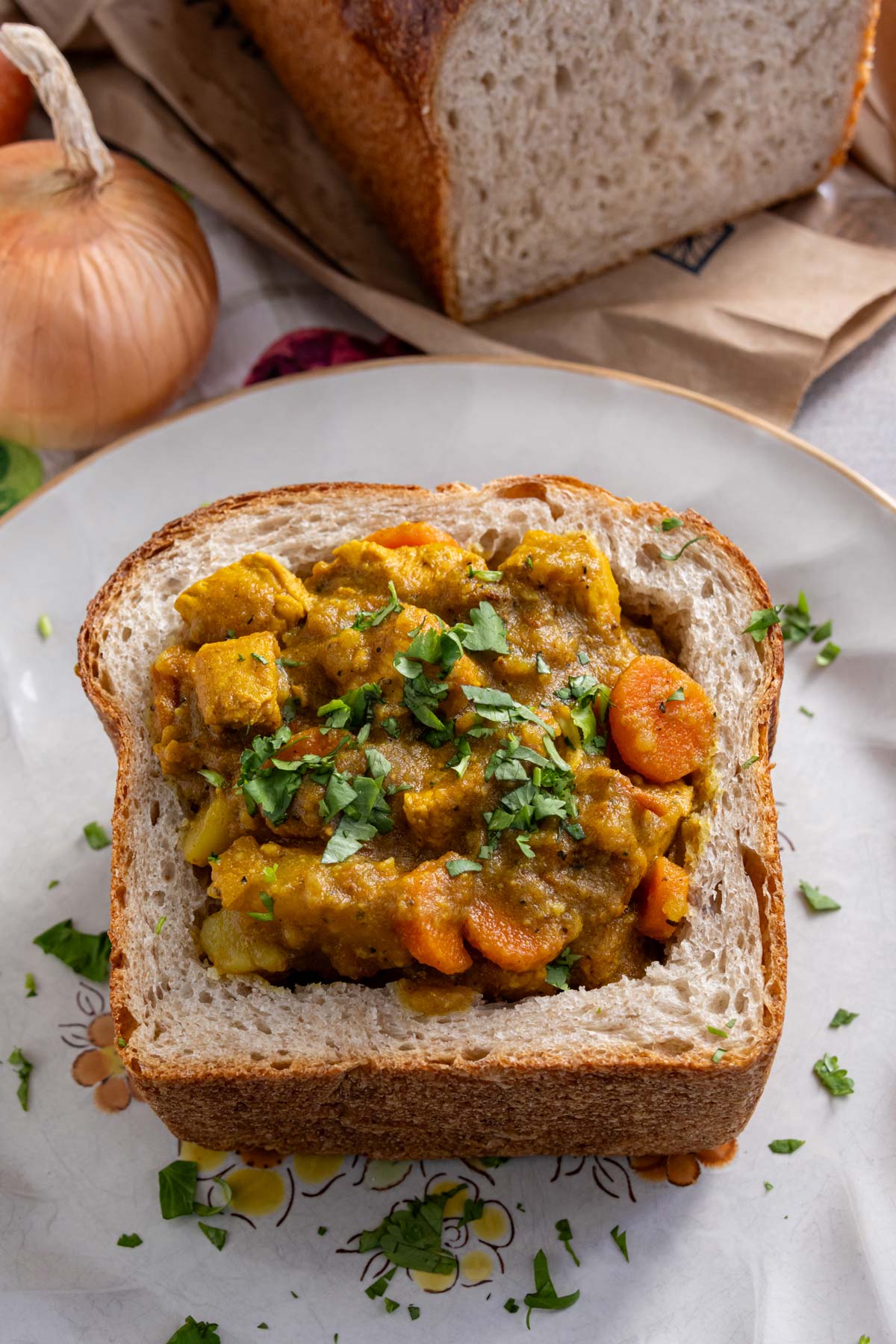
Bunny Chow is a Durban-style South African curry served in a hollowed out loaf of bread. In this case it's made with chicken and potatoes, but you could also use lamb, chickpeas or beans. No bunnies were harmed in the making of this bunny chow! If you love curry, you've got to try this unique version.
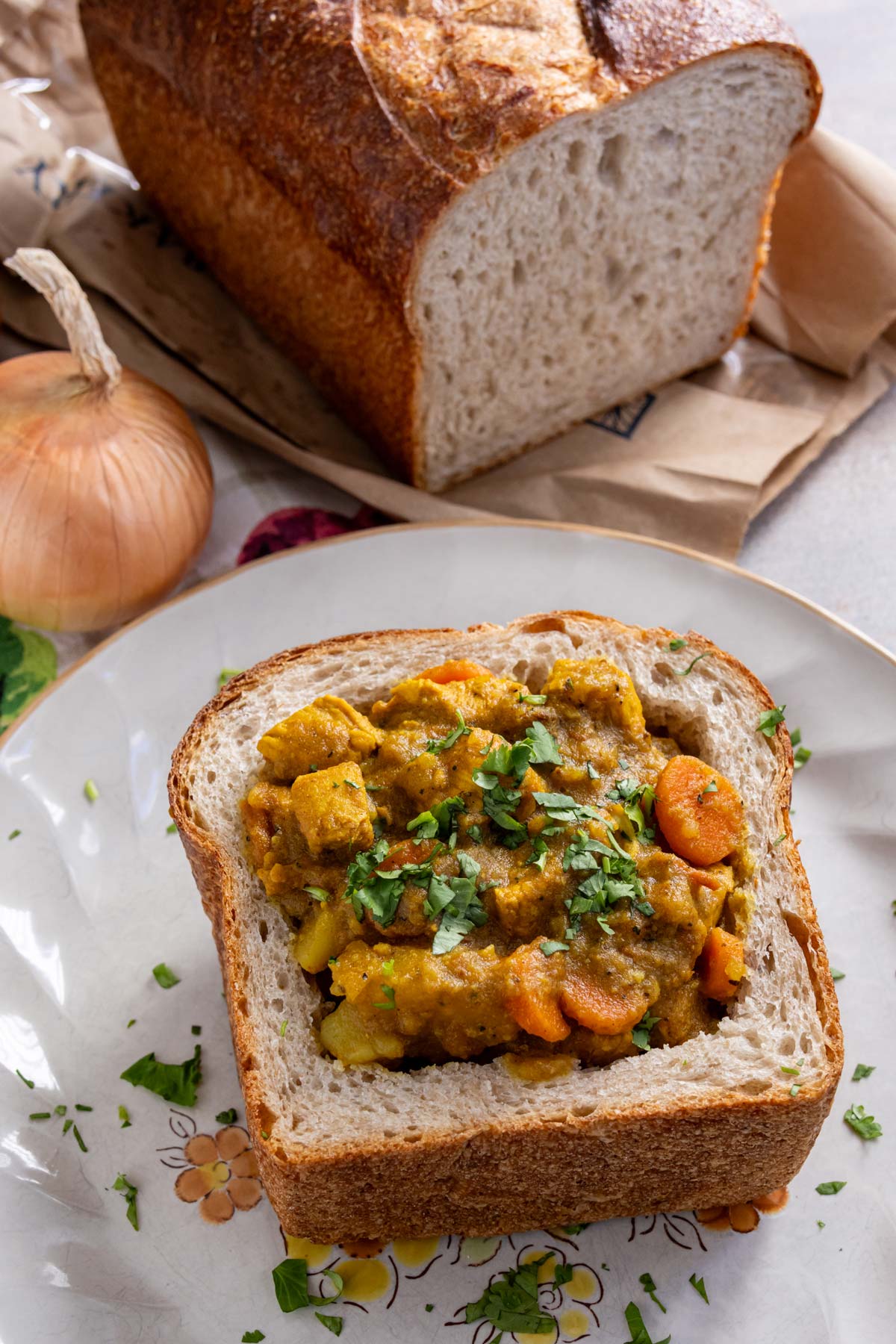
Bunny Chow originated in Durban, South Africa in the 1940's. Durban is the third largest city in South Africa and has the largest Indian population in the country.
The story goes that back in the 1940's, Indian laborers arrived in KwaZulu-Natal to work at the sugar plantations . They worked long hours with short breaks, requiring meals that were easy to eat, cheap, and practical.
A hollowed out loaf of bread filled with hot curry, typically vegetarian, was just the fix. Meat fillings came later. The filling was capped with the portion of bread that was carved out, then used to dip and eat the filling by hand. No utensils required!
The name "bunny chow" originates from the caste of Indian merchants who sold the curry, known as "bania," and the slang word for food, "chow." For all intents and purposes, the name "bania chow" or "bunny chow" means Indian food.
Nowadays, some of the most common fillings for bunny chow are curries featuring either lamb or mutton, chicken, or beans or chickpeas. They're often served with a side salad and/or pickled vegetables.
If one were to order bunny chow in Durban, they'd have options for various sizes such as quarter, half and full loaves. One would only need to ask for the size and flavor of their choice. For example, "Can I have a quarter chicken bunny?"
Ingredient notes

- Chicken: I use chicken because it's my go-to curry protein and cooks quickly. You could use any boneless, skinless cut of chicken cut into bite size pieces for this recipe. As an alternative, lamb or mutton are also popular meat choices for bunny chow (though cooking times would vary if you make a switch here). Meanwhile, chickpeas are very popular as a vegetarian option.
- Potatoes: Potatoes are very common as a hearty filler for this Durban-style curry. Waxy style potatoes, such as Yukon golds, are less likely to fall apart during cooking.
- Spices: You really can't make a curry (of any kind) without spices. Some of the spices used in this recipe include bay leaves, cinnamon stick, fresh ginger, cumin (both seeds and ground), garam masala (actually a spice mixture), ground turmeric, ground coriander, Kashmiri chili powder, and salt. Fresh garlic is not technically a spice (it's an allium/part of the onion family), but is also included in this bunny chow recipe.
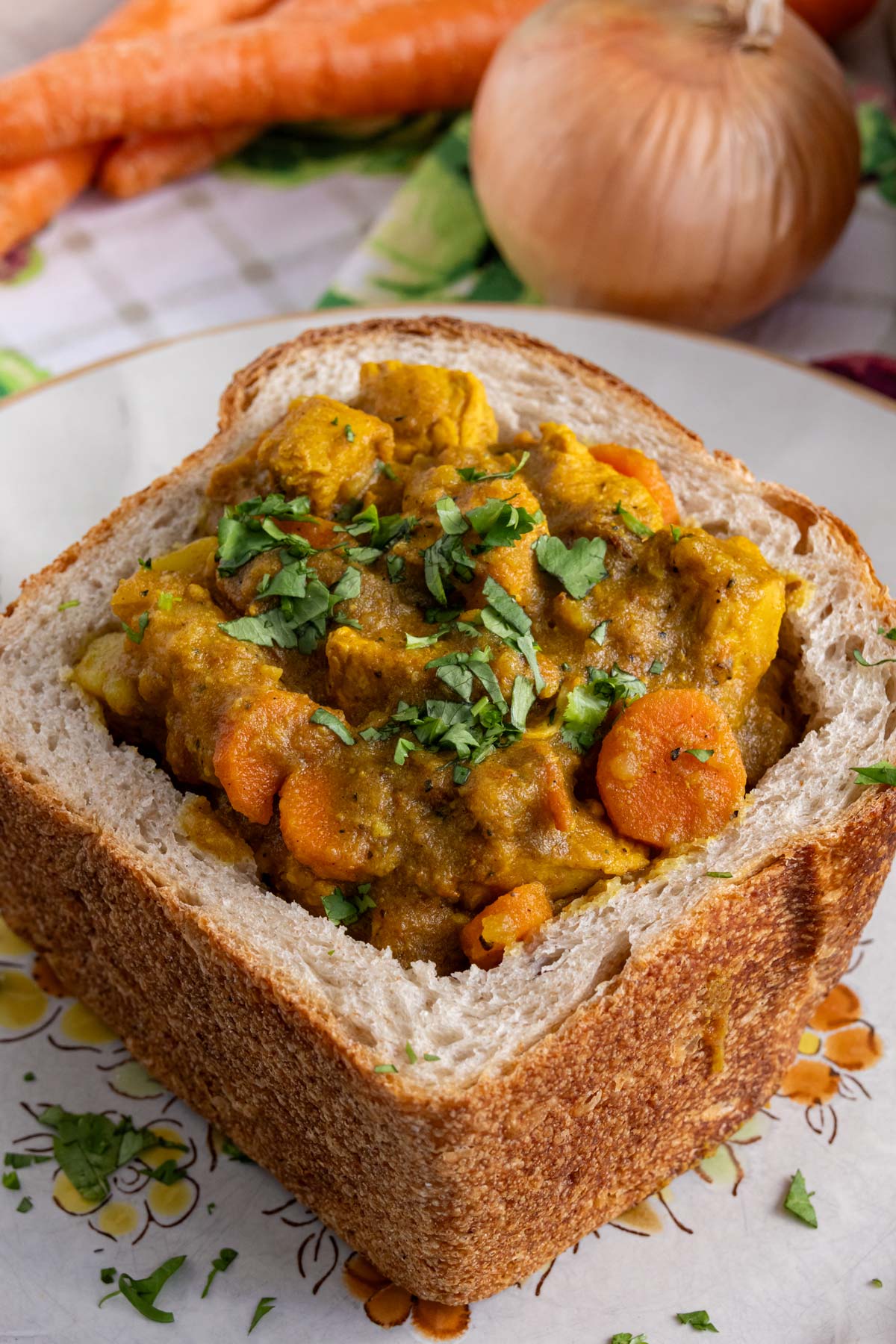
- Bread: Typically bunny chow is served in simple loaves of unsliced white sandwich bread, called government loaf. It will have a tighter crumb and super soft texture. You can cut the loaf into quarters, in half, or leave it whole and then hollow it out leaving a thick wall and bottom. You could also use smaller loaves of bread, like a small boule, and carve that out to create your bunny chows, but it's less traditional. I used a sourdough pan loaf, which also isn't traditional, but I like the texture and flavor. It's a bit sturdier too.
How to make it
Cut the loaf of bread crosswise into quarters. Hollow out most of the inside of each piece along the cut side leaving a small edge (about ¾-inches) around the sides and the bottom intact to create a bread bowl. Reserve the interior of the bread that was removed for dipping.
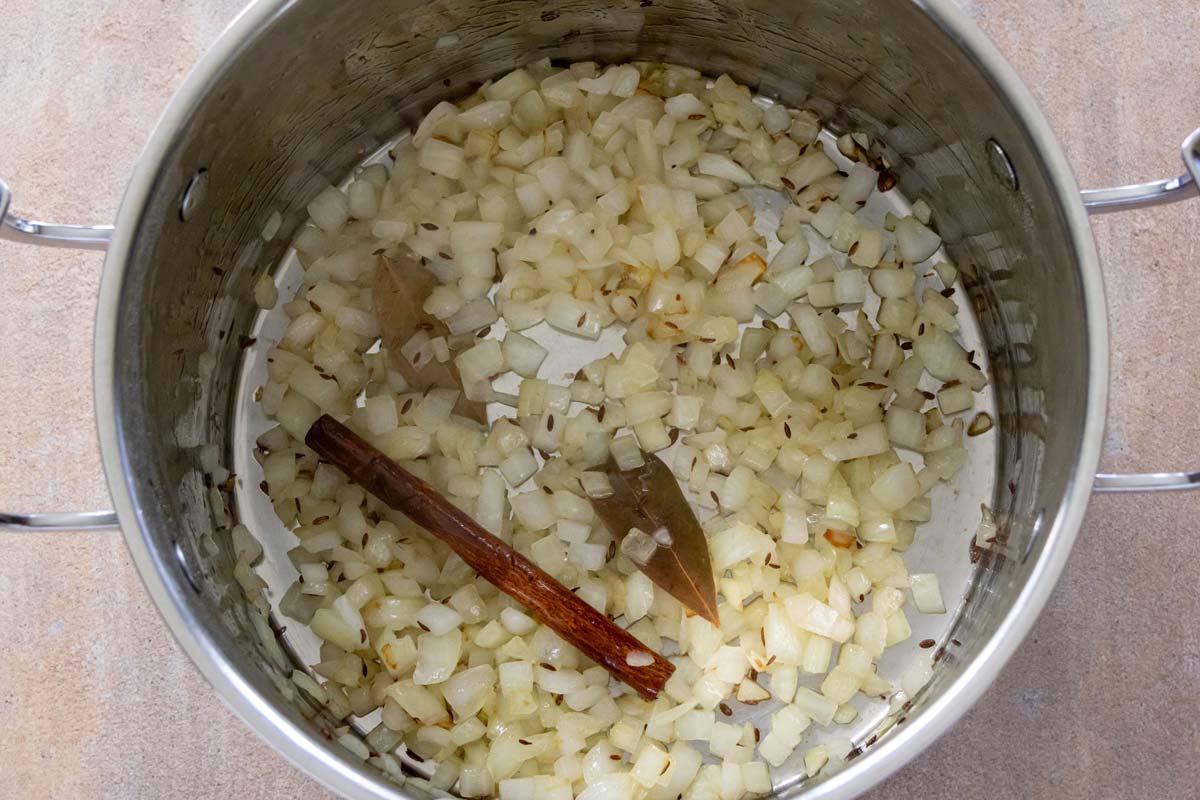
Heat oil in a medium pot over medium-high heat. When hot, add bay leaves, cinnamon stick, and cumin seeds. The seeds will sizzle and sputter. Stir for 15 to 30 seconds.
Then add onions and continue to cook, stirring regularly until softened, about 5 minutes.
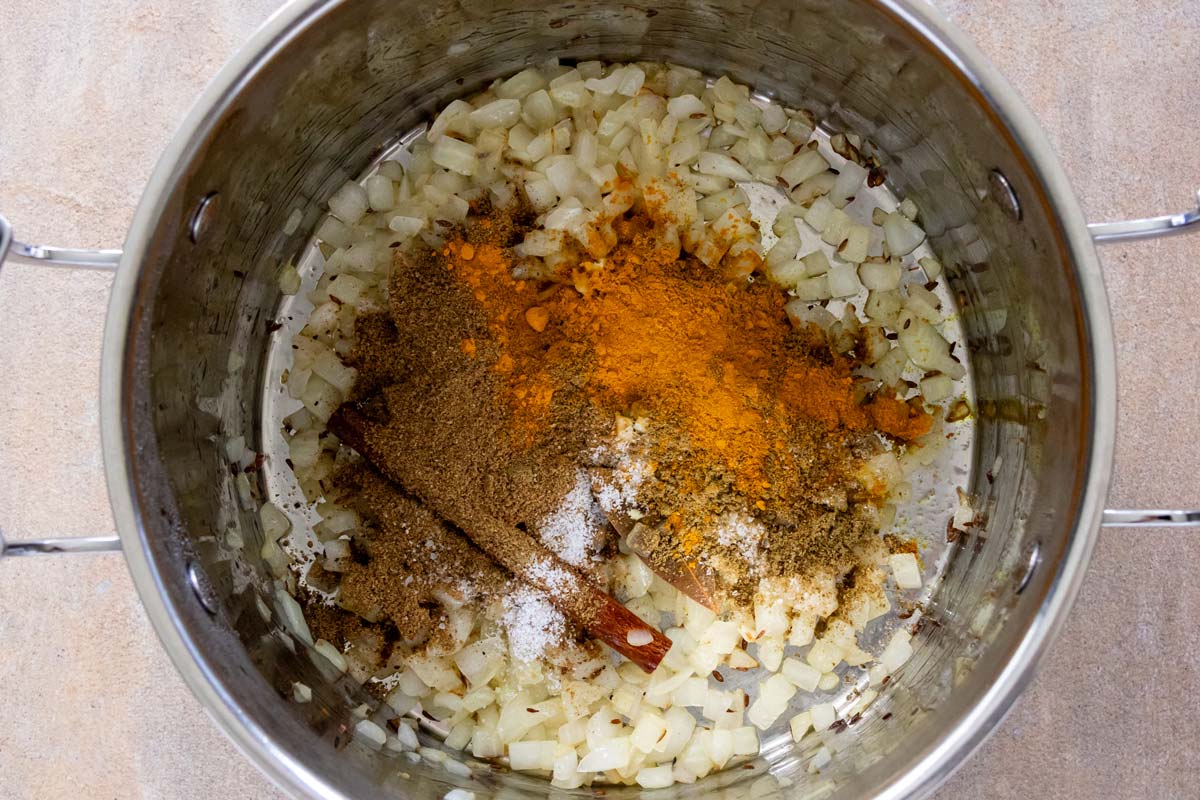
Next, add garlic, ginger, garam masala, ground turmeric, ground coriander, kosher salt, ground cumin, and Kashmiri chilli powder. Cook for another minute or so, until fragrant but don't let it burn.
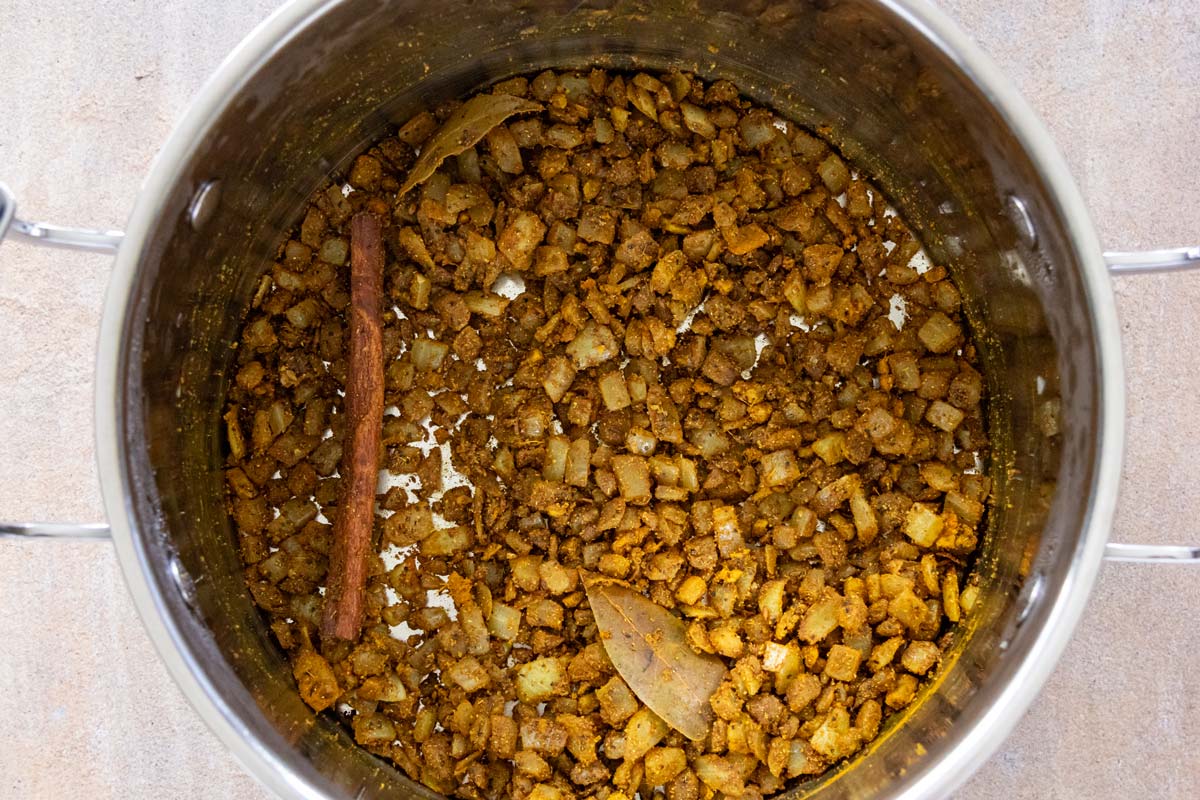
Add tomatoes, stirring to combine and cook for another minute.
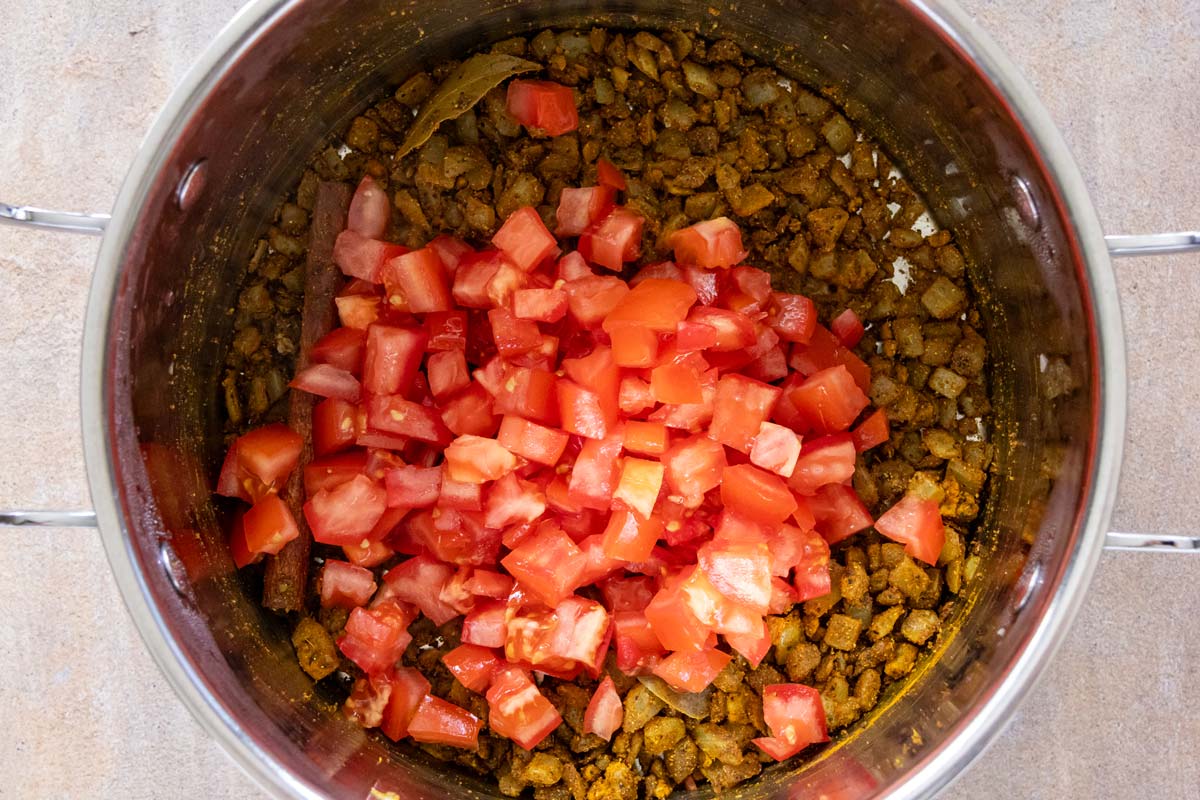
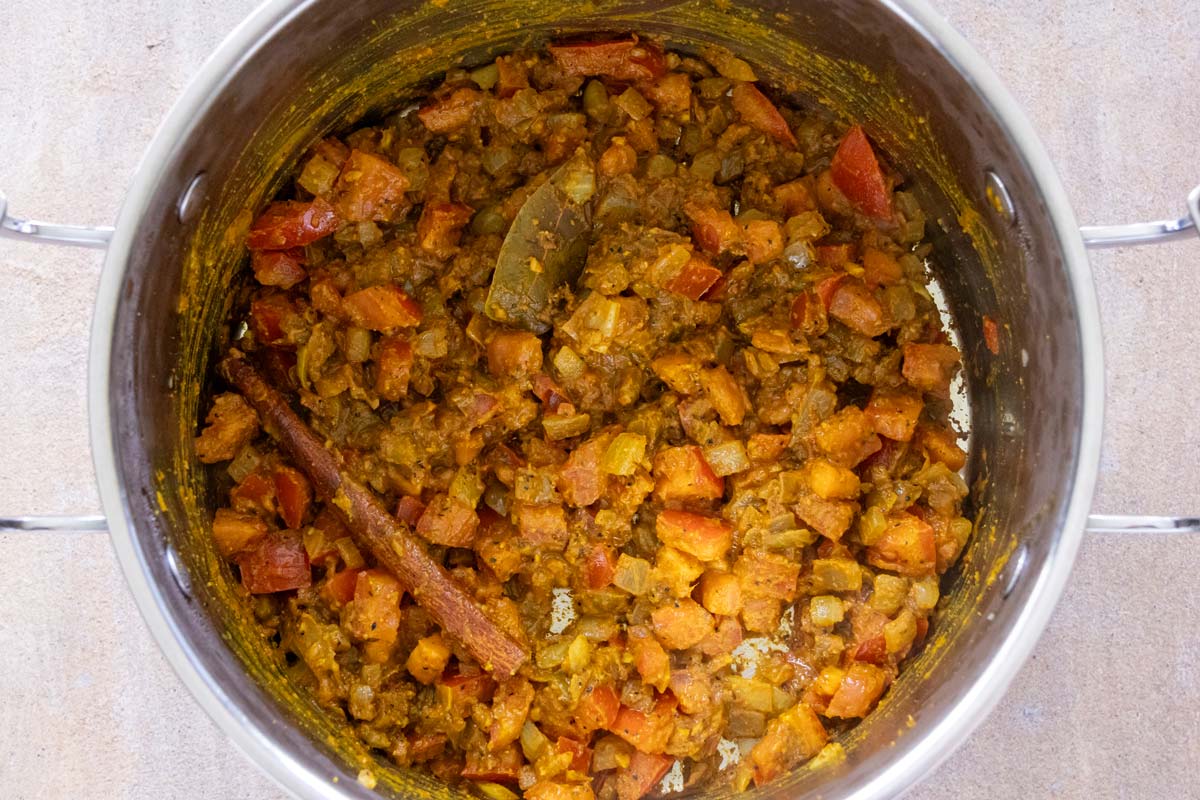
Next, add chicken, stirring to coat with the spices, and cook for a few more minutes.
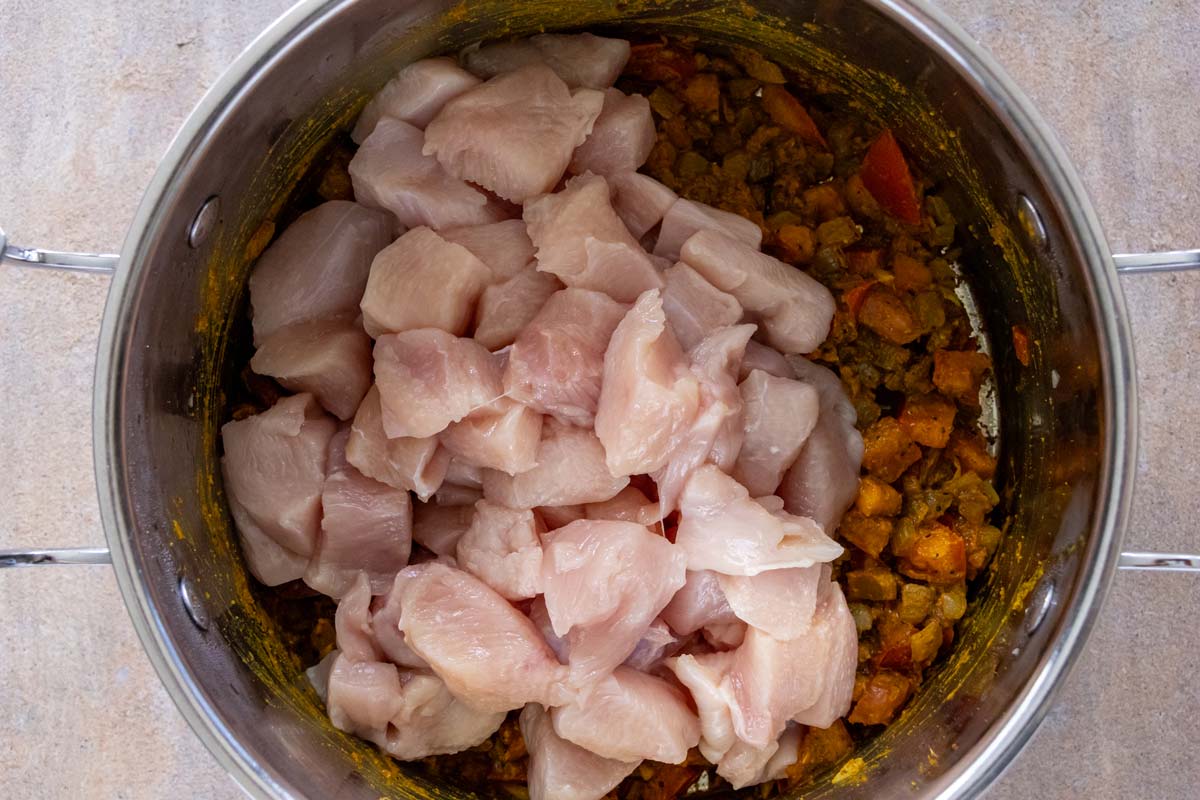
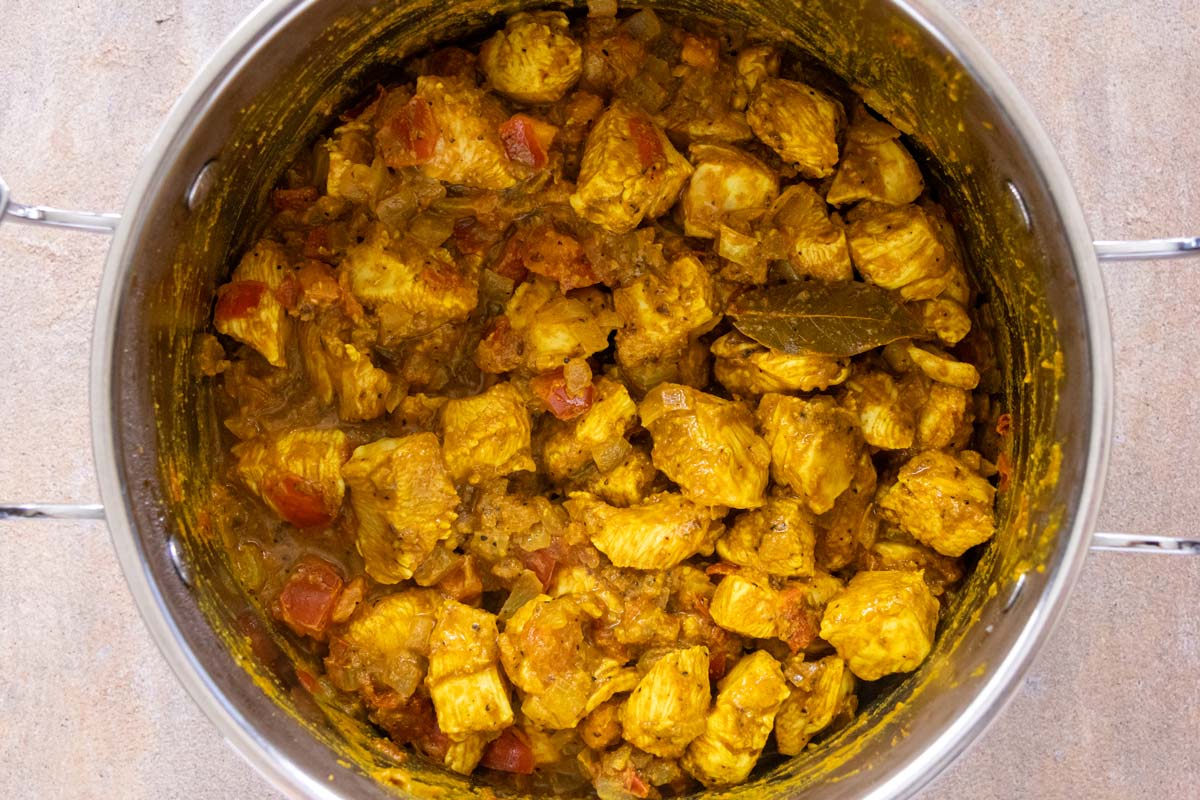
Then add broth, potatoes, and carrots.

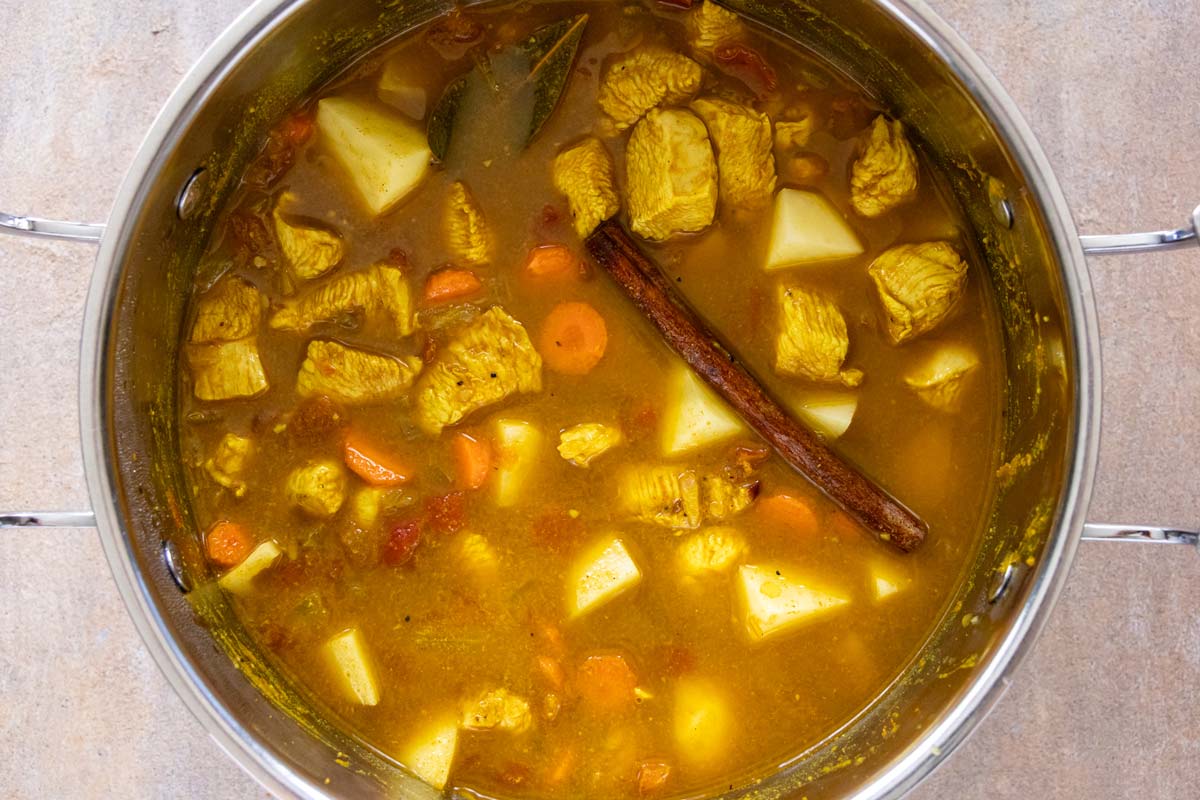
Raise the heat to bring to a boil, then reduce the heat. Simmer until the chicken and the potatoes are cooked through and the mixture has thickened and reduced significantly.
The amount of reduction to your liquid is a personal preference. Keep in mind that if it's too runny it will make the bread soggy, but too dry and you won't have sauce for dipping.
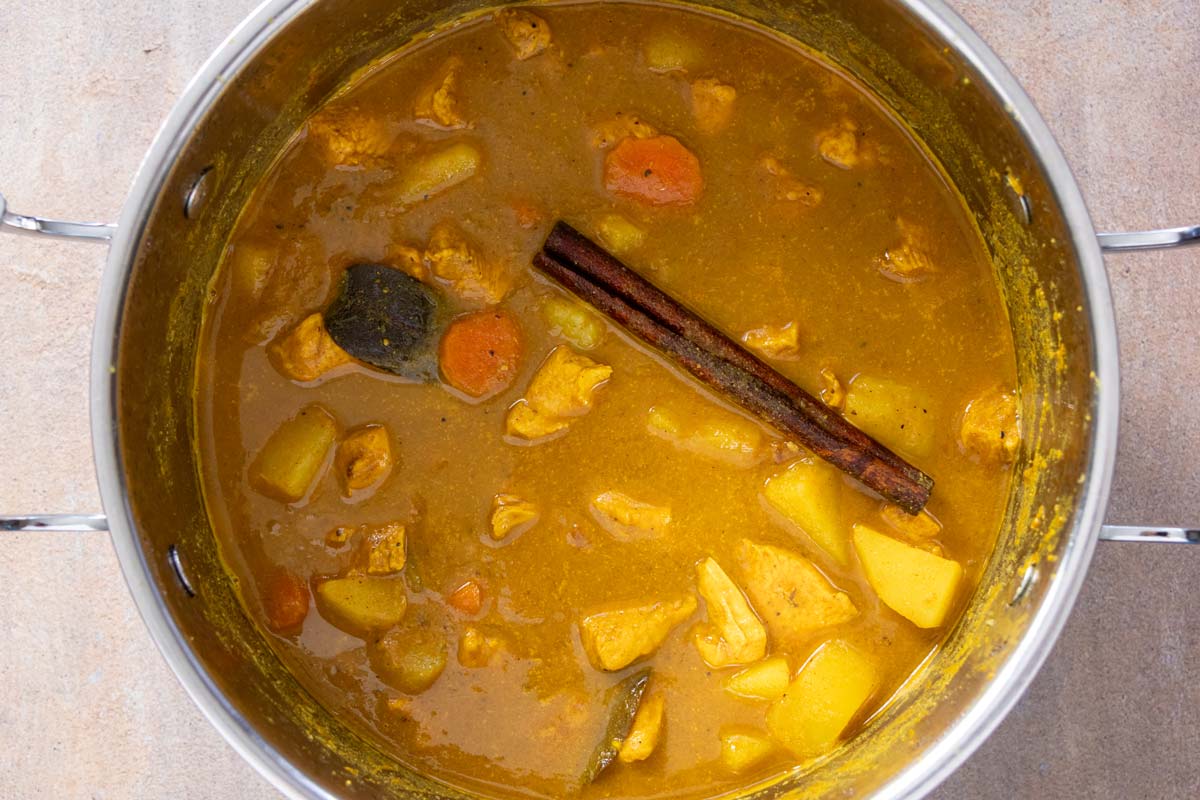
Remove the cinnamon stick and bay leaves. Taste and adjust seasoning as needed.
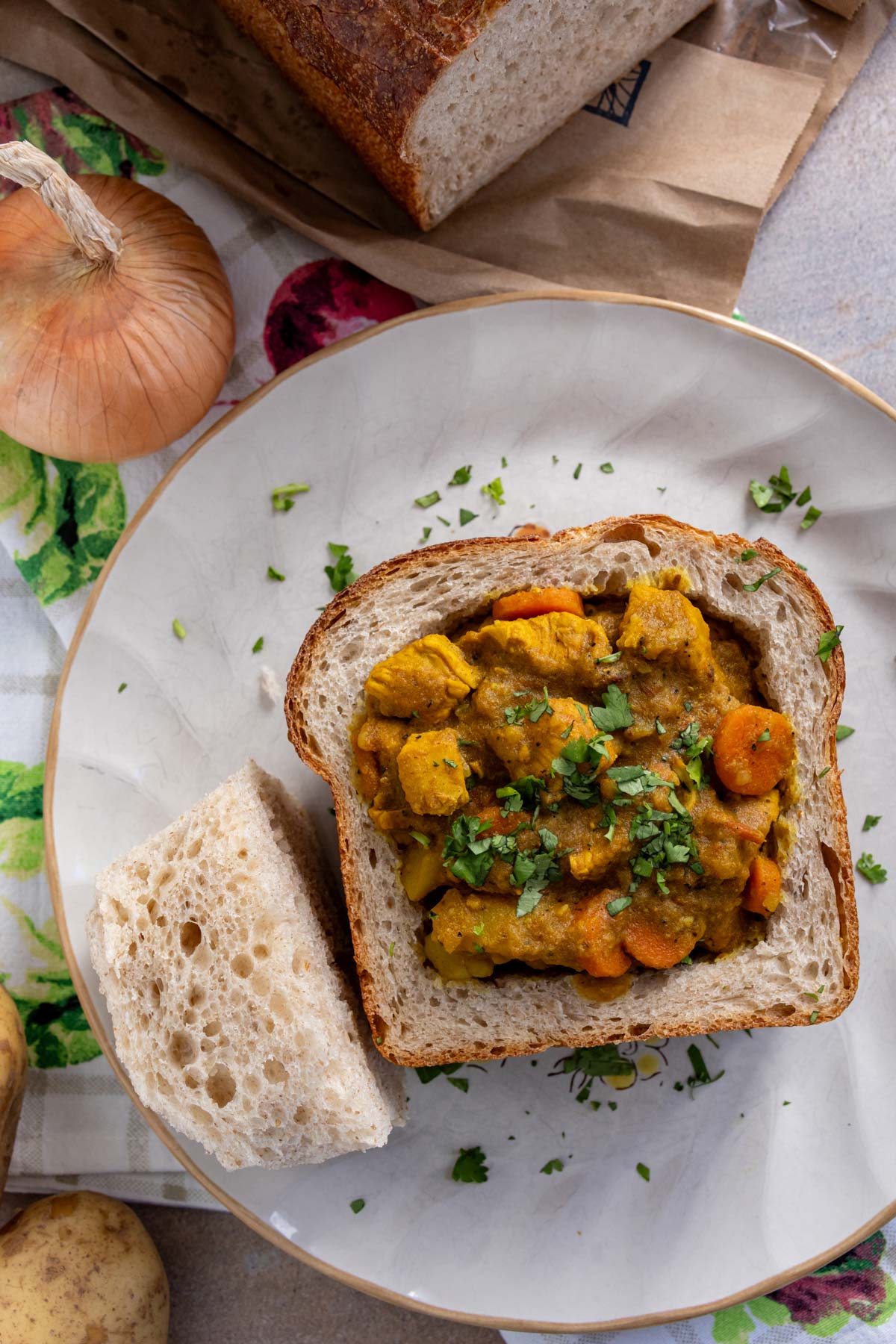
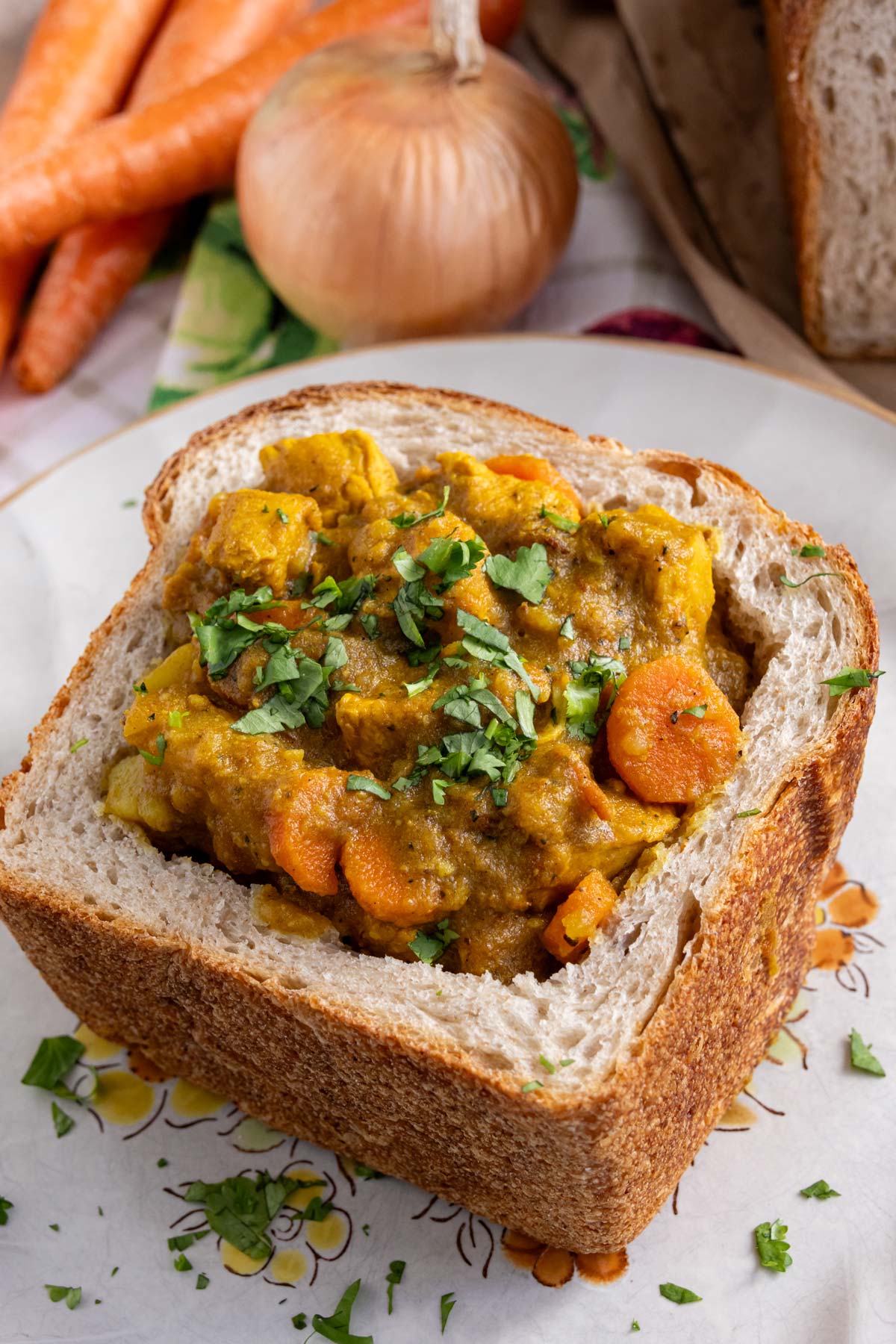
Serve the curry in the hollowed out portions of bread and top with chopped fresh cilantro, if desired, for some color.
Please scroll to the bottom of the post for the full recipe (in a printable recipe card) including ingredient amounts and detailed instructions.
Expert tips
Portioning and carving out the bread
This recipe yields two half bunnies or four quarter bunnies depending on your preference. I think a quarter bunny is more than satisfying enough for me, but if you have a big appetite, cut the loaf into halves instead of quarters and enjoy!
Use a sharp serrated knife, like a bread knife, to portion your loaf of bread into pieces. I use a smaller serrated paring knife to actually carve out the inside of my bread pieces, cutting along the inside edges all the way around, about ¾-inch from the edge. Then I use my fingers to gently pry the interior out from the bottom, making sure I leave a thick base of bread at the bottom.
Be careful when you are carving out the inside of the two interior pieces of the loaf. Since they don't have a crust at the bottom, it can be easy to rip holes in the base when pulling out the middle. Be gentle and remove the interior bread little by little if needed. Use extra bits of the removed bread to patch up any holes that occur to avoid leaks.
Serving and storage
Serve your bunny as is, or with some picked vegetables or salad on the side. Don't forget to serve with the carved out bread filling for dipping.
You can most definitely cook your curry filling a day or two in advance and refrigerate in a covered container until needed. Gently reheat on the stovetop in a pot over medium-low to medium heat. Add water as needed to ensure the filling does dry out or scorch to the bottom of the pot. It will thicken both as it cools and reheats, so definitely add water a little at a time during this reheating process until your curry is heated through and at the right consistency.
If you've assembled your bunnies but can't finish them, you're better off scooping the filling out of the bread and refrigerating the curry separate from the bread. Then reheat the filling (the microwave works great for a smaller amount) and reassemble your bunny chow, preferably with fresh bread, to enjoy the rest.
Variations
- Lamb: Replace the chicken with small cubed pieces of lamb. Cook for 15 to 20 minutes longer, or until the lamb is tender. Note: your potatoes may start to fall apart after extensive cooking-if using lamb I would personally plan to stew the meat for 15 to 20 minutes before adding the potatoes/carrots and then continue cooking until everything is done.
- Chickpeas or Beans: Replace the chicken with drained and rinsed canned chickpeas or beans. You could also cook the chickpeas/beans from scratch but I would plan to cook them separately, drain, and later add them to the curry, otherwise your potatoes and carrots will seriously overcook. Also, cooking beans in a salty liquid can cause them to get tough, so cooking them outside of the curry first would be the best method.
- Minis: Use small hollowed out rolls to make cocktail style bunnies. In this case, I would cut the meat and vegetables into much smaller pieces in order to easily fit into the rolls.
Other recipes you may like
- Braaibroodjie (South African Grilled Cheese)
- Cape Malay Chicken Curry
- Karipap Pusing (Malaysian Spiral Curry Puffs)
- Kare Udon (Japanese Curry Udon Soup)
- Burmese Beef Curry with Potatoes
- Chicken Saag (Indian Chicken and Spinach Curry)
Tried this recipe? Please leave a star ⭐️⭐️⭐️⭐️⭐️ rating in the recipe card below and/or a review in the comments section further down the page. You can also follow me on social media on Facebook, Instagram, and Pinterest!
Bunny Chow (South African Curry in Bread Bowls)
Ingredients
- 1 unsliced loaf of white sandwich bread
- 2 tablespoons vegetable or canola oil
- 2 bay leaves
- 1 cinnamon stick
- ½ teaspoon cumin seeds
- 1 large onion diced
- 1 tablespoon minced or crushed garlic
- 1 ½ teaspoons minced fresh ginger
- 3 tablespoons garam masala
- 2 teaspoons ground turmeric
- 1 teaspoon ground coriander
- 1 teaspoon kosher salt preferably Diamond Crystal brand (if using another brand start with half the amount then add more later if needed)
- ½ teaspoon ground cumin
- ¼ to ½ teaspoon ground kashmiri chilli powder or cayenne pepper
- 2 medium tomatoes diced
- 1 ½ pounds boneless skinless chicken breasts, tenders, or thighs cut into bite sized pieces
- 2 cups chicken broth or water
- 2 medium potatoes peeled and cubed into 1-inch pieces (about 1 pound)
- 2 carrots peeled and diced
- Fresh cilantro optional for garnish
Instructions
- Cut the loaf of bread crosswise into quarters (alternatively you could make 2 large portions by cutting the loaf in half). Hollow out most of the inside of each piece along the cut side leaving a small edge (about ¾-inches) around the sides and the bottom intact to create a bread bowl. Reserve the interior of the bread that was removed for dipping.
- Heat the oil in a medium pot over medium-high heat. When hot, add the bay leaves, cinnamon stick, and cumin seeds. The seeds will sizzle and sputter. Stir for 15 to 30 seconds.
- Then add the onions and continue to cook, stirring regularly until softened, about 5 minutes. Next, add the garlic, ginger, and all of the spices. Cook for another minute or so, until fragrant but don't let it burn.
- Add the tomatoes, stirring to combine and cook for another minute. Next, add the chicken, stirring to coat with the spices, and cook for a few more minutes.
- Add the broth, potatoes, and carrots. Raise the heat to bring to a boil, then reduce the heat to medium. Simmer covered at first for about 5 minutes, then uncovered for another 20 to 30 minutes, stirring regularly. The chicken and the potatoes should be cooked through and the mixture should have thickened and reduced significantly. The amount of reduction to your liquid is a personal preference, but keep in mind that if it's too runny it will make the bread soggy, but too dry and you won't have sauce for dipping.
- Remove the cinnamon stick and bay leaves. Taste and adjust seasoning as needed. Serve the curry in the hollowed out portions of bread and top with chopped fresh cilantro, if desired, for some color.
Notes
- This recipe yields two half bunnies or four quarter bunnies depending on your preference. I think a quarter bunny is more than satisfying enough for me, but if you have a big appetite, cut the bread into halves instead of quarters and enjoy!
- Use a sharp serrated knife, like a bread knife, to portion your loaf of bread into pieces. I use a smaller serrated paring knife to actually carve out the inside of my bread pieces, cutting along the inside edges all the way around, about ¾-inch from the edge. Then I use my fingers to gently pry the interior out from the bottom, making sure I leave a thick base of bread at the bottom.
- You can cook your curry filling a day or two in advance and refrigerate in a covered container until needed. Gently reheat on the stovetop in a pot over medium-low to medium heat. Add water as needed to ensure the filling does dry out or scorch to the bottom of the pot. It will thicken both as it cools and reheats, so definitely add water a little at a time during this reheating process until your curry is heated through and at the right consistency.
- The nutritional information for this recipe is an estimate based on the assumption that some of the interior of the bread is scooped out but not necessarily consumed.
Nutrition
*All nutritional information is based on third-party calculations and should be considered estimates. Actual nutritional content will vary with brands used, measuring methods, portion sizes and more.*



Comments
No Comments