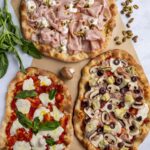
Pinsa Romana (Roman-Style Pizza)
Try a taste of Rome in your own kitchen! Although you’ll find variations of pizza throughout Italy, Pinsa is a unique style which originates in Rome. These oval-shaped personal-size pies feature a unique blend of flours in the crust, yielding the perfect balance of crisp and chew while also making this distinctive pizza easier to digest.
Servings: 3 pinse
Calories: 739kcal
Ingredients
- 500 grams (4 cups) bread flour
- 50 grams (⅓ cup) rice flour plus more for dusting
- 30 grams (3 tablespoons) spelt or soy flour
- 3 grams (1 teaspoon) instant or rapid-rise yeast
- 400 grams (1 ⅔ cups) cold filtered water (from the fridge)
- 10 grams (1 tablespoon) kosher salt preferably Diamond Crystal brand (if using Morton, you may need half the amount in volume)
- 10 grams (1 tablespoon) extra-virgin olive oil plus more for brushing
Instructions
- Combine all three flours and the yeast in the bowl of a stand mixer fitted with the dough hook attachment. With the machine running on low speed, add about 1 ¼ cups (300 grams) of the cold water in a few additions, mixing between each addition, until there are no dry patches of flour left in the bowl, a few minutes.
- Add the salt and olive oil and continue to mix on medium speed, then add the remaining water a little at a time until combined, a few minutes. It will still look a bit wet and chunky.
- Increase the mixer speed to medium-high and continue to knead the dough. At first it will continue to stick to the sides, but eventually it will pull together into a ball. It might whip around a bit, stuck to the dough hook, but that’s fine. Pause the machine once or twice, pull the dough off the dough hook and continue mixing. Mix for a total of 7 to 10 minutes, or until the dough is smooth, elastic, and still a bit tacky to the touch.
- Transfer the dough to a lightly oiled large mixing bowl. Cover tightly with plastic wrap and transfer to the fridge for 24 to 72 hours for cold fermentation.
- About 3 to 4 hours before baking, remove the dough from the refrigerator. Lightly dust a work surface with rice flour and carefully turn the dough out of the bowl onto the surface. Divide the dough into 3 equal pieces weighing around 330 to 335 grams each. (You can also divide the dough into 4 pieces if you want slightly smaller pinse; in that case, aim for roughly 250 gram balls).
- Using your hands, form a dough ball out of each piece of the dough. I like to flip the dough over in my hands (since the bottom now has rice flour on it but the top is more sticky) and then pull the edges to the bottom to create a smooth ball.
- If your work surface is large enough you can leave the balls on there (spacing them out so they have room to rise), or transfer them to a parchment paper-lined and rice flour-dusted baking sheet. Lightly dust the tops with rice flour, then cover loosely with plastic wrap or a clean kitchen towel. Let it rise at room temperature until the dough has doubled, about 1 to 3 hours (depending on the ambient temperature).
- While the dough is proofing, you can prepare your pinsa toppings.
- At least 1 hour before baking, place a pizza stone on the center rack of the oven and preheat to the hottest temperature it will go 550°F (280°C) or at least 500°F (260°C).
- Working with one ball of dough at a time, place on a lightly rice floured work surface and gently stretch from the center toward the edges to create an oval or rectangle shape. You can use your fists underneath the dough to help stretch, then move toward the edges and let gravity help you. If the dough springs back, let it rest for a couple minutes, then try again. The ovals should measure about 12-to-14-inches in length and 9-to-11-inches in width (it can take some practice, but the thinner/larger you can get it the better).
- Transfer the stretched dough to a rice flour-dusted pizza peel (if it’s large enough), wooden cutting board, or the flat bottom (upside down) of a baking sheet, drizzle the top of the dough with a little extra-virgin olive oil and blot/spread gently with a pastry brush to lightly cover the entire surface.
- Carefully transfer the dough from the peel/board to the heated pizza stone. Bake for about 5 to 6 minutes. Keep in mind that the crust will brown even more after you add the toppings later on. I like mine well-done and extra crispy, but you may not; if that’s the case, bake them a bit less at this stage. If you see any particularly large bubbles appear mid-baking, you can poke them with the tip of a knife and quickly but carefully use the side of the knife blade to gently deflate them. Although bubbles are great (and one of the features of a good pinsa), if they’re especially big it will be harder to arrange your toppings.
- Remove from the oven and repeat with the remaining dough. Then add the toppings of your choice to each pinsa and, using the pizza peel, return as many as may fit on your pizza stone to the oven. Bake for about 4 more minutes, or as needed to heat the toppings and melt the cheese.
- Remove from the oven using the peel and cut with scissors or a serrated knife into pieces to serve.
Notes
- Topping suggestions:
- Marinara: Tomato sauce, sliced fresh garlic, fresh oregano.
- Margherita: Tomato sauce, fresh mozzarella, fresh basil, and extra-virgin olive oil.
- Cherry Tomatoes & Stracciatella: (I had this flavor combo in Rome!) tomato sauce, halved cherry tomatoes, stracciatella cheese, and fresh basil.
- Diavola: Tomato sauce, fresh mozzarella, spicy salami, and chili flakes.
- Capricciosa: Tomato sauce, fresh mozzarella, artichokes, ham, mushrooms, and olives.
- Quattro Formaggi: (bianca – white pizza without tomato sauce, or rossa – red pizza with tomato sauce) fresh mozzarella, gorgonzola, fontina, and Parmigiano-Reggiano.
- Mortazza: (toppings are not baked on the pizza) sliced mortadella, burrata or stracciatella cheese, and chopped pistachios or pistachio pesto drizzle.
- You can bake the dough to create pinsa bases in advance. When you’re ready, add your toppings and finish baking in a super hot oven for a few minutes. Technically you can even eat pinsa without toppings like bread if you really wanted! It’s very versatile.
- Store leftover pinsa in an airtight container or wrapped in aluminum foil in the refrigerator for up to 3 days. Reheat in a hot toaster oven or regular oven (about 400 to 425°F) on a foil-lined pan (for easy cleanup) until heated through.
Nutrition
Serving: 1pinsa (without toppings) | Calories: 739kcal | Carbohydrates: 143g | Protein: 25g | Fat: 4g | Saturated Fat: 1g | Polyunsaturated Fat: 1g | Monounsaturated Fat: 3g | Sodium: 1335mg | Potassium: 67mg | Fiber: 7g | Sugar: 1g
Check out the original post for more information, step-by-step photos, and more by scanning this QR code!