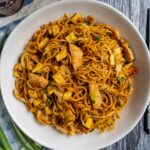
Mie Goreng (Indonesian Stir-Fried Noodles)
Mie Goreng (also spelled Mi Goreng or Mee Goreng) is an Indonesian stir-fried noodle dish that also has variations in Malaysia and other parts of Southeast Asia. The stir-fry sauce features a unique balance of savory, sweet, and spicy.
Servings: 2 servings
Calories: 672kcal
Ingredients
Mie Goreng Sauce:
- 2 tablespoons kecap manis (sweet soy sauce)
- 1 tablespoon light (regular) soy sauce
- 2 tablespoons ketchup
- 1 tablespoon oyster sauce
- 2 teaspoons toasted sesame oil
- 1 teaspoon sriracha or sambal oelek or more if desired for more spice
Stir-Fried Noodles:
- 6 ounces (170 grams) dried Chinese egg noodles OR 10 ounces (285 grams) fresh/par-cooked Chinese egg noodles (any yellow/wheat noodles can work, but I used fresh/par-cooked chow mein aka Hong Kong-style stir-fry noodles)
- 1 tablespoon vegetable oil
- 1 large egg beaten
- 4 ounces (113 grams) thinly sliced raw chicken breast OR peeled and deveined shrimp
- 3 cloves garlic minced or crushed
- 1 cup packed (85 grams) shredded/thinly sliced cabbage or chopped bok choy
- 1 cup packed (85 grams) bean sprouts
- 1 roma tomato cut into 6 wedges
- 2 scallions chopped
Instructions
- Whisk together the sauce ingredients in a bowl and set aside.
- If using dry noodles or fresh noodles that require cooking, boil the noodles according to package directions, drain, rinse with cold water, and set aside. If using fresh/par-cooked noodles (check the packaging for cooking instructions), you don’t need to boil them in advance.
- While the noodles are boiling, heat half the oil in a wok or large (preferably nonstick) skillet or pan over medium-high heat. Add the beaten egg, tilting the pan slightly so it spreads out evenly. Cook the omelet for about 1 to 2 minutes and then flip it over and finish cooking the other side for a few more seconds until it’s cooked through (it’s ok if it breaks up, you’re going to chop it anyway). Remove from the pan to a cutting board and cut it into strips or dice it up.
- Add the remaining oil to the pan over high heat and add the chicken or shrimp, stir-frying for 1 to 2 minutes until mostly cooked through.
- Add the garlic, and stir-fry for another 30 to 60 seconds or so until fragrant. Toss in the cabbage and bean sprouts and cook for about 1 minute until they begin to wilt.
- Add the tomato wedges and stir-fry for 30 to 60 seconds until they start to soften (Note: if using par-cooked noodles you can hold off on adding the tomatoes until the last step and add them with the omelet and scallions so they stay more intact).
- Add the noodles and the prepared sauce. If you have boiled your noodles, stir-fry them for about 1 minute, but if your noodles are the par-cooked kind that don’t require boiling, stir-fry for about 3 minutes so they can finish cooking. You can add a splash of water or two if it seems really dry. This will help finish hydrating the noodles since the stir-fry sauce is on the thicker side.
- Finally, add the chopped/sliced omelet, scallions, and tomatoes if you hadn’t added them earlier. Toss together until evenly coated, cooking for another minute so all the flavors absorb. Serve immediately.
Notes
- Yellow Chinese egg noodles (such as chow mein noodles) are perfect for making mie goreng. You can use dried, fresh, or par-cooked Chinese egg noodles. Use about 10 ounces fresh/par-cooked in place of the 6 ounces dried. The par-cooked chow mein noodles I used are from Twin Marquis and can be added right to the stir-fry without boiling first. Always follow package directions to determine how to prep the noodles before stir-frying them, as methods will vary depending on the noodle. You could also use lo mein noodles (which are a bit thicker than chow mein noodles) or instant ramen noodles (about 3 packages of the noodles only without the seasoning packet). In a pinch, you could use spaghetti though it’s not really the best or most authentic substitute.
- Mie goreng isn’t mie goreng without kecap manis, or Indonesian sweet soy sauce. If you can’t find kecap manis to purchase it, you can make a variation yourself for this recipe. To do so combine three parts honey, maple syrup, or brown sugar with one part soy sauce.
- Although a lot of recipes don’t feature fresh tomatoes, my favorite mie goreng from a local restaurant includes tomatoes. I love the freshness and juiciness that the tomatoes contribute to this dish. If you add them midway through cooking they will soften and get juicy. Alternatively, add them closer to the end to retain their structure.
- You can certainly customize this recipe to your preferences (or to whatever you have on hand). Here are some suggestions:
- Omit the chicken/shrimp and use a vegetarian stir-fry sauce instead of the oyster sauce to make a vegetarian version
-
- Add more/other veggies such as bell peppers, mushrooms, or carrots
Nutrition
Calories: 672kcal | Carbohydrates: 99g | Protein: 34g | Fat: 16g | Saturated Fat: 3g | Polyunsaturated Fat: 5g | Monounsaturated Fat: 6g | Cholesterol: 126mg | Sodium: 1703mg | Potassium: 670mg | Fiber: 4g | Sugar: 24g
Check out the original post for more information, step-by-step photos, and more by scanning this QR code!