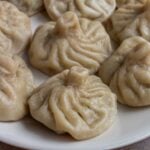
Khinkali (Georgian Dumplings)
Khinkali are large, pleated Georgian dumplings typically filled with a juicy meat filling seasoned with lots of onion and fresh cilantro. They're eaten by hand and finished simply with ground black pepper.
Servings: 22 dumplings
Calories: 152kcal
Ingredients
Dough:
- 525 grams (4 cups + 3 tablespoons) all-purpose flour plus more for dusting
- 1 teaspoon kosher salt
- 2 large eggs beaten
- 1 cup water hot (not boiling)
Filling:
- 225 grams (8 ounces) ground beef
- 225 grams (8 ounces) ground pork
- ½ cup (65 grams) finely chopped onion
- ½ cup (25 grams) finely chopped cilantro
- 56 grams (2 ounces / 4 tablespoons) unsalted butter melted
- 2 cloves garlic crushed
- ½ to 1 tablespoon kosher salt (use ½ tablespoon for Morton’s brand or 1 tablespoon for Diamond Crystal brand)
- ½ teaspoon crushed red pepper flakes
- 1 cup water or beef broth
Cooking and Serving:
- Water
- Kosher salt
- 2 bay leaves
- Ground black pepper
Instructions
To make the dough:
- Combine the flour and salt in a large mixing bowl or in the bowl of a stand mixer fitted with the dough hook.
- If mixing by hand, create a well in the center of the flour and add the eggs and water, then stir starting in the center and moving outward to absorb all of the flour into the liquid to create a dough; knead for about 5 to 10 minutes until smooth.
- If using the stand mixer, mix on medium speed until the dough comes together into a smooth ball, about 3 minutes.
- It should be slightly tacky but not sticky. Cover the dough with a tea towel or plastic wrap and set aside to rest while you make the filling.
To make the filling:
- Combine all of the filling ingredients except the water in a mixing bowl until thoroughly combined. Add the water about ¼ cup at a time and stir until it’s completely absorbed into the filling.
To assemble:
- Cut the dough in half, place one half back into the bowl and cover, and place the other half on a work surface dusted lightly with flour. Roll the dough out to about a ¼ inch thickness and cut it into 3 ¾-inch diameter circles. Set the scraps aside with the reserved dough and reroll it later. Then, individually, roll out each cut circle to about 5-inches in diameter. If possible, roll the edges a little thinner.
- Place about 1 ½ tablespoons filling into the center of each dough. Gather the edges little by little and pleat all the way around like an accordion to enclose the filling. When you have pleated all the way around, pinch the dough together firmly and give it a little twist to create the stem or handle. You can snip the top of the handle with kitchen shears to trim it slightly, if desired.
- Set finished khinkali aside on a tray or sheet pan lined with parchment paper and dusted with flour. Cover so they don’t dry out, and repeat with the remaining dough and filling, re-rolling the dough scraps as needed. You should have about 22 to 24 khinkali.
- Generously salt a large pot of water and add the bay leaves (you can also simultaneously cook them in 2 smaller pots if you don’t have a large pot). Bring it to a boil. In batches, add the khinkali (about a dozen at a time depending on the size of your pot) and use a spoon to gently move them around so they don’t stick to the bottom.
- Boil for about 6 to 8 minutes (they will flip upside down and float to the surface when done). Lower the heat if needed so it’s a gentle but not rapid boil. Use a spider skimmer to remove the cooked khinkali and set them aside. Repeat with the remaining dumplings.
- Place finished khinkali on a serving platter and serve immediately with black pepper.
Notes
- Don’t use utensils to eat your khinkali! That’s actually considered poor etiquette. Hold the handle, or kudi, between your fingers and flip the khinkali upside down. Sprinkle it with black pepper, take a small bite of dough from one of the edges to create an opening and blow on it to help cool the filling a bit. Then slurp out some of the broth and eat the dumpling.
- To Freeze: Place assembled but uncooked khinkali on a lightly floured parchment paper-lined baking sheet and freeze until frozen solid. Transfer fully frozen khinkali to a freezer bag or other airtight freezer-safe container for up to 3 months. No need to thaw before boiling them, but cook them longer as needed until they float to the surface.
- I use a large rolling pin to roll out the dough, but then a smaller wooden dowel to roll out each disc. It's a bit easier to maneuver.
- I use a medium cookie scoop to portion out the filling evenly onto each disc of dough. If you have leftover meat filling, you can shape it into a patty and pan-fry it.
- Make sure to use enough flour so your assembled khinkali don’t stick to your work surface or to the parchment paper-lined baking sheet.
- If you don't have a large pot, you can simultaneously boil your Georgian dumplings in 2 smaller pots in order to avoid boiling in too many batches. They'll be done quicker this way.
Nutrition
Serving: 1dumpling | Calories: 152kcal | Carbohydrates: 18g | Protein: 7g | Fat: 6g | Saturated Fat: 3g | Monounsaturated Fat: 1g | Cholesterol: 35mg | Sodium: 290mg | Potassium: 67mg | Fiber: 1g
Check out the original post for more information, step-by-step photos, and more by scanning this QR code!