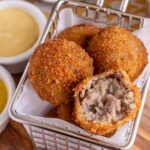
Bitterballen (Dutch Fried Meatballs)
Bitterballen, or Dutch Fried Meatballs, are a popular Dutch bar snack similar to croquettes and served with mustard for dipping. Serve them with ice cold beer and you’ll feel like you’ve been transported to Amsterdam!
Servings: 46 balls
Calories: 77kcal
Ingredients
Bitterballen:
- 113 grams (1 stick / 4 ounces) unsalted butter
- 125 grams (1 cup) all-purpose flour
- 3 cups beef broth or stock
- 1 teaspoon kosher salt (Diamond Crystal, use ½ teaspoon if using Morton’s) plus more as needed
- ½ teaspoon ground black pepper
- ¼ teaspoon ground nutmeg
- 455 grams (1 pound) ground beef
- 40 grams (¼ cup) finely chopped onion (about ½ small onion)
- 4 grams (1 tablespoon) finely chopped parsley
Breading and Serving:
- 65 grams (½ cup) all-purpose flour
- 2 large eggs beaten
- 150 grams (1 ½ cups) breadcrumbs (preferably panko pulsed several times in the food processor to make it more fine or plain dry breadcrumbs)
- Vegetable oil for frying
- Mustard for serving
Instructions
- In a large skillet, melt the butter over medium heat. To make the roux, whisk in the flour, a little at a time, until you have a smooth, thick paste.
- Slowly whisk in the beef broth about ½ cup at a time until the mixture is smooth and still quite thick. Simmer for a couple minutes, add the seasonings and give it a quick taste. Adjust seasoning as needed (note that beef broth will vary in saltiness and you may or may not need to add more salt to compensate).
- Stir in the ground beef (breaking it up with a wooden spoon), onion, and parsley. Cook the mixture for about 4 to 5 minutes or until the beef is mostly cooked through. It will continue to cook when you fry the bitterballen. Give the mixture another taste and adjust seasoning if needed.
- Remove from the heat and transfer the mixture to a shallow container. Cover and refrigerate for at least 3 hours but preferably overnight if possible to allow the mixture to fully solidify. The mixture should be thick enough that you could cut it into pieces.
- Line 2 sheet pans with parchment paper and prepare your breading station by placing the flour, beaten eggs, and breadcrumbs into 3 wide bowls or other shallow containers.
- Use a medium cookie scoop (about 1 ½ inch diameter works well) to portion out the meat evenly and shape into small balls with your hands. Arrange the balls on one of the sheet pans.
- After shaping all the balls, bread them one by one by rolling each first through the flour, then through the egg, and then through the breadcrumbs. Arrange the breaded balls on the other sheet pan. Repeat with all the meatballs.
- At this point you can refrigerate the pan until you’re ready to fry them.
- Heat 1 to 2 inches of oil in a Dutch oven or deep-fryer to a temperature of 375°F/190°C. Fry the meatballs in small batches (about 8 to 10 depending on the size of your pot) for about 2 ½ minutes until crisp and golden. Use a spider skimmer or the deep fryer basket to remove the fried bitterballen to a paper towel-lined tray to soak up excess oil. Repeat with the remaining balls in batches.
- Serve hot with your favorite mustard (or a variety of mustards!) for dipping.
Notes
- Refrigerate leftover Dutch bitterballen for about 3 to 4 days. Reheat in the oven or air-fryer (preferable) to re-crisp before serving.
- To freeze breaded but uncooked bitterballen: Arrange them in a single layer on a baking sheet and freeze until solid. Then transfer frozen balls to a freezer bag for up to 3 months. No need to thaw before frying, but just add another minute or 2 as needed to the cook time.
- To freeze already cooked bitterballen: Arrange them in a single layer on a baking sheet and freeze until solid. Then transfer to a freezer bag for up to 3 months. Thaw and reheat in the oven or air fryer to heat and re-crisp them before serving.
- When scooping and shaping the balls of chilled beef mixture, it’s helpful if you have another person who can roll the balls while you scoop/portion them. Otherwise, I recommend scooping out all the portions onto your sheet pan, then going through and rolling them all one-by-one. Otherwise your hands will be dirty and slippery when using the scooper if you roll after each scoop.
- To make vegetarian bitterballen, try replacing the ground beef with finely chopped mushrooms, and use vegetable broth in place of the beef broth.
- You may fry using a deep fry thermometer to track the oil's temperature. The downside to this is you may have to fiddle with your stovetop controls to adjust the heat in order to maintain the right temperature if it drops or rises significantly.
- Instead, I recommend using an electric deep-fryer (I have an old version of this one passed down from my grandmother!). It does a great job of maintaining the oil temperature without any stress.
Nutrition
Serving: 1ball | Calories: 77kcal | Carbohydrates: 5g | Protein: 3g | Fat: 5g | Saturated Fat: 2g | Polyunsaturated Fat: 1g | Monounsaturated Fat: 1g | Cholesterol: 19mg | Sodium: 112mg | Potassium: 9mg
Check out the original post for more information, step-by-step photos, and more by scanning this QR code!