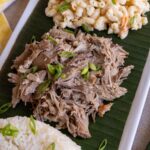
3-Ingredient Slow Cooker Kālua Pork
This simple recipe for homemade Kālua Pork only needs a few ingredients and some hands-off cooking time. The result is sublime. If a trip to Hawaii isn’t in the cards, this homemade kalua pork is the next best thing!
Servings: 8 servings
Calories: 420kcal
Ingredients
- 1 (4 to 6 pound) pork shoulder or pork butt roast
- 1 to 1 ½ tablespoons alaea salt or Hawaiian red sea salt if you can’t find it, use Himalayan pink salt; use about 1 tablespoon for a 4 pound roast or 1 ½ tablespoons for a 6 pound roast
- 1 tablespoon liquid smoke
- 1 large banana leaf optional
Instructions
- Trim off the fat cap and pierce the pork roast all over with a carving or barbecue fork (it will pierce deeper than a regular fork) or if you don’t have one, a skinny, sharp knife. Rub in the salt and then coat with liquid smoke.
- If using a banana leaf, wrap it around the pork like wrapping a present and tuck the edges underneath the roast to keep it well-wrapped. You may need to cut the banana leaf depending on its size and how you plan to wrap it. I wrap mine in one direction with one piece of banana leaf and then the opposite direction with another piece.
- Place the pork roast into the slow cooker, cover and set it on LOW for 8 to 12 hours (8 should be sufficient for a smaller roast, but you’ll need closer to 12 for a large roast). Check the roast for doneness about 8 hours in (if using banana leaves just gently pull it open to check). It should be fork tender and easily pull apart.
- If you have used a banana leaf, remove it now (it may break into multiple pieces but that’s fine; I use tongs for this). Remove most of the cooking liquid, but save it. Remove any bones if it was a bone-in roast, then shred the pork with 2 forks, adding some of the liquid back as needed to keep the pork moist.
- Save any extra cooking liquid in case you need it for reheating leftovers. Cooking liquid should be added sparingly, just enough to retain moisture but should not be soupy or too liquidy.
Notes
- Pork: Use either pork shoulder or pork butt for this recipe. Pork shoulder (or picnic shoulder) is a bit leaner and usually sold bone-in, while pork butt (or Boston butt) has more fat marbling and is typically sold bone-in or boneless. These are the typical cuts you’d use for pulled pork, and they work well for this recipe too since they’re ideal for slow cooking processes.
- Liquid Smoke: This is a concentrated seasoning made by capturing real wood smoke and condensing it into a liquid. Since you aren’t digging an imu in your yard and smoking a pig all day, this is the best way to capture that smoky flavor without the hassle.
- Salt: Alaea salt, also known as Hawaiian red salt is your best and most authentic choice here. It’s an unrefined sea salt blended with ‘alaea (pronounced a-lie), a volcanic clay rich in iron oxide. This natural clay gives the salt its distinctive brick-red color and subtle earthy flavor. If you can’t find it, use another high quality salt such as Himalayan pink salt which is easier to source.
- Banana Leaves: This is optional, but will add a more authentic rich and earthy flavor. You can typically find banana leaves (usually frozen but occasionally fresh) in Asian or Latin American grocery stores. They’re cheap and well worth buying a pack to get more authentic flavor in your kalua pork. Make sure to wash and dry (just wipe with a paper towel) your banana leaves before using.
- Storage: Transfer cooled kalua pork to an airtight container with some of the leftover cooking liquid (to help retain moisture) and refrigerate for 4 to 5 days. You can also portion and freeze it for up to 3 months. Thaw overnight in the fridge. Whether refrigerated or frozen and thawed, reheat gently on the stovetop or in the microwave before serving.
Nutrition
Calories: 420kcal | Protein: 40g | Fat: 28g | Saturated Fat: 10g | Cholesterol: 140mg | Sodium: 953mg
Check out the original post for more information, step-by-step photos, and more by scanning this QR code!